

This Tesla Model Y Juniper Feature Could Get You Pulled Over
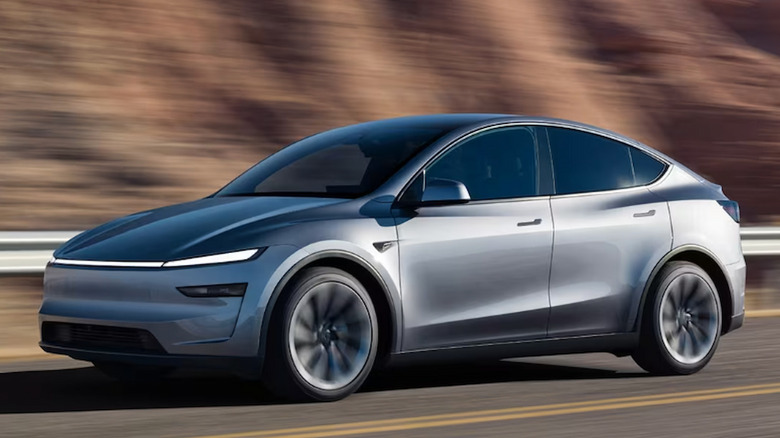
In 2025, Tesla launched its new Model Y, AKA "Juniper," in the U.S. Compared to the 2024 Model Y, this revamped design of Tesla's best-selling electric vehicle sports a more modern, Cybertruck-esque design, a quieter interior, new tires, improved connectivity, and upgraded touchscreen interfaces. However, it's the Juniper's re-designed rear end that could get you pulled over.
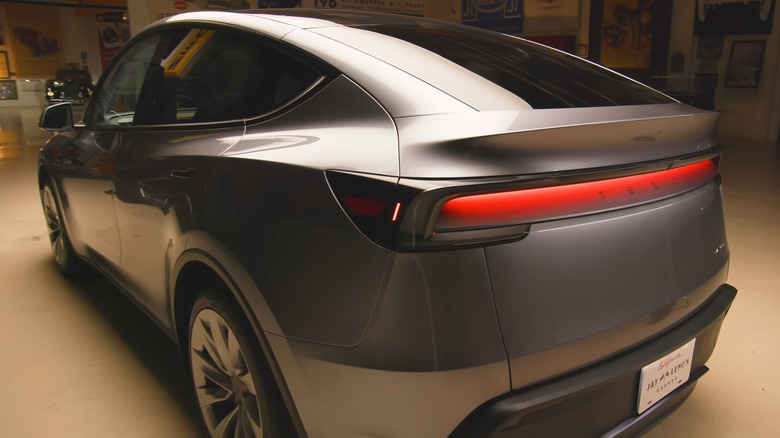
In January 2026, TeslaOracle reported that a Juniper owner had been pulled over by a cop in Indiana, who believed the EV's taillights weren't turned on. The latest Model Y's redesigned taillights are certainly unconventional, with an extended reflected light bar in place of more traditional taillights seen on the 2024 Model Y, or the outward-facing LED strip offered with the modified Cyberstream taillight upgrade. Below, we break down how the Tesla Model Y Juniper's taillights differ from its predecessor and, more importantly, how Tesla has ensured its EV meets regulatory requirements in the U.S.
What's different about the Tesla Model Y Juniper's taillight design?
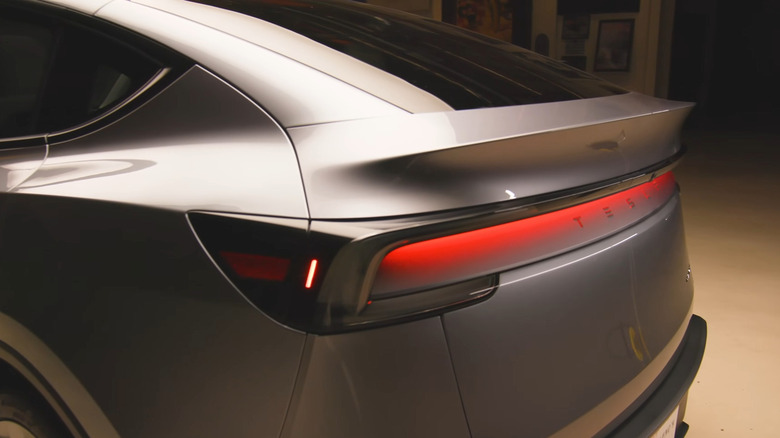
In an episode of Jay Leno's Garage, Tesla designer Franz von Holzhausen described how the Model Y Juniper features "an indirect running light" at its rear. This means there is no direct light emitted from this light bar. Instead, the illuminated light bar is tucked away upward, with the red light it emits reflected downward onto a more visible, custom-textured strip at the back. What you actually see from behind the car is this reflected, much softer light. Von Holzhausen described this design as a "first in the industry."
This is a stark contrast to the previous Model Y, which offered more conventional taillights: Distinct LED lights mounted on either side of the vehicle's rear alongside the brake and turn signals. The Model Y Juniper still has separate turn indicators and C-shaped brake lights, with an extra brake light in its backscreen window. However, these other rear lights are arguably less distinctive than in the 2024 Model Y, as the reflective width-length bar blends into them on either side — which may be what confused the officer in Indiana.
How the Tesla Model Y Juniper's taillight design meets regulation
The bottom line is Tesla would not be able to sell the Model Y Juniper in the U.S. unless its design meets the Federal Motor Vehicle Safety Standard (FMVSS) No. 108. This regulation covers the photometric and visibility requirements (including color, intensity, and mounting) for lamps, reflective devices, and associated equipment.
According to Tesla engineer Lars Moravy, while there are federal requirements for rear lights, the manufacturer's new design meets this standard because "the regulation is how much lumens come off the surface, but it never defines what kind of surface that has to be."
FMVSS No.108's requirements are pretty thorough, but the Standard specifies that a passenger car's taillights should be "steady burning" red, and activate when the vehicle's headlamps or parking lamps are activated. The minimum and maximum candela (not lumen) requirements for the light intensity of taillights are slightly more complex, as they differ by angle. For example, at an 80 degree outboard corner point, a vehicle's taillight should reach a 0.5 minimum luminous intensity.
Tesla will have had to perform goniophotometer tests (used to measure light intensity) to ensure the electric SUV design complies with the luminous intensity requirements for these angles in order to sell the model in the U.S. — though other countries may have different requirements and regulations.