

Fish In The US Are Shrinking And Scientists Are Concerned
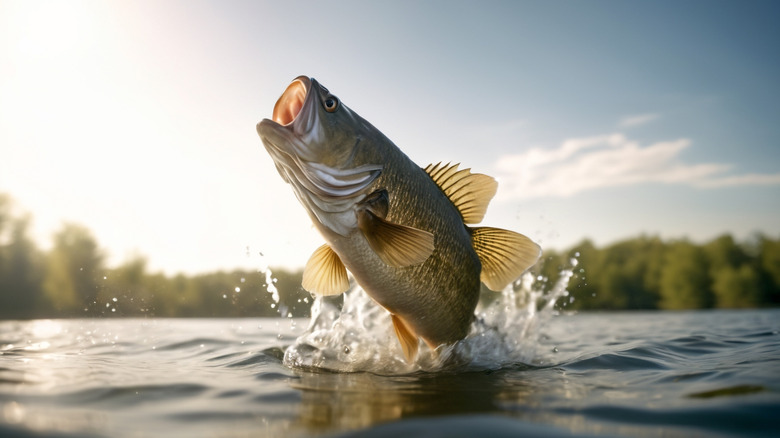
There's a silent change taking place beneath the surface of many lakes in the United States. New generations of fish are growing smaller and weaker than their ancestors. Scientists claim this is a warning we can't ignore. For the past several decades, fishermen and biologists noticed that the fish are getting smaller not only in number, but also in size. A newly published study revealed just how deep this change runs.
Researchers from the University of Michigan School for Environment and Sustainability ran a long-term study that included over a thousand lakes across the U.S. The research spanned over 75 years, and it paints a gruesome picture of an ecosystem under serious pressure due to changing freshwater levels as temperatures rise. But it's not only the fish that are the main concern. The very balance of life in inland waters is in question. The shrinking of fish might seem like a small detail, but it carries big consequences for ecosystems, local communities, and the future of America's lakes.
America's shrinking fish
The study, covering 1,497 inland lakes in Michigan, reveals a striking pattern. Many freshwater fish species are becoming smaller than their previous generations. The research was published in Global Change Biology, and it analyzed the length of 13 different fish species from 1945 through 2020. The researchers found that 37% of age classes showed a significant decrease in length. The decline in size was most pronounced among the youngest and the oldest members of the species.
The Michigan study used advanced statistical models to separate the effects of climate factors, such as warmer water temperatures and longer growing seasons, from other environmental influences. Results showed that for species adapted for colder waters, size sometimes increased with longer growing seasons, however, it decreased with higher surface water temperatures. For species adapted to warm waters, the result was a general decrease in size. These findings highlight how warming water temperatures are altering the biological traits in fish. Similarly, warming oceans are affecting the dolphin population. Rising water temperature is a global phenomenon that has an impact on our entire ecosystem.
In simpler terms, fish are not just fewer in number, they're also smaller than before. Warmer waters make it impossible for fish to grow. They reach a certain age at a smaller size than previous generations of the same species. This matters because size directly influences a fish's chances of survival, how it feeds, how well it can reproduce, and how it interacts with predators. According to this new study, it seems that long-term climate and environmental change are reshaping the ecosystem in U.S. inland waters.
Why shrinking fish is a serious problem

The research is built on a broader effort by the University of Michigan to digitize decades of fish records through a crowdsourced project. This ongoing initiative is helping scientists uncover long-term trends hidden in historical data. Old field notebooks and archives show us how bad climate change is and how it's transforming freshwater ecosystems.
The shrinking of fish size and fish populations is a sign of the shifting balance in the ecosystems. Smaller fish could influence entire food chains. Younger fish that are smaller are easier prey, and smaller adults produce fewer eggs. Over time, the fish population will weaken and will be unable to withstand sudden changes such as droughts, heatwaves, and pollution.
Larger and older fish are key to a stable fish population. Although they're not the most fertile individuals, they are most likely to survive encounters with predators and changes in the ecosystem. Since the fish are getting smaller, their ability to support new generations is significantly reduced. But the problem is also starting to affect the people that rely on fish for food. The catch is getting smaller, and the impact on the economy will be significant.
This creates a new challenge for fishery managers. Fishing rules limiting the size of a catch are based on the assumption that fish grow at a steady rate, but the shifting growth patterns mean that such rules need to be updated. Scientists say that protecting healthy habitats, restoring cooler waters, and monitoring the development of fish growth is crucial for the survival of many freshwater species. The message is clear: the shrinking of the fish in the U.S. is more than a local concern. It's a signal of how climate change is transforming life and how every single being is adapting to it.