

Five Old-School Gadgets Nobody Uses Anymore
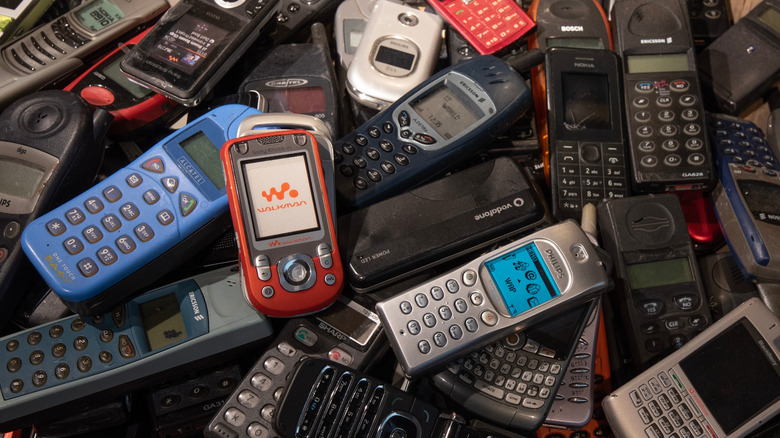
Touch-screen smartphones weren't popularized until the mid-to-late 2000s, and well before that time, people carried a Walkman to listen to music on the move, a point-and-shoot or film camera to take pictures, a VCR or DVD player to watch the latest movies, and a landline-based cordless phone for calls. These gadgets were built to last for years, but had limitations as well. Owning a Walkman meant flipping the cassette to listen to a complete album and swapping batteries every other day. Taking pictures on a disposable or film camera meant waiting days just to see those photos, and a new music or movie release would take months to arrive in stores.
After the smartphone's arrival, most of those have become technically obsolete. Now, to take a picture or listen to music, a feature-rich app stands at the ready. Some older devices and formats have in sales, typically . For example, vinyl turntables with modern upgrades are becoming increasingly popular. Likewise, nostalgia is driving millennials and Gen Zers towards . However, the interest in these gadgets is limited to a niche section of buyers, and it's unlikely that older tech will return to mainstream market dominance. Here are five devices that were once popular, and considered essential, but nobody uses anymore.
Numeric keypad phones

Keypad phones from companies like Nokia, BlackBerry, and Motorola ruled before touchscreen phones took over. Phones like the Nokia 3310 are nowhere to be seen today, but this Nokia model — and similar models — enjoyed loyal userbases during their peak. The sturdy and reliable phone .
BlackBerry but did quite well in other nations. Its BlackBerry Messenger (BBM) was very popular for some time with its target demographic, offering the kind of exclusivity iMessage does today. On the numeric keypad, texting became popular, and people could type without looking at their phones. The on BlackBerry phones even faster and more convenient. But the for these phones with the iPhone's launch in 2007. Later, the launch of feature-heavy Android touchscreen phones was a final blow to keypad phones.
Smartphones offered greater ease of use, with better cameras, snappy file sharing, a faster web browsing experience, and hundreds of useful apps. Eventually, keypad phones in comparison to iPhones and Android smartphones.
The iPod

Apple's iPod may not have been the first MP3 player, but it was perhaps the most popular music player — boasting a clutter-free design, a tiny digital screen, and the iconic touch-sensitive click wheel. The iPod made it easier for people to listen to a catalog of songs on the go. There or CD player; this tiny gadget could fit in your pocket. MP3 players like the iPod struck a chord with users, especially younger consumers.
Gone were the days when you had to carry a handful of cassettes to listen to different artists; you could download the latest music and scroll through hundreds of songs in seconds. However, smartphones largely and other MP3 players, as users could do more on a larger screen, including playing music.
Smartphones made it easier for people to discover and share music with friends. Apps like Spotify and Apple Music offered high-quality music from around the world. As well, storage wasn't an issue for smartphones — one could stream music on YouTube and other apps via the internet. As demand declined, while other MP3 players fell into relative obsolescence as time dragged on.
The Walkman
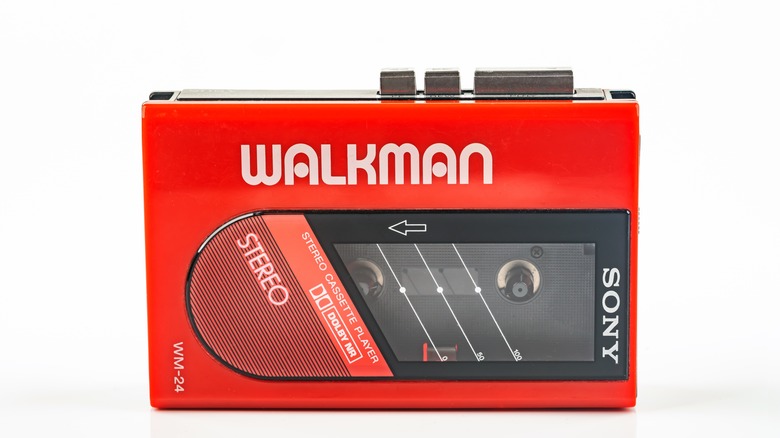
Before the iPod achieved dominance, and even before portable CD players offering anti-skip technology made the rounds, music fans would flex their Walkman units — portable cassette players you could carry anywhere while listening to your favorite tunes. The iconic device gained popularity in and made private music listening more convenient. Beyond cassettes, many models had built-in FM radio capabilities, giving users more options. Mixtapes gained popularity at around the same time, allowing people to share curated playlists with others.
But there were downsides as well. There was no option to skip a track (at least on most Walkman models), and rewinding took a lot of time on a Walkman. Sometimes, the tape would tangle or loosen from a cassette, and one had to wind it back using a pen or pencil. The battery life was generally quite brief, and unlike more modern MP3 players, most portable cassette players relied on removable AA or AAA batteries.
Disposable Cameras

Smartphones have made it a snap to take countless pictures in a matter of seconds, but that wasn't the case with disposable cameras. You could take only a finite number of pictures with each camera, and it was discarded after the pre-loaded film roll was developed. Disposable cameras from brands like Kodak and Fujifilm gained . Unlike digital cameras, particularly high-end DSLR (digital single-lens reflex) cameras, there wasn't much to tinker with. The point-and-shoot disposable cameras had a fixed-focus lens, aperture, and . A single roll would let you take around 20-30 photos, and the camera was usually sent to a lab to develop the film.
With such limitations, every shot mattered. Blurring, overexposure, or noise artifacts were often visible on photographs. This changed when DSLRs became more commonplace. The advanced cameras offered plenty of features, and the option to change lenses to capture close-range or far-away subjects. Moreover, you could take hundreds of pictures and review them instantly. Later, the average consumer started using their smartphone to capture photos and video, for DSLRs and mirrorless cameras in turn.
Cordless landline phones

In the past, many households used bulky wired landline phones for calls. With a connected receiver on these phones, people couldn't move too far from the phone's base while on a call. This changed with the proliferation of cordless phones, which made it easy for people to take the receiver anywhere around their homes — within a certain range. Apart from the ability to move freely while chatting, these phones also usually came bundled with the ability to utilize voicemail, caller ID, and a phonebook.
But the arrival of mobile phones . Landlines as a whole became a secondary phone option and, within a few years, became obsolete — except in cases of emergency — as mobile phones became cheaper, and carriers offered unlimited calling, texting, and data. With the option to make video calls, send emails, browse websites, and chat with friends on social media, mobile phones offered enough features to replace several other single-purpose gadgets, and landline phones were included in that list.