

What Do Smart Toilets Actually Do?

Upgrading to a smart toilet is self-care in a nutshell. Smart toilets, though pricey, have features that will change the way you use the toilet. Just ask anyone who's used one while traveling abroad, like Tokyo's transparent public toilets. You likely already know that smart toilets have a bidet want for cleaning, but that's not even the half of it. Features like air dryers, heated seats, and dual-flushing await. Smart toilets are also more efficient, which can lower your water bill and the money you spend on toilet paper since you likely won't need as much. And, with features like dual flush and adjustable temperature controls, smart toilets can be environmentally friendly.
Smart toilets make using the bathroom much more enjoyable, but if you're unsure what they do and whether you need one, then keep on reading to learn more about them. You might want one for yourself by the time you're done.
Bidet features
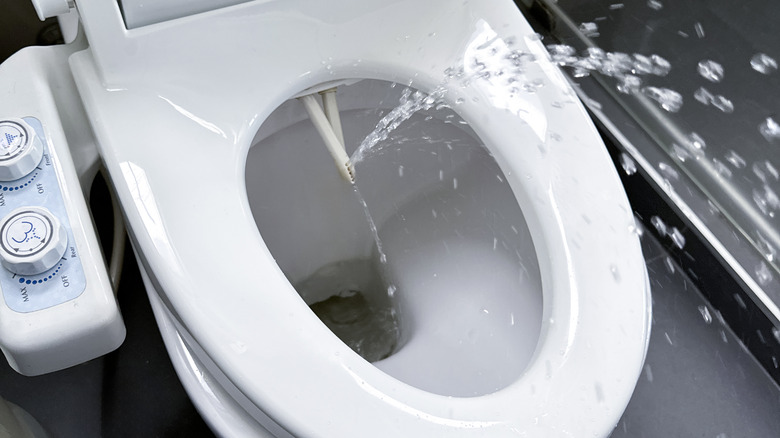
If you haven't tried a bidet yet, you're missing out. Forget toilet paper, which is a waste of money, bad for the environment, and inefficient when it comes to cleaning up. A bidet is more effective at cleaning up, and it's less wasteful. While you might need a few pieces of toilet paper to dry, you can forget about spending huge sums on it every month. There are bidets that can be attached to any existing "non-smart toilet," and while they're cheap, they're not nearly as good as the bidets in smart toilets, which take cleaning to the next level.
Depending on the smart toilet you have and which buttons you press, you can adjust the temperature of the water coming out of the bidet, an essential feature when you don't want to be blasted by cold water during your morning routine. Sure, it's one way to wake up, but it's rather rude. Bidets on smart toilets often have adjustable water pressure to modify how soft or hard the water shoots out. How this is controlled depends on the toilet, but it's sometimes displayed as several buttons that intensify the pressure. Again, depending on your model, the bidet can be concealed within the toilet, emerging only when needed, and the angle can be adjusted until you find the sweet spot. Although not every smart toilet has this, some contain two bidets: One for the back and one for the front for double the cleaning potential. If any of those features sound like must-haves, make sure your next smart toilet has them installed.
They warm your seat and deodorize
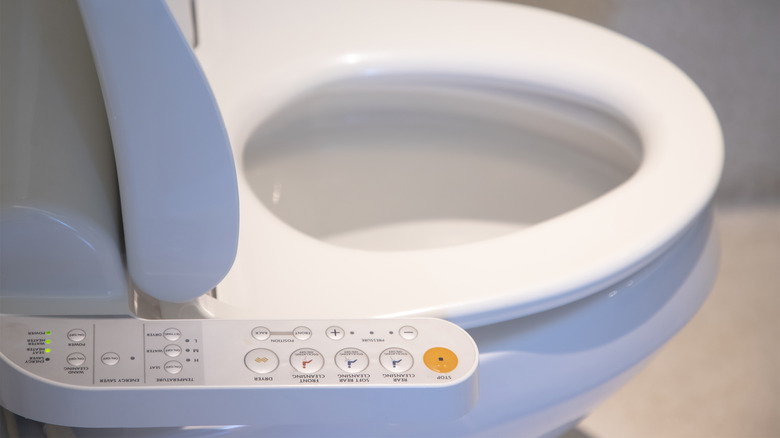
Who wants to wake up on a cold, winter morning and sit on a freezing toilet seat? It's an unpleasant shock that you don't need as the grogginess from last night wears off. Smart toilets don't have this problem. When you sit down, you'll be welcomed by a warm toilet seat that doesn't ruin your morning. Each smart toilet is different, but, for the most part, you should be able to adjust how the seat heating feature works. For example, if you want to save money, you can opt to only turn on the feature when you sit, which sort of defeats the purpose, or you can choose to always have the feature on to ensure you're never caught off guard by a cold seat. In some cases, smart toilets can be set to warm up the seat throughout the day, so that it never gets too cold. You'll still have to clean it (smart toilets can't do it for you yet), but you may be surprised to know the toilet isn't the dirtiest thing in your bathroom.
Not only can smart toilets warm you as you sit, but they can also deodorize the bathroom, which keeps it ready for the next person. The deodorizing features make it sound like the smart toilet sprays a scent while you use the toilet, but it's more complicated than that. Rather than scenting the room, which just covers up the smell, the dedorizer on the toilet intakes the surrounding air and purifies it by filtering through a carbon filter. After the fact, if you want to spray something, it's up to you, but you won't be covering up a smell, just freshening up the bathroom.
Eco-friendly features
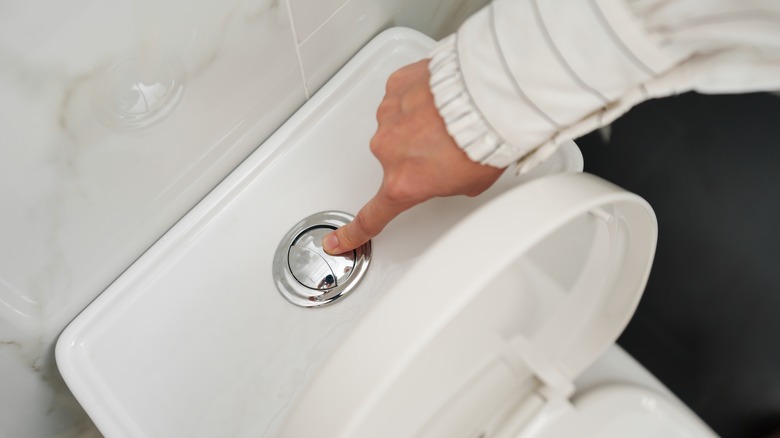
Smart toilets make the act of using the bathroom a lot more pleasant for you, the user. But they don't stop there. They're also great for the environment because they contain eco-friendly features that conserve water. While these features depend on the smart toilet you're using, you can expect dual flushing on most smart toilets. This feature is simple. Smart toilets with the dual flush feature have two buttons for flushing; one uses less water, while the other uses more water for heavier jobs. For example, if you have to toss a single, dirty tissue, you can select the low-water option to conserve the amount of water used. While bidets increase water usage, they do cause you to use less toilet paper, which balances out. Also, you can adjust the pressure of the bidet, with lower pressure modes using less water.
As mentioned, heated seats on a toilet are great, but if you're worried about wasting electricity, then keeping the seat on at all times is not a great idea. You can instead set your toilet to only turn on the heated seats when you sit down. Even setting the seats to heat intermittently throughout the day will save electricity. It's a compromise that's ultimately good for the environment. There are many other eco-friendly features on smart toilets, like automatic shut-off settings that put the toilet to sleep when not in use, and LED nightlights that only activate when sensing movement — it's better than the ToiLight, an unusual gadget you've probably never heard of.