

13 3D Printing Projects You Must Try
We may receive a commission on purchases made from links.
From the technically impressive to the just plain fun, we've gathered together thirteen 3D printing projects that will push you and your printer beyond its comfort zone. There's no Benchy or storage boxes here; no calibration cubes or temperature towers. Gloves off, this is the major league now. You'll need your retraction and bridging dialled in, a reliable flow rate, and some fresh filament for successful prints. Not quite as tricky as 3D printing an entire Lamborghini, mind.
While some of these are premium models, they have a free test print available to try before you commit. Still, given the time and filament investment that they'll take, paying for a tried and tested model and supporting the creator isn't a terrible idea. The designs cover a broad range, from print-in-place but technically tricky to multipart designs that'll need a little construction. Some of the designs are simple prints, but will lead you down a rabbit hole of some intriguing aspect of science that you might not have heard of. We make no apologies for the entire weekend or two that you're about to lose!
Print-in-Place Chainmail

Print-in-place is a featured element of lots of these projects; it relies on extreme tolerance accuracy to print parts so close to each other, yet without actually touching and without the use of supports. This can be used for mechanical parts or linkages. You've probably seen the proliferation of print-in-place Flexidragons that have invaded craft markets everywhere, but have you ever seen functional printed clothing?
In this case, the extremely tedious process of connecting rings in a piece of chainmail can easily be replaced by printing the rings already connected together. Brilliant. While there are a few designs floating around, user PropsMaker has the widest selection, whether you want small pieces that you can DIY together yourself, or an entire chainmail suit. The model pictured above costs $30, uses two and a half rolls of filament, and takes approximately 176 hours to print everything. No one said this would be easy.
Apart from the technical impressiveness of this project, can you honestly tell me you haven't always wanted your own chainmail? Admittedly, this probably won't help you in an actual sword fight; well, unless it was a 3D printed sword, that is. Even NASA is getting in on the 3D printed chainmail game with its futuristic meteorite resistance fabric.
Dummy 13
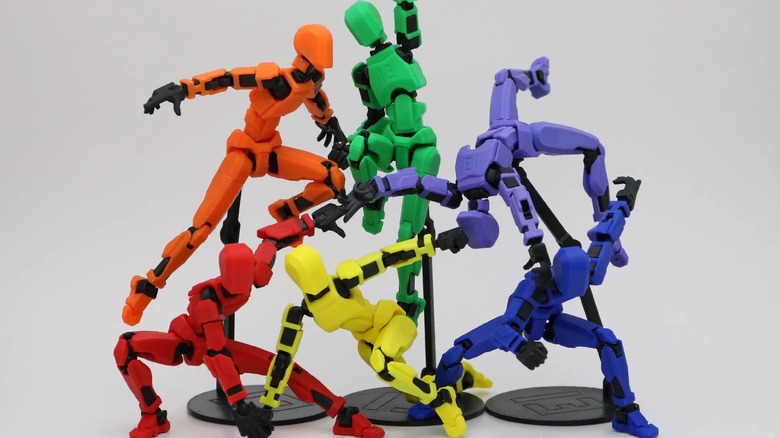
Dummy 13 is a customizable and fully 3D printed posable robot; there are no screws or pins needed. It also won the Printables 3D Model of the Year Award in 2024. It's handy for artists and animators to have around for anatomical drawing, allowing you to create a realistic pose for your characters. But it's also just fun to play with robot dolls (ahem, get your mind out of the gutter, we're not talking about that kind of hackable sex robot dolls!)
The whole thing is printed in two plates, and it's recommended you use PETG for strength in the ball joints and skeleton, while PLA works fine for the body and plating. There are hundreds of accessories and variations available, too, like guns and samurai swords or alternative heads (and, uh, a female body). You can also print a special "sprue" version that's ideal for gifting and feels like putting together a ScrewFix kit. The only difference is that you don't need any of that horrifically stinky plastic glue once it's cut off; everything is push-fit. The creator includes a commercial license as long as you attribute the design, so you can test the water at your local craft market without pricey start-up costs.
Compliant Mechanism Toothpick Crossbow
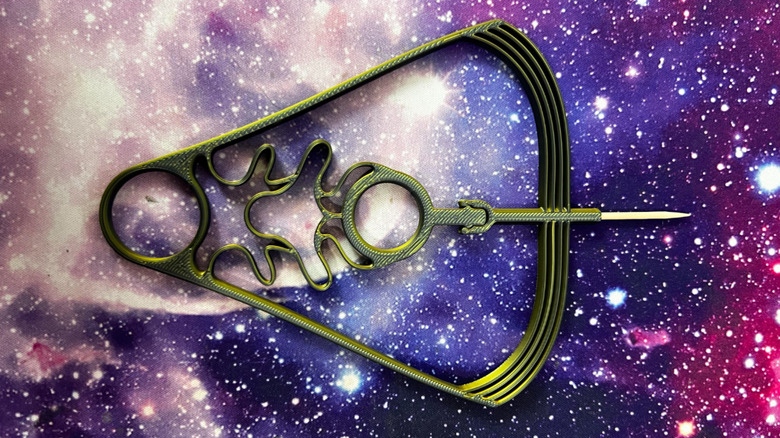
If you've never heard of compliant mechanisms, be prepared to dive headfirst down a rabbit hole of intrigue. You've probably experienced a compliant mechanism in at least one household object: Strap buckles, which you squeeze together to release. Compliant mechanisms get their function from flexing the material itself, rather than affixing separate clasps, joints, or springs. Some manufacturers have turned to AI to help design these almost organic parts, while Apple is using 3D printed Titanium and Steel to make stronger unibody watches that wouldn't otherwise be possible with traditional subtractive manufacturing.
With compliant mechanisms, the object itself becomes the hinge or the spring, which makes them perfect for printing, like this incredible toothpick crossbow from MakerWorld user christophersfactory that can fire anywhere from 15 to 30 feet. Do we need a warning not to shoot this at people or animals? Pointy things can hurt. Christopher also has a range of geared fidget toys that are well worth having a go at, all available to download for free. While you can try printing in PLA, it can tend to be too brittle for repeated use. Nylon is best, but PETG is a good sweet spot, and you're more likely to have some lying around.
Suspended Hand
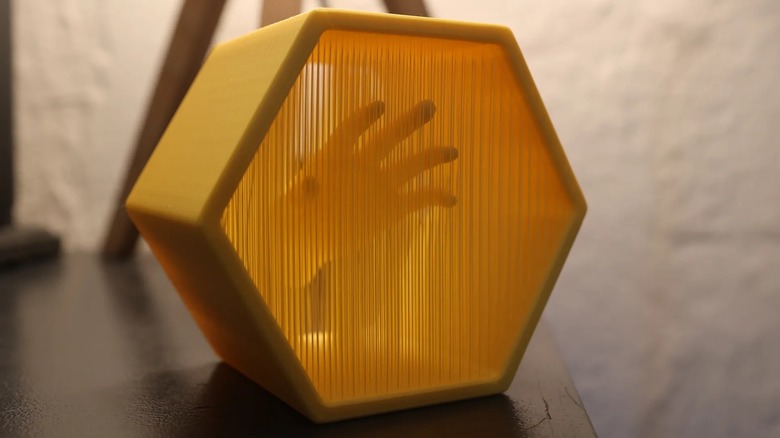
A form of string art mixed with engineering, suspended models rely on meticulously dialled-in bridging settings, as the central object is held up by a lattice of single extruded strands of filament pulled taut across an outer shell. It looks almost magical, and the barely visible strands give this model the illusion of a hand being suspended in the air. No additional supports are needed — but be careful that you don't accidentally cut those strings thinking they're supports (I mean, they are, technically, but they're intentional!)
This is one of those models that will really tax your setup, so it's best to start printing in the daytime and keep an eye on it, or you'll wake up to a handful of suspended spaghetti instead. If a levitating hand isn't impressive enough for you, try the Millennium Falcon. User fay3dlab has a whole series of suspended ships on MakerWorld, most of which have slots for LED lighting to take your prints to the next level, too.
TeleTunes F# Tin Whistle
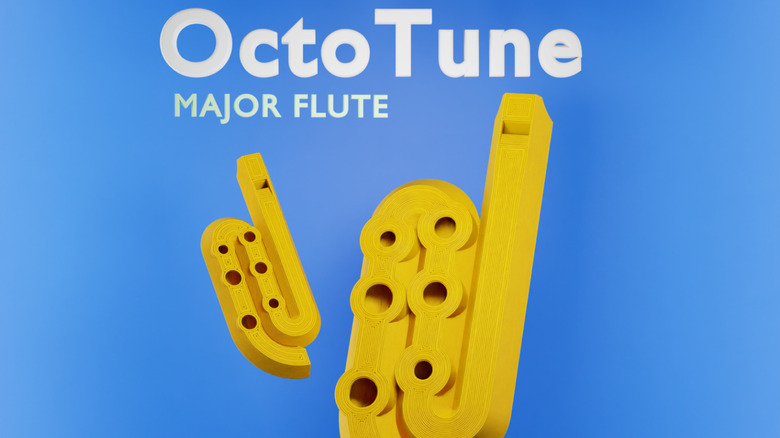
Tin whistles — otherwise known as penny whistles or Irish whistles —are simple wind instruments like a recorder, tuned to a specific diatonic scale with a limited set of notes. Listen to this and tell me you're not impressed. They're much easier to play for beginners because you don't need to learn scales on a full octave; even the most musically inept should be able to play something that sounds like it's "in tune."
There are a few designers out there, but TeleTunes is the best, having meticulously designed a whole series of completely 3D printable tin whistles in a variety of scales and all manner of shapes and sizes, like a telescopic unicorn horn in D major. This is the free version — the OctoTune in F sharp, but he also offers premium models, such as drone whistles, where the sound is split in two, with one flute playing a constant note to accompany you.
Tensegrity Planter
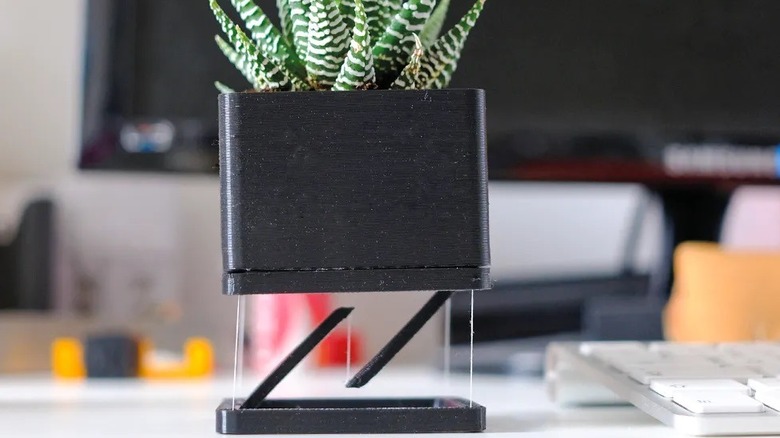
If you missed the whole tensegrity craze, you're one of today's lucky 10,000. Tensional integrity (to use the scientific term) is where structures are created from the perfectly balanced interplay of solid compression objects (like beams), and tight strings or cables between them. In other words: it's engineering magic.
Rather than 3D printing the tension linkage strings — which can look like you're cheating and just printing a solid object — this anti-gravity planter requires you to add fishing wire, giving a more invisible look. But this one is also more than just a piece of art, since you can actually plant something in it. The magic here is that the central structure and string effectively reverse where the weight is being held from (so the top section is actually dangling from the bottom); the strings on the outside then keep the pot from tipping over. No matter which direction the pot is pushed in, a string on the other side will keep it balanced. Be careful, though; tensegrity structures can be delicate with only a few strings to hold the whole thing up.
The Octahedroflake
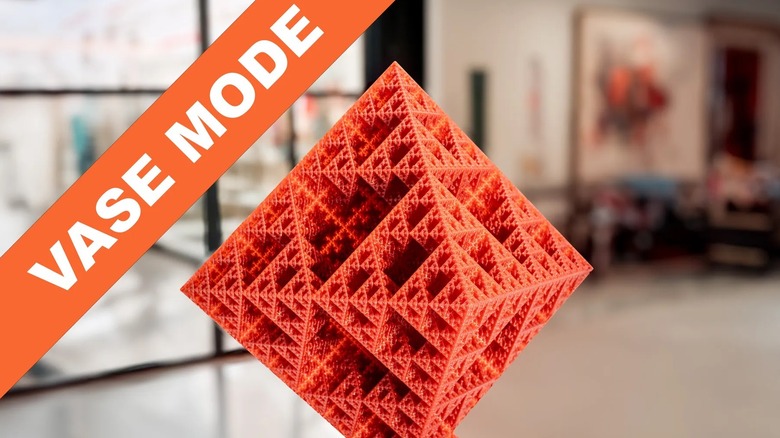
You can say that twice! The Octohedroflake is a (checks notes) "higher-dimensional analog of the Sierpinski Triangle". To you and me, it's a 3D fractal, though your printer obviously can't print in infinite detail. Apart from looking incredible, the Octohedroflake prints in vase mode. Vase mode, so called because the only use it typically has is printing vases, is a combination of model and slicer settings such that the object can be printed with a single extrusion of filament from start to finish for the entire model. Ironically, actual vases made using vase mode tend to be a bit functionally useless; they're weak and crack easily. So it's great to see the mode used creatively here.
With no retraction, z-hops, or start stopping, vase mode printing does have a certain elegance and musical quality to it — the creator of the Octahedroflake model describes it as "your printer will enjoy printing this". To get this level of detail and a reliable print, be sure to check the instructions and don't try to resize it. PLA is fine, though, and the lack of extraneous movement means it should look great in dual-color or rainbow filaments. There are a variety of sizes and ready-made GCodes for different nozzle sizes.
The Entire Dungeons and Dragons Monster Manual
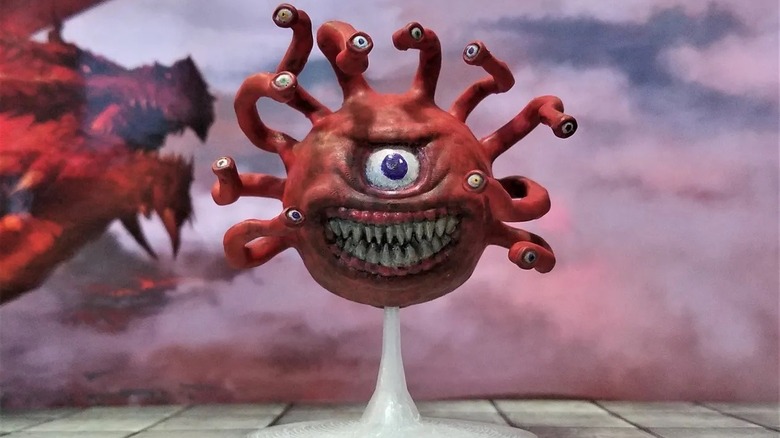
It's safe to say 3D printing has trasnformed tabletop gaming of all kinds, but no more so than anything involving miniatures, like wargaming and TTRPGs. Until recently, these little models were locked behind pricey injection moulded manufacturing, where the dies for a single model can run into tens of thousands of dollars. Like so many things, 3D printing democratized that — anyone with a printer could suddenly be their own manufacturer for fractions of a dollar. And you don't need to order weeks in advance of your session; if your party took a sudden detour into the cave of a Beholder, you can have him printed and painted by the following day.
But that starts with a design file, which is where most of us would trip up. From Aboleth to Zombie, user MZ4250 (Miguel) has been slowly modelling the entire contents of the Dungeons and Dragons Monster Manual, and is constantly going back to improve older models as well. The Printables repositiory has around 3200 files to download (Warning: the page takes a while to load and might crash your browser), but you'll need to join the Patreon for pre-supported versions of everything. May you never have to substitute a generic large humanoid creature for an owlbear again. That said, you might want to swap out for a smaller 0.2mm nozzle for the best results (one of the best 3D printing accessories you can buy).
Puzzle Boxes
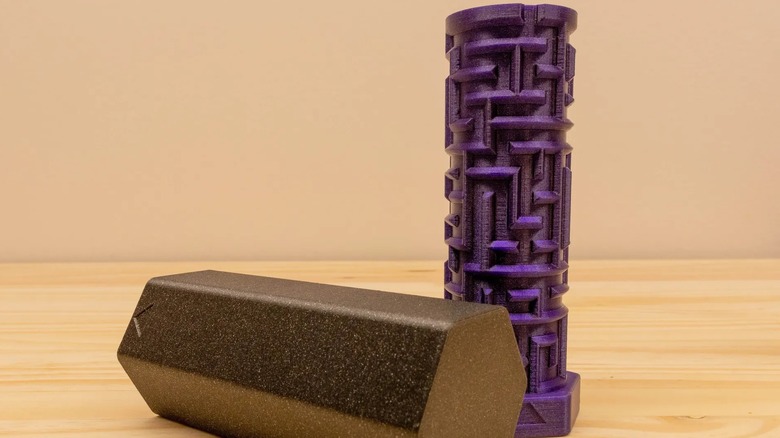
Need a clever way to gift a Christmas voucher or cash? Or are you just evil and like your friends and family to suffer while you laugh hysterically at their struggles? In either case, a 3D printable puzzle box is ideal, and there are hundreds to choose from, all of which are relatively easy to print. This labrinyth puzzle is my favorite, with a maze hidden on the inside that you need to navigate the latch through to release.
The complication lies in the fact that your path doubles back on itself a number of times; an obvious point when you're looking at a 2D maze, but less obvious when you're trying to pull a box apart. The concept is easy enough for kids to understand by simply fiddling with it that you shouldn't need to explain anything, yet still tricky enough to bamboozle the parent when they confidently offer to help!
Working Desktop Trebuchet
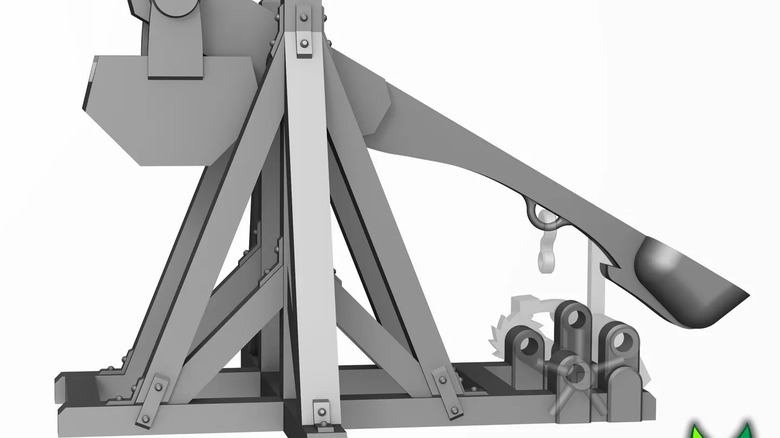
Do you know what's better than a desktop catapult? A desktop trebuchet, because everyone knows the trebuchet was the superior medieval siege weapon. It's particularly handy to get back at someone who's been firing a pesky compliant mechanism toothpick crossbow at you. This free Printables sample version from user VogMan is designed in 28mm scale so it can even be used to decorate your tabletop wargames — but a more complex one with winches, ratchets, and more firepower is available at Cults.
There's a catapult, too, in case you'd like to reopen the great debate. In truth, at this scale, the trebuchet won't actually fire as far as the catapult (or even a compliant crossbow), because physics. The trebuchet relies on mass to produce the kinetic energy (rocks would be placed into the big bucket), while the catapult or crossbow have tension built-in (with a rubber band or flexible material). Scale down the mass, and the trebuchet doesn't work nearly as well.
Print-in-Place Adjustable Wrench

An adjustable wrench is one of those tools that you can never find when you need it, so you should probably just print one for every room. No supports should be added for this print-in-place model, but there are some built-in supports that you'll need to snap off. We'd recommend something stronger than PLA to print this one, though. PETG or ABS should be suitable. It's also worth reading through a few pages of comments for tips from other users — the ratio of successful to failed prints is quite high.
In case it wasn't obvious, 3D printed tools like this one are not for heavy-duty use, so you won't get much torque out of this without passing the break point. It's handy to keep around, though, for the less demanding jobs, and while we're on the topic, there are plenty of 3D printed tools that are just as useful, if not more so, than their manufactured counterparts.
KiMe Kinetic Sculpture
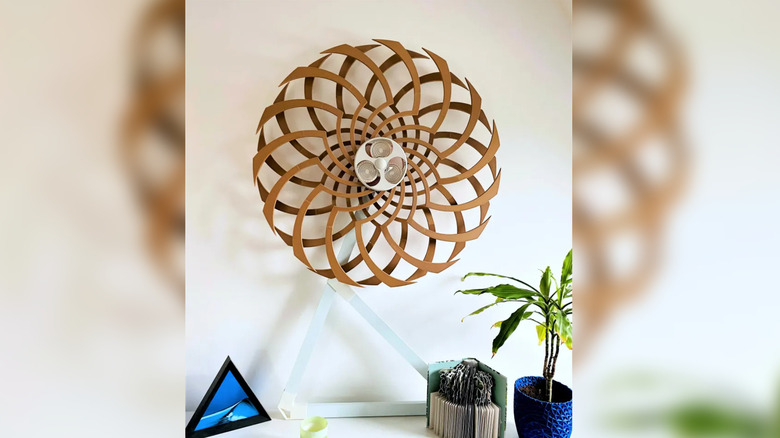
Kinetic sculptures, sometimes affectionately known as useless machines, use the interaction between moving elements to create mesmerizing patterns you can stare at for hours. These kinds of art pieces typically cost thousands of dollars to buy commercially, which is exactly the sort of market that's ripe for disruption with 3D printing.
The creator of this incredible KiMe kinetic sculpture estimates around 135 hours to print this entire 83-centimeter diameter beast and 2 kilograms of filament — plus there's a couple of pages worth of build guide that you'll need to follow carefully — but it's probably one of the most impressive things you'll ever make. Unlike other designs, the KiMe is almost completely 3D printable. While the designer attempted to make that 100% printable, they found the friction was just too high, so they compromised with a metal rod and some bearings. No external power is needed, as the design uses 3D printed compliant springs to produce a runtime of around 8-12 minutes with only a little winding.
Dustpan and Brush
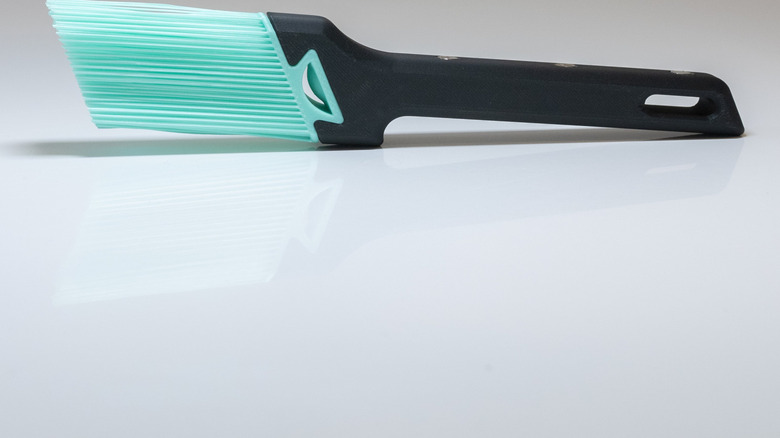
While this might not be the most glamorous item on the list, I figure if you got this far down and your printer has been busy for weeks populating your tabletop with a goblin horde and various siege machines, you're probably going to need a little brush to clean the bits out — and I can't think of a better way of doing that than with a 3D printed brush. YouTuber Devin from MakeAnything produced this genius design that uses the properties of bridged material to produce the semi-flexible bristles, so you'll want to make sure your bridging is dialled in right. Of course, you'll need to chop the supporting end off once printed.
The small detail brush is free, so you can have a go and see how effective it is; the larger dustpan and brush model to clean your whole workshop costs $6.99. Because it's printed in two parts, if the bristles are damaged or wear down, you can just print a replacement without needing to do the whole handle again. We applaud that design philosophy; it's the exact opposite of planned obsolescence, where things are designed to eventually need replacing, like Apple deliberately throttling the CPU as phones age.