

5 Best Sci-Fi Movies Of 2025, Ranked
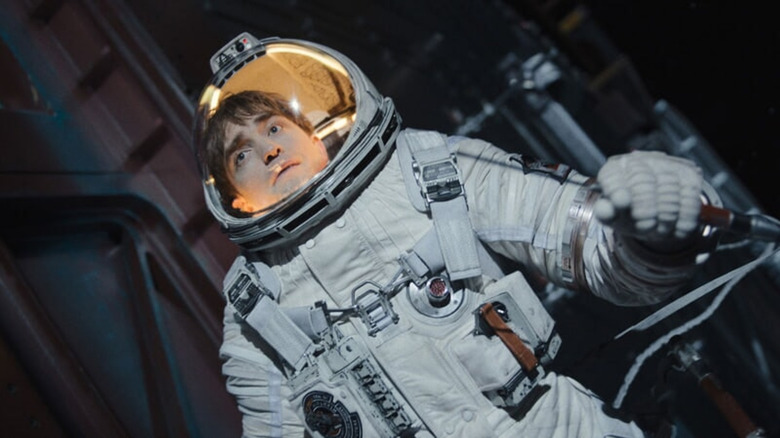
In a year when artificial intelligence skyrocketed to the forefront and proved its potential to change the world, several film directors turned to science fiction to interrogate the consequences of frontier technologies and the forces developing them. Historically, the genre has been the ideal medium for this brand of social commentary. And while science fiction has predicted several inventions, the greatest stories speak to the time in which they were written, like "Frankenstein's" rejection of the First Industrial Revolution and "Star Trek's" exploration of the Cold War.
And in a year like 2025, in which political, economic, and social systems struggle to keep pace with the technology revolutionizing them, science fiction is a great vehicle to unpack the ramifications of this so-called progress. Considering the alternately hopeful and pessimistic viewpoints of this year's movies, it's important to remember how the great sci-fi screenwriter Ray Bradbury described the purpose of the genre in a 2010 interview with The Paris Review: "Science fiction is any idea that occurs in the head and doesn't exist yet, but soon will, and will change everything for everybody, and nothing will ever be the same again."
Still, the genre lacked the success it had in previous years, when hits like "Dune" and "Everything Everywhere All at Once" dominated both the box office and awards circuit. The only major sci-fi financial hit of 2025 is the heavily criticized "Avatar: Fire and Ash," the third entry in the franchise. Despite the lack of financial successes, 2025 produced several top-notch sci-fi films.
5. Frankenstein

Guillermo del Toro's much-anticipated adaptation of Mary Shelley's famed novel "Frankenstein" is a scenic delight, and likely a Best Picture contender at the 2026 Oscars. With austere polar landscapes, gothic dungeons, and a dynamite cast clothed in their Victorian best, "Frankenstein" reanimates one of the most iconic stories with its director's signature visual flair.
Starring Oscar Isaac as the twisted Victor Frankenstein, the Netflix film has been a Hollywood darling since its November release, soliciting high praise while being shortlisted for at least six categories at the 2026 Oscars. Such accolades are to be expected of the beloved del Toro, whose "Pan's Labyrinth," "Cronos," and "The Shape of Water" are staples in the monster canon. Jacob Elordi's haunting portrayal of the not-so-wretched creature has received rave reviews as well, offering a refreshing take on one of literature's most compelling characters.
Unfortunately, "Frankenstein" fails to reach the pinnacle of either its source material or its director's previous works. Like its eponymous doctor, "Frankenstein" falls victim to its own ambition, losing its narrative grasp as it grapples with the defining question of the age: How do we reckon with the adverse consequences of technological progress? But despite the film's inability to emulate the biting nuance of Shelley's novel, it is a beautifully adorned critique that debuted during a news cycle dominated by the heights, failures, and consequences of world-changing technologies. As such, del Toro strikes at some of sci-fi's most enduring themes, demanding his viewers consider the same question posed by the ancient Greek tale referenced in the source text's subtitle, "A Modern Prometheus." Namely, that the most important scientific question isn't if you can accomplish something, but whether you should. If only the world's tech bros were as unequivocal in their answer as the beloved director, who refuses to use generative AI in his films.
4. Predator: Badlands
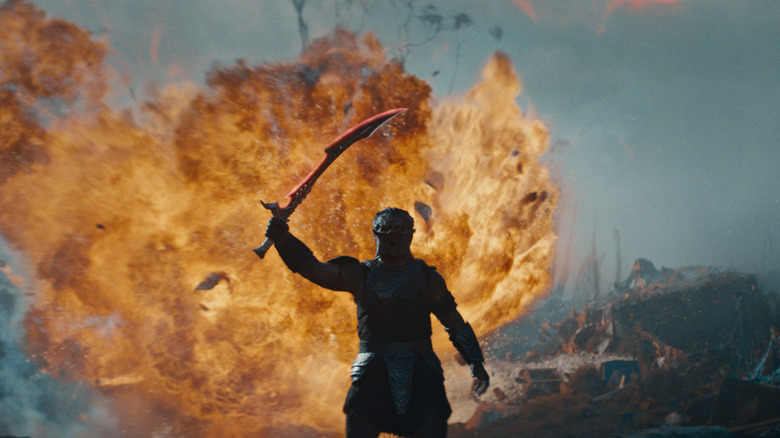
Like the best sci-fi revivals, "Predator: Badlands" takes a well-worn franchise and flips it on its head. A slashing caper through a universe of man-eating foliage and fauna, Dan Trachtenberg's third "Predator" installment casts the famed galactic hunter as the protagonist. And while some viewers might be skeptical of watching yet another backstory in the franchise, "Badlands" is a refreshing coming-of-age tale that disguises itself in an intergalactic buddy-cop package reminiscent of Disney's hit show, "The Mandalorian." This time, however, the antagonist-turned-hero is paired with a band of furry sidekicks and a chatty android zoologist, played by Elle Fanning. Adding a lighter tone typically lacking in the franchise, Fanning and the cast create a jovial, dare I say family-friendlyatmosphere in line with the franchise's new Mickey Mouse-sporting owners.
This is not to say that "Badlands" doesn't pack a serious punch, however, as Trachtenberg fulfills all the requisites of any great "Predator" flick, including dreadlocked killers, high-tech weapons, physics-defying finishing moves, and even an arsenal-improvisation sequence that would make Arnold Schwarzenegger proud. The result is a rip-roaring adventure romp with the visual scale, narrative scope, and dialogic playfulness of an animated film, but infused with the gory highs one comes to expect from the galaxy's bloodiest franchise.
Trachtenberg's ability to deliver a mix of high-octane action and light-hearted comedy makes "Predator: Badlands" the rare sequel likely to appeal to a wider audience than its predecessors. And yet, its strength still lies in the interplay with the original's immortal premise: What if the universe's deadliest killer has its eyes trained on you? The catch, however, is that "Badlands" argues that such a creature may have been humankind all along.
3. Companion

"Companion" is almost impossible to discuss without spoilers. Frankly, placing it on this list might be enough to upend some viewers' experience of the movie. But this Drew Hancock pop sci-fi thriller is as good as the genre gets, and no best-of-2025 list is complete without it. A cross-genre romp that doesn't feel like science fiction until its mind-bending first act twist, the movie delivers on its premise as strongly as any this year. With burgeoning stars like Sophie Thatcher ("Heretic," "Yellowjackets") and Hollywood-favorite Jack Quaid ("Novocaine," "The Boys"), along with Harvey Guillén ("What We Do in the Shadows"), Lukas Gage ("White Lotus"), and comedian Jaboukie Young-White, watching Drew Hancock's feature debut feels like catching a band before it made it big: they're still ironing out the finer details of their instruments, but the indefinable "it factor" is unmistakably present.
In "Companion," Hancock has crafted an exhilarating investigation into the power dynamics beneath romantic relationships and how the stories we tell about ourselves and each other define the arena in which they take place. Furthermore, Hancock dives into how technology changes these dynamics, gamifying relationships and reinforcing sexist stereotypes that bar people from finding meaningful connections. These themes resonate as AI-powered companion applications continue to gain popularity, spelling out a future in which machine learning changes the mechanisms of our social sphere. While "Companion" is a worthy exploration of these ideas, it finds success in its ability to communicate them while primarily delivering a heart-pounding comedicrollercoaster. All told, "Companion" is a fun-loving psychosexual thriller that asks the all-important question: What happens if you combine "Legally Blonde," "Strangers On A Train," and "The Terminator"?
2. Mickey 17
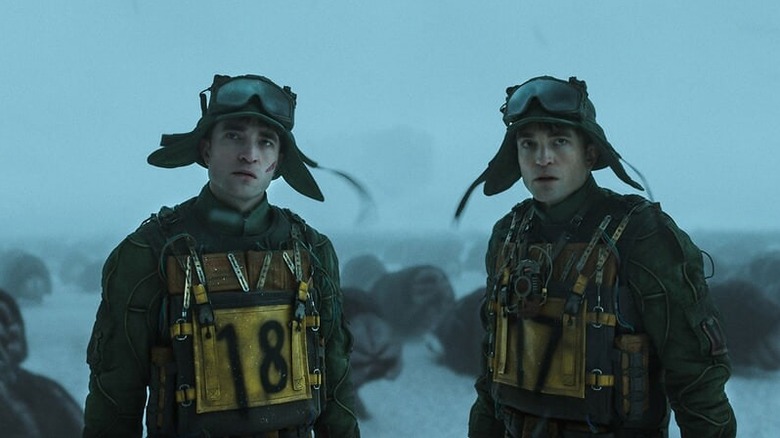
The hallmark of great science fiction is that its absurdities ring truer than reality. Director Bong Joon Ho accomplishes just that with "Mickey 17," a hilarious intergalactic takedown of capitalism gone awry. Based on the 2022 novel "Mickey7" by Edward Ashton, "Mickey 17" applies the famed director's satirical eye to the ideal canvas: a high-pitched, frenetic Robert Pattinson caught in a "Groundhog Day" cycle of senseless self-slaughter. More in the vein of Bong's comedic thriller "Okja" than his Best Picture-winning "Parasite," "Mickey 17" takes the banality of modern workdays and applies it to a grander thematic backdrop, using a conveyor belt of death montages to convey something about the relationship between capitalism and oppression. In this way, Bong Joon Ho's film is more than a makeshift "Office Space" in orbit. Rather, it uses the plight of one existentially-tortured employee to detail how economic exploitation, resource capture, and scientific progress enable authoritarian systems. And while this description may seem like a pretentious drag on paper, "Mickey 17" is much more a slapstick comedy than an overwrought think piece.
Powering this comedic engine are show-stopping performances from Mark Ruffalo and Toni Collette, whose not-so-subtle portrayals of power-hungry, space-loving billionaires propel the film from a "Three Stooges"-esque comedy of errors into a biting satire in the tradition of Charlie Chaplin's "The Great Dictator," delivering a humorous look at the absurdities of fascism, the bludgeoning tools of its enforcement, and the often-obtuse leaders that wield it. Add a dash of romance, siblingrivalry, and a colony of gigantic trumpet-nosed space larvae, and "Mickey 17" is the rare film that leaves viewers laughing while pondering the consequences of their mortality.
1. Bugonia
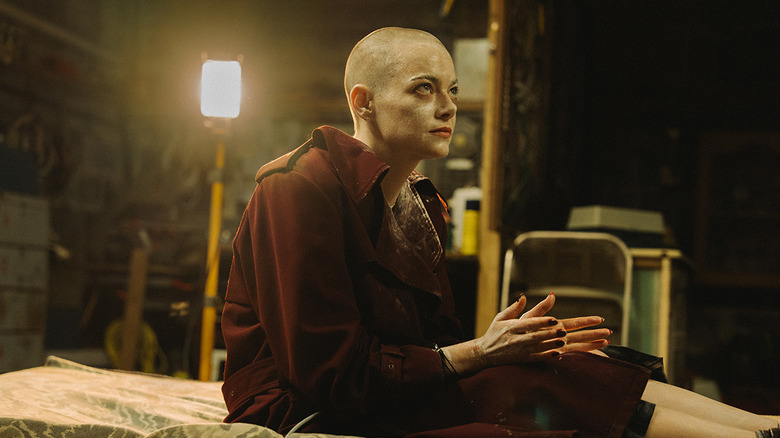
The best sci-fi movie of the year is also the one that most speaks to 2025. Filmed by Oscar-nominated director Yorgos Lanthimos, "Bugonia" follows two conspiracy theorists, Jesse Plemons and Aidan Delbis, who kidnap a powerful CEO (Emma Stone) they believe is an alien plotting the destruction of the human race. Adapted by Will Tracy, the writer who brought us the Anya Taylor-Joy hit "The Menu," from Jang Joon-hwan's 2003 Korean sci-fi horror flick "Save The Green Planet!," "Bugonia" feels directly pulled from a news cycle rife with assassinations, political conspiracies, and tech-bro oligarchs set on conquering viewers' time, money, and resources. Tonally, this black comedy harkens back to Lanthimos' earlier works, recalling the cramped, dry humor of his breakout "Dogtooth" while applying the stark visuals of his most recent Plemons-Stone collaboration, "Kinds of Kindness."
Although visually and emotionally striking, the strength of "Bugonia" lies in its ability to capture the existential panic plaguing today's classpolitics. Alternately depressing and comedic, the cat-and-mouse torture game between Plemons and Stone parallels a violent political landscape that blurs the lines between perpetrators and victims, toggling viewers between feelings of horror, disgust, sympathy, and schadenfreude-filled catharsis as they try to identify the story's true villain. On balance, "Bugonia" is a philosophical film that forces its audience to ask who is really at fault for the violence plaguing politics today: those lashing out against oppression or the individuals held mortally accountable for it. Whether or not viewers agree with the film's conclusions, it is difficult to argue that any sci-fi flick this year better attests to the sociopolitical climate in which it was released. As such, future viewers will likely see "Bugonia" as a prism into an especially fraught, hopefully unfamiliar, moment in American history.