

How Real Doctors Feel About HBO Max's The Pitt
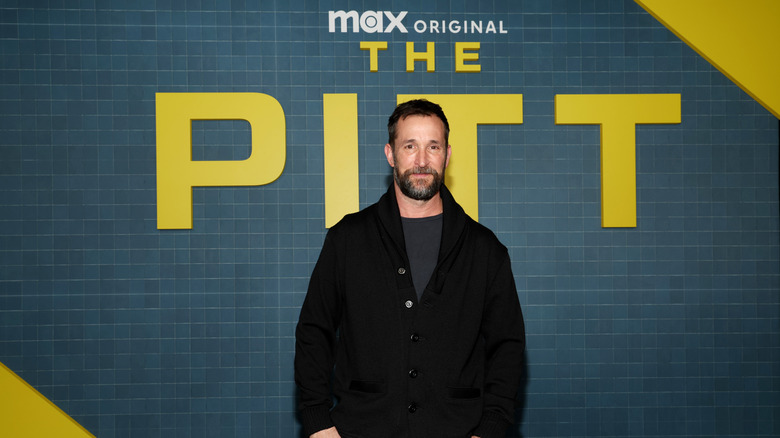
One of the highest-rated TV shows of 2025, according to IMDb, was HBO Max's The Pitt, an award-winning hospital drama starring Noah Wyle. The series does a rather impressive job of depicting the chaos and drama that come along with working in an emergency room. What makes The Pitt stand out from other hospital dramas is its commitment to providing viewers with a brutally accurate portrayal of what an ER environment is like. Put simply, The Pitt does away with many of the familiar plot lines found in standard hospital dramas, with soap-opera-style relationships between doctors a prime example. Instead, the show's focus is gritty realism.
The episodic structure of The Pitt is also interesting and helps reinforce the show's sense of realism. Specifically, each episode unfolds in real time over a single hour in a hospital emergency room. Over the course of the season, the show provides viewers with a 15-hour glimpse into what an emergency room environment is like. If this form of storytelling sounds familiar, it's because it's similar to a format popularized by the hit show 24 in the early 2000s.
Since its debut earlier this year, The Pitt has garnered overwhelmingly positive reviews from both viewers and critics alike. This past September, for example, the show won the 2025 Primetime Emmy Award for Outstanding Drama Series. And key to the show's success is its bluntly realistic portrayal of life inside the emergency room.
Doctors say The Pitt is the most realistic hospital drama ever made
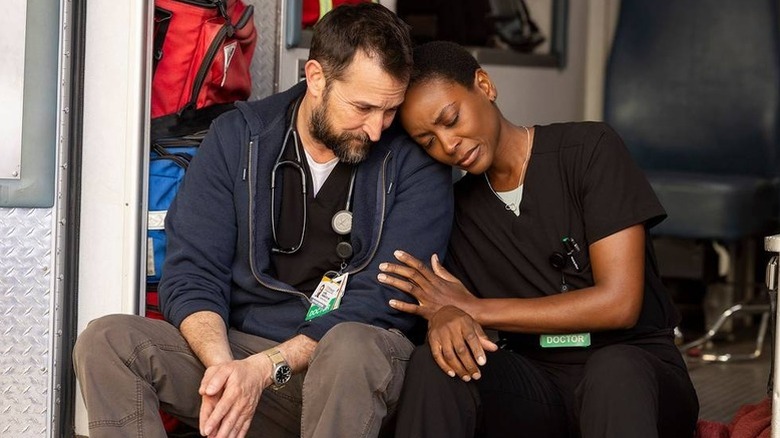
The creators of The Pitt made a concerted effort to make the series as realistic as possible. In the months since its debut, dozens of doctors have praised the show for its striking realism, many opining that The Pitt portrays life in an emergency room in a way rarely seen before. To this end, The Pitt purposefully avoids the fictional quirks and niceties typically seen in popular medical dramas like House and Grey's Anatomy. Difficult conversations and interactions aren't watered down. Not every storyline has a happy ending. For the show creators, realism trumps everything else, which is precisely why the show has resonated with viewers and doctors.
To this point, surgeon Emily Boss, writing for Newsweek, praised the show's commitment to medical realism. Citing one example, Boss said she was glad to see Noah Wyle, in his role as Dr. Michael 'Robby' Robinovich, tell "parents directly, without euphemisms, that their daughter had died and the team was going to stop their resuscitation attempts."
Boss adds that The Pitt doesn't shy away from depicting the brutally tense moments that can often arise between doctors in high-pressure situations.
"The most triggering dynamic for me on the show was between a senior male resident and a junior female intern," Boss writes. "In a moment of frustration, he openly berates her, undermining her competency and decision-making in front of an entire stunned and silent team."
The Pitt has ER doctors on set to ensure realism
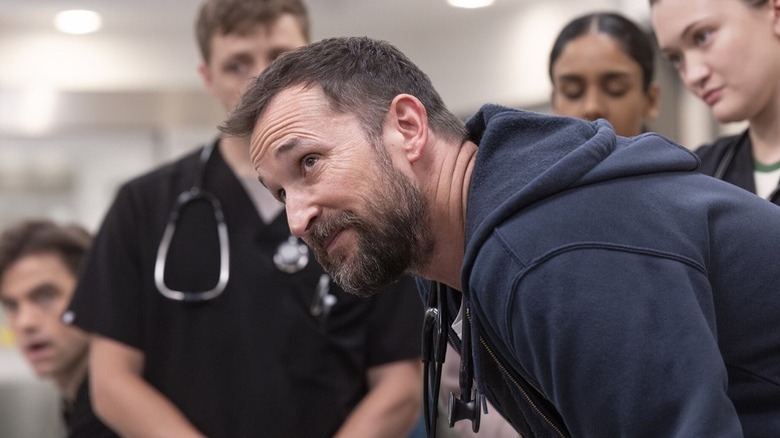
One of the factors that gives The Pitt its sense of authenticity is that the show's producers work closely with actual ER doctors. Not only that, but ER doctors are always on set to ensure that every detail, no matter how small or seemingly insignificant, is as accurate as possible.
To this point, Dr. Sylvia Owusu-Ansah said that producers from the show came to her to help brainstorm episode ideas based on situations that aren't typically represented in medical dramas.
"It's just incredible how accurate they are, how intentional they are, and how they really acknowledge our medical expertise and take that, and that's what's made the show what it is today," Oqusu-Ansah said during an interview with CBS News.
As another example, Vulture earlier this year talked to Dr. Lukas Ramcharran from Johns Hopkins University School of Medicine, who said that the show is the most realistic "depiction of emergency medicine on television, perhaps ever."
Ramcharran also said that the show's format helps the overall realism of each episode. Because the episode is an hour in real-time, there's simply no room to layer on unnecessary or frivolous storylines. The structure of the show itself requires a unique focus on details that matter the most.
"The idea of one shift is good at showing what a day in the life is like and different push-and-pulls in the role," Ramcharran explained. "You have the medicine, but you also have all these other non-medicine things that pull at your attention: your team members, your hospital, the trials and tribulations of working with people who come to you on their worst day."
The good news for fans of the show is that production on season 2 is reportedly already underway.