

5 Best James Bond Gadgets That Exist In Real Life
For nearly seven decades, James Bond has been dazzling audiences with ridiculous gadgets that we could only dream of. But you'd be surprised to know that the past 25 James Bond movies have inspired real-world innovation. In fact, intelligence agencies even tried to replicate Bond-style devices during the Cold War era after taking inspiration from Ian Fleming's spycraft lore. After all, while Bond's jetpack, laser pen, and futuristic gadgets captured the imagination of the audience in the 1960s, they're real now in various forms. The old "007" movies were previews of modern-day technologies.
What was once an unattainable dream is becoming a reality. The "Wet Nellie" submarine is incredibly similar to modern amphibious vehicles, and even Dr. No's robotic arms from the 1962 movie can be compared to modern robotic prosthetics. It's clear that the influence of "007" is extending far beyond the silver screen. So let's explore how Bond's gadgets parallel, contrast with, and even directly inspire real technological advances in the modern world.
X-ray glasses
Pierce Brosnan's 007 wears hilarious high-tech X-ray glasses in the 1999 Bond movie "The World is Not Enough." The Q-Branch engineers create a pair of blue-tinted shades with the sole purpose of revealing if Bond's enemies have weapons underneath their clothes. However, our favorite secret agent occasionally gets to see more than just weapons, especially when it comes to women in the famous casino scene. Bond's eyewear is pure fiction, but the general idea hopped from the silver screen into real-world medicine in a different way.
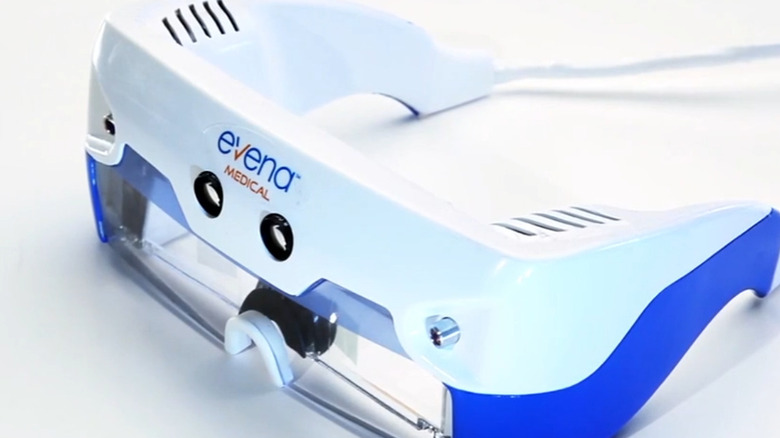
Evena Medical's Eyes-On Glasses System is a real-life invention inspired by fiction, but it doesn't peer through fabric. Instead, it uses multi-spectral near-infrared and 3D imaging to visualize veins under the patient's skin. They're designed to help medical personnel see vasculature in real time, helping professionals find the best spot for drawing blood, placing an IV for medicine distribution, and various other medical purposes. Although this technology didn't reveal hidden knives or guns, it did bring us closer to X-ray vision.
The glasses weren't enough to keep Evena Medical alive. The company filed for bankruptcy in 2017, four years after unveiling the X-ray glasses, due to legal issues involving several of its C-suite officers.
Bionic arms
In the very first James Bond movie, "Dr. No" (1962), the audience meets a memorable villain whose arms were lost to radiation. This evil scientist, Dr. Julius No, replaced his arms with crude metal prosthetics that gave him frightening strength, but limited his dexterity. Dr. No demonstrates his impossible strength on a few occasions throughout the movie, but the lack of grip he needed to overcome Bond ultimately led to his demise. (Oops! Late 60-year spoiler alert.) Those arms are iconic in the Bond universe.
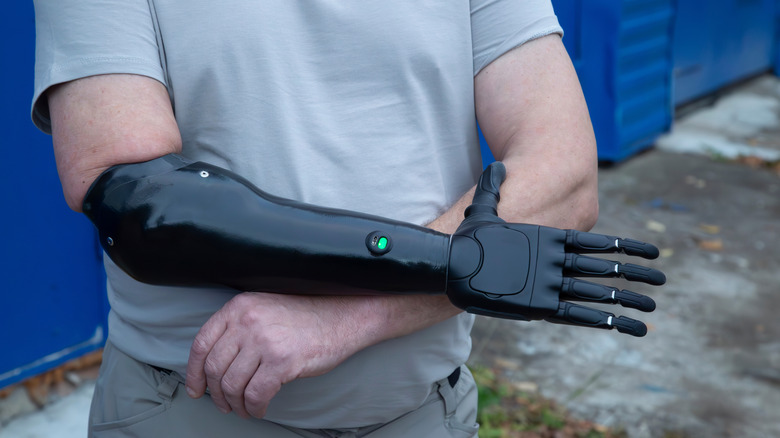
Fast forward six decades, and real-world bionic limbs have moved far beyond villainous movie props. Modern prosthetics are engineered to restore natural movement and control, rather than crush metal statues as Dr. No does in the movie. Real-life prosthetic hands can even mimic feeling. Devices such as the i-LIMB hand feature individually powered digits, allowing users to handle everyday objects with as natural a grip as possible. They work by picking up signals from the residual muscles and are incredibly precise. Maybe today's bionic limbs don't give amputees supernatural strength and power, but they empower them to live more independent lives.
The submarine car
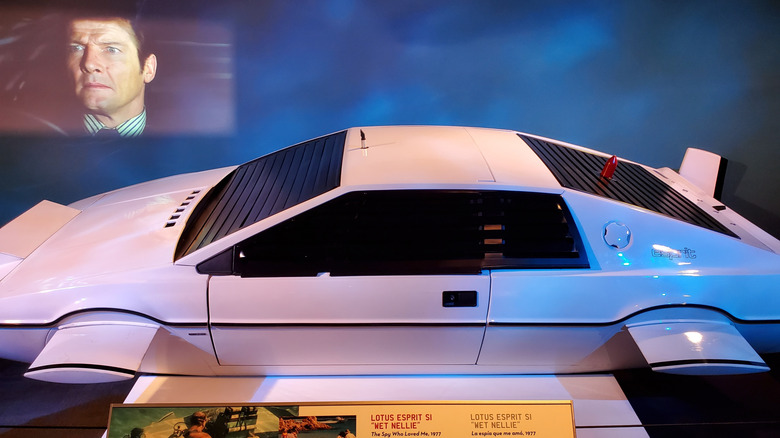
In the 1977 James Bond classic "The Spy Who Loved Me," 007 gets a new ride. Roger Moore drives a sleek white Lotus Esprit S1 that can transform into a submarine, with fins and propellers, when underwater. This car stunned the audience when the movie came out, and it became one of the franchise's most iconic gadgets. The prop, nicknamed "Wet Nellie," was custom-built as a working submarine, though it couldn't actually transform into a working car like in the film. Although it could maneuver underwater without a problem, the interior was a wet sub, which means the operators needed scuba gear.
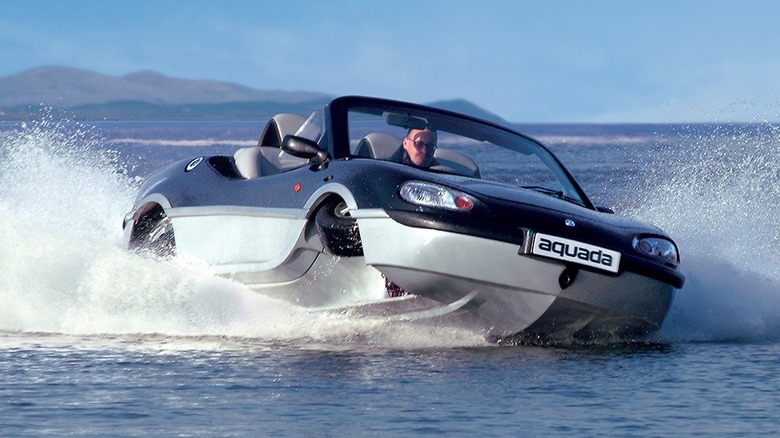
Although we still haven't come up with cars that can transform into submarines, modern amphibious vehicles come close. They can travel on land as well as on water. For example, the Gibbs Aquada is a high-speed amphibious car that can reach over 100 mph on land and more than 30 mph on water, all thanks to the retractable wheels and water jets. Other real amphibious vehicles, such as the Hydra Spyder, combine sports-car performance with boat-like hulls.
Bond's Wet Nellie was purchased in 2013 by none other than Elon Musk, who expressed the desire to make it functional. Tesla designed a James Bond-inspired submarine car, but it never came to life. It seems Musk abandoned this idea in favor of owning the original prop. While 007's car doesn't really have the dual functionality, its angular design served as inspiration for Tesla's Cybertruck aesthetic.
Biometric weapon security
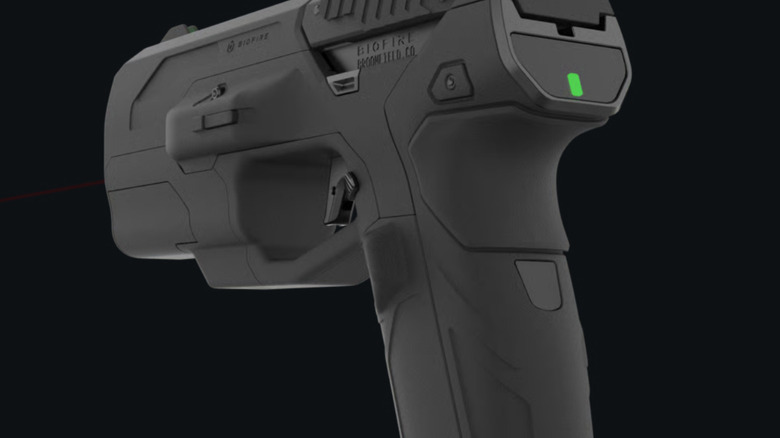
In the 2012 Bond movie "Skyfall," Q Branch gives its 007 agent a very personalized Walther PPK pistol that only fires when Bond is holding it. The grip of this pistol contains a palm-print reader coded to Bond's unique print. This allows the trigger to be biometrically enabled, which means that when a henchman got hold of the agent's weapon, he was unable to use it, allowing Bond to escape. That cinematic moment plays on a very clever idea: Why should a weapon work for everyone who picks it up when not even our smartphones do?
Today's biometric weapon safety systems are designed with this precise idea in mind. The goal is to keep firearms out of unauthorized hands. One major breakthrough is the Biofire Smart Gun. This 9mm handgun has integrated fingerprint and facial recognition sensors that verify the user's identity before the trigger is unlocked, preventing weapon theft and misuse. That said, face ID for guns might not sound so futuristic and exciting anymore, given that the Marines have robots that carry and fire machine guns. We're getting closer to "The Terminator" than James Bond.
The microchip implant
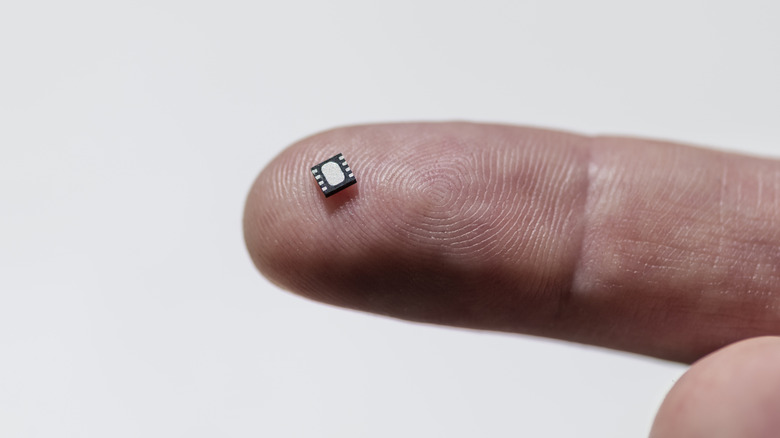
In "Casino Royale," Daniel Craig's James Bond gets a microchip implanted in his forearm that can track his whereabouts through GPS. But this tracking implant also continuously transmits 007's vital signs back to MI6, and this proves crucial when Bond almost dies due to poisoning. The agency was able to monitor his deteriorating health and guide him to the antidote.
While 007's microchip borders on science fiction, we use similar technology in the real world. However, our microchips today have a very different role. For example, we implant small radio frequency identification microchips (the size of a grain of rice) into our pets and livestock to provide them with unique digital IDs. They reconnect us with lost pets or help track health and movement patterns of animals on farms.
Beyond animal welfare, implantable chips are shaping modern neuromedical science. Companies like Neuralink are developing brain-computer interfaces that can be implanted into humans to translate neurological activity into digital commands. This helps patients with paralysis control computers and prosthetics with thought alone. Scientists have even showcased bionic legs that plug directly into a patient's brain. From Bond's life-saving microchip tracker to pet IDs and now implants that connect minds with machines, microchip technology has truly developed beyond what we see in 007's world.