

5 Places You Can't Legally Fly A Drone In The US
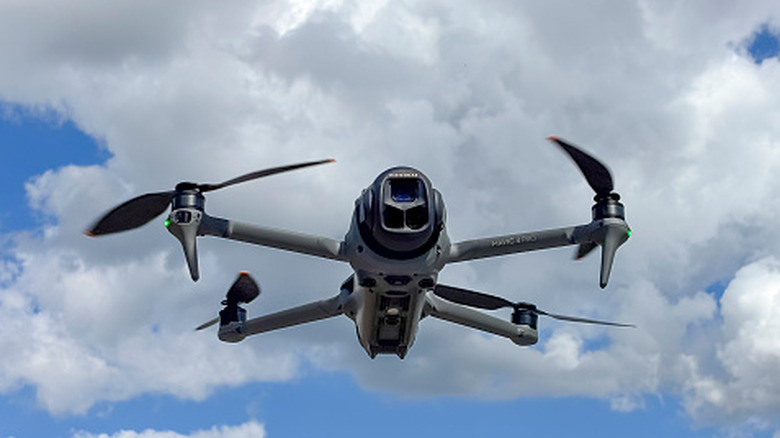
Drone piloting can be fun and enriching, whether you've got a cheap, reliable drone you just fly as a hobby or a 4K camera drone for professional photography. However, drone piloting is heavily regulated in the United States, as a drone in the wrong place at the wrong time could have disastrous consequences. This is why there are several locales and situations where running a drone is illegal, such as near airports, over stadiums, and within restricted airspace.
While drones may be small in comparison to other aircraft, their presence can prove dangerous for a variety of reasons, like getting in the way of larger aircraft, falling onto a pedestrian from above, or hindering emergency response efforts. Anyone who is interested in becoming a drone pilot, whether for personal or professional reasons, is obligated to learn the various no-fly zones, and make sure to stay away from them. These rules are set by the Federal Aviation Administration (FAA), and violations could constitute heavy fines and even jail time.
Near an airport
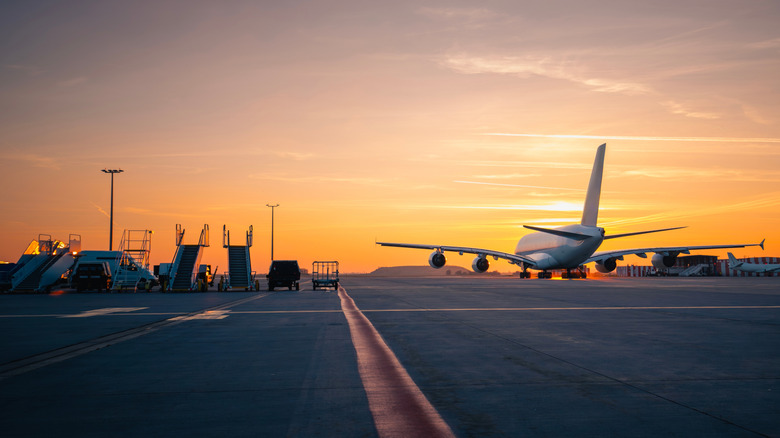
One of the first responsibilities you learn as a drone pilot is to give other forms of aircraft, especially commercial, a very wide berth. Because they are so small, it's difficult for a large airplane to differentiate a drone from other planes and avoid crossing paths, which could result in dangerous collisions. It's for this reason that airports are one of the primary no-fly zones for drone operators.
Most airports are considered controlled airspace by necessity, as tower operators need to know who's flying where in order to keep everyone safe. Operating a drone within this airspace is forbidden outright, and even operating near that space requires an official authorization, which usually comes with altitude restrictions.
Technically, there are locations that aren't considered controlled airspace, like a remote or private airport. You are allowed to operate a drone near these areas without prior authorization. However, you must stay below 400 feet at all times, and it's on you to be aware of incoming air traffic and yield the right of way. You can identify controlled airspace on the FAA's B4UFLY service if you're not sure.
Over stadiums or sporting events
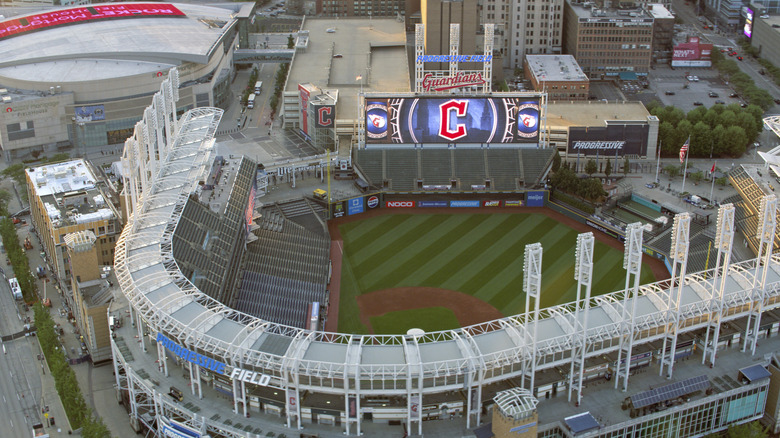
It might sound fun to fly a drone over your favorite sporting event for a bird's-eye view, but unfortunately, this is prohibited. After all, if you were operating a drone over a baseball game and it got knocked out of the sky by a foul ball, the drone could fall onto the field and interrupt the game in the best case, or fall on someone and injure them in the worst case. According to the FAA, drone operation is prohibited in and around stadiums from one hour before a sporting event begins until one hour after it ends.
Specifically, you can't fly over a Major League baseball game, an NFL game, an NCAA Division One football game, or NASCAR Sprint Cup, Indy Car, and Champ Series racing events. The FAA utilizes the Sporting Event Automated Monitoring System, or "SEAMS," to provide live data on active sports-based no-fly zones. SEAMS can tell you when the no-fly zone of a nearby sporting event will be enacted.
Around emergency or rescue operations
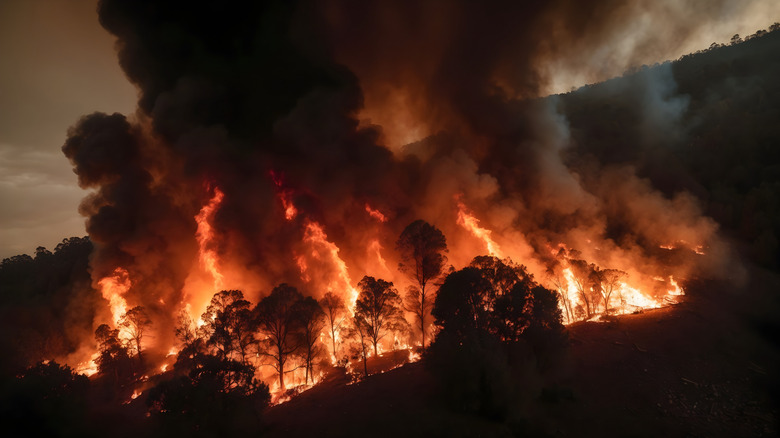
During an emergency situation like a wildfire or hurricane, it's vital that response crews have uncontested control over local airspace for firefighting and civilian rescue. Just one drone buzzing around overhead could stall these operations, and even a single wasted second could spell the difference between life and death for emergency crews and endangered civilians. Whenever there's a hazardous situation, the FAA will establish a Temporary Flight Restriction (TFR) over the affected area.
Even commercial planes can't fly through a TFR, so it goes without saying that drone operation is strictly prohibited. If a TFR hasn't been officially established, any and all drone pilots are still obligated to stay far away from disaster response efforts. The FAA takes this extremely seriously; anyone who interferes with active disaster response efforts, intentionally or otherwise, could be subject to a civil penalty of up to $20,000, as well as up to 12 months in prison.
In restricted or special-use airspace
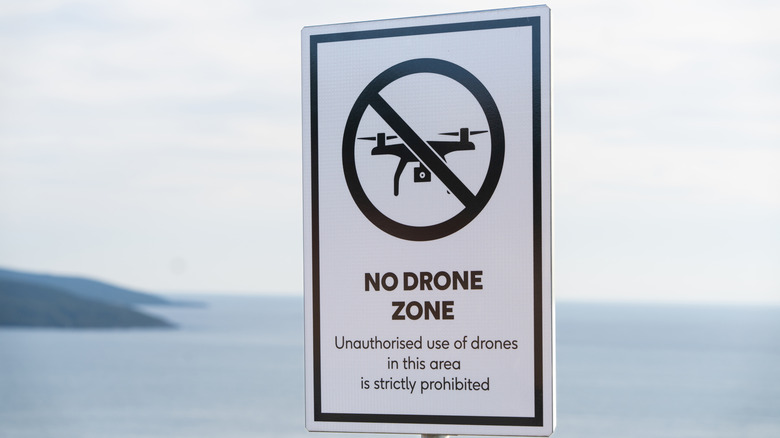
There are a number of reasons drone operation could be limited within a particular airspace. While there are the obvious instances like federally-controlled airspace above airports, sometimes, local governments may establish No Drone Zones out of concern for public safety. No Drone Zones can be established by state, local, territorial, or tribal government agencies.
These areas are usually denoted on the ground by distinctive signs, which are provided to local agencies by the FAA. Technically, only take-off and landing are prohibited within No Drone Zones; you can still fly through them, but you'll have to land somewhere else. An airspace can also have restricted or limited drone operation permissions, usually established by the FAA.
In prohibited airspace, for example, no aircraft of any kind, drones included, can be operated without express permission from whatever agency owns the airspace. In restricted or special-use airspace, some degree of drone operation may be permitted, but subjected to strict rules and regulations to keep different kinds of aircraft and activities safely segregated.
Within Washington, D.C.
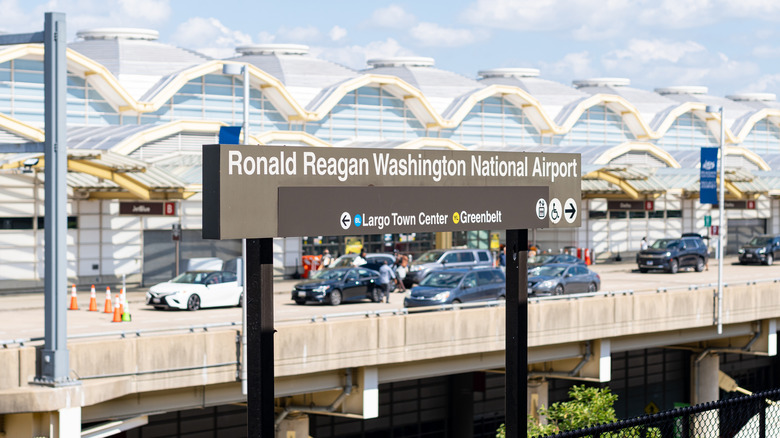
The most heavily regulated airspace in the United States is located above the nation's capital of Washington, D.C. This area is officially known as the National Capital Region. It's governed by an FAA-managed Special Flight Rules Area (SFRA), originally established following the 9/11 attacks as national defense airspace.
The precise radius of the SFRA is 30 miles from the Ronald Reagan Washington National Airport, and its rules are explained by the FAA in an official Notice to Airmen. Rather than a single, all-encompassing radius, the SFRA actually consists of two "rings" of influence, a 15-mile inner ring and a 30-mile outer ring. Within the inner ring, any and all aircraft operation, including piloting a drone, is prohibited by the FAA without prior authorization.
If you're located within the outer ring, 15-30 miles from center point, you are allowed to operate a drone for recreational purposes. However, your drone must be officially registered, and you have to keep it below an altitude of 400 feet and in clear view at all times, as well as avoid any and all other aircraft. You can get permission to operate a commercial drone within the SFRA under the Part 107 rules set by the FAA.