

The Future Of Pain Relief May Come From Wearable Tech - Here's How
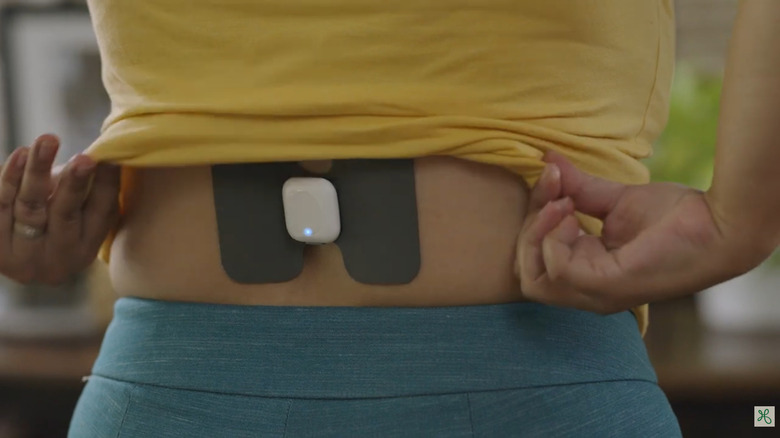
Living with chronic pain can be debilitating. Routine medications are common in pain management, but they often come with their own side effects. Opioid addiction is a significant public health concern that Netflix covered in "Painkiller," a limited series from 2023. But the future of pain relief doesn't just lie in opioids. It might also involve wearable tech.
Wearable health technology is slated to revolutionize the future of pain relief by using machine learning algorithms and electrical impulses to manage pain. Such devices aren't just designed for chronic pain sufferers, though. They can also relieve frustrating everyday aches and pains that impact mobility and quality of life. Wearable health tech can be placed on the body as needed, although alternatives in the form of surgical implants may be less bulky and easier to use for some patients.
Pills, therapy, and continuous doctor visits can be overwhelming and depressing for those dealing with chronic pain. In contrast, innovations in wearable health tech could change the entire landscape of pain relief. Research into these types of devices has already demonstrated positive effects for patients.
Two examples of wearable health tech for pain management

Enso, a wearable pain-relieving device by Hinge Health, targets both joint and muscle pain. It's a small, square device that sticks to the body using an adhesive-style backing, but it can easily be removed and reapplied. Enso works by sending electrical impulses to the area it's been applied to, and users can control the intensity of those signals through the Hinge Health app. This type of device is known as a transcutaneous electrical nerve stimulator (TENS). You can safely wear Enso for extended periods, and you can also use it in conjunction with expert therapy services available on the Hinge Health app. It might even stimulate your body's endorphins, which can also support pain relief.
Another promising device is the ultrasound-induced wireless implantable (UIWI) stimulator developed by the Zhou Lab at USC Viterbi's Alfred E. Mann Department of Biomedical Engineering. It's a flexible band that classifies pain by intensity based on brain signals, which it achieves using an AI algorithm. The device then stimulates the spinal cord with a pulse to help block pain. Researchers at the Zhou Lab are looking to evolve this tech to allow for less invasive implantation or to enable external application entirely. While scientists may have developed a nano-drug painkiller that could help combat the opioid crisis, wearable health tech envisions a future that de-emphasizes pill use altogether.
Why wearable health tech is important

Wearable health tech offers a novel way to manage pain without the side effects and addiction potential of pills. Even basic over-the-counter medicine, such as ibuprofen, can worsen patient outcomes. One 2022 study published in The Clinical Journal of Pain, Long-term Use of Wearable Health Technology by Chronic Pain Patients, assessed the benefits of such devices. The researchers followed hundreds of patients across a year to determine the effectiveness of wearable tech for pain relief. Their study revealed that wearable tech "may positively impact depression and prescribed medication," specifically morphine, in chronic pain sufferers. Although these results were not statistically different from those seen in control groups, those who used wearable health tech "demonstrated a willingness to do so for extended periods of time."
In a clinical trial conducted by Enso, the company found that its users experienced a 54.7% decrease in pain after four weeks of use. Study participants also reported improved mobility and walking speed. According to a Nature editorial, wearable health technology is "already beginning to influence clinical practice." Advances in flexible materials, sensors, and AI enable wearable devices to help manage chronic conditions outside the doctor's office. However, data security and accessibility challenges have yet to be overcome at scale.
Short of research on wearable tech accurately predicting pain flare-ups, current research into the applications of these innovations remains scarce. This is partly due to limited data integration, limited data quality, and other technical challenges. Further research into the effectiveness of wearable tech will provide a more complete picture of its potential benefits. For now, these developments inspire hope that opioids may someday take a back seat to wearable health tech as a go-to pain management solution.