

2025 Was One Of The Warmest Years To Date And It's Only Getting Worse

Recent climate data from early 2026 showed that 2025 was one of the three hottest years on record. According to data from The World Meteorological Organization, "the past three years, 2023–2025, are the three warmest years in all eight datasets" and from that data, it also shows that the consolidated average from those three years came out to be 1.48 degrees Celsius (2.664 degrees Fahrenheit) with an included uncertainty of ± 0.13 degrees Celsius (0.234 degrees Fahrenheit) above the pre-industrial era. That's rather worrying because that means global warming is accelerating faster than it otherwise should, and it is becoming harder to predict by current climate models.
As many experts already point out from the published data, the planet continues to warm up, and it doesn't look like it will stop anytime soon. For one, ocean warming continues, likely thanks to all the greenhouse gas accumulation in the atmosphere. For two, natural climate phenomena are also at work, like the El Niño–Southern Oscillation. In 2025, La Niña conditions were responsible for cooling in the tropics, though in a case like this, La Niña wasn't enough to offset the overall heat problem.
No matter the reason, persistent heat just isn't healthy. It lowers the quality of life and it can catalyze erratic weather, leading to natural disasters. A good real-world example is wildfires. Last year an increase in wildfires across Europe was observed, which worsened air quality for those affected while destroying homes and forests. Overall, the year 2025 was shockingly hot, and if trends continue, it will only get worse.
Why does it keep getting so warm?
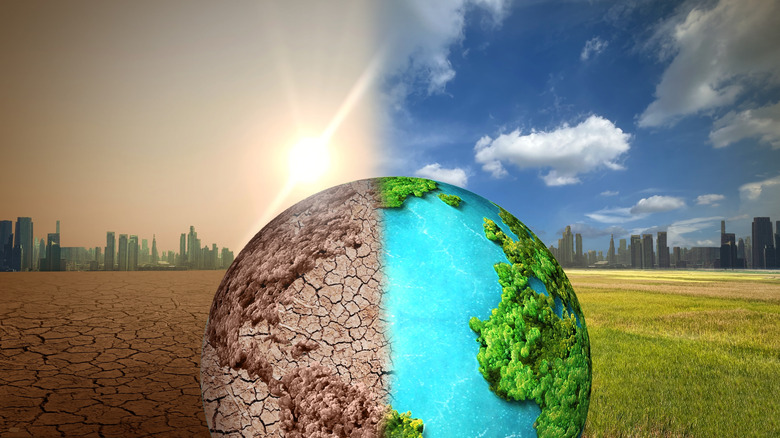
The elephant in the room that doesn't always get directly addressed is global warming. Global warming is the long-term increase in Earth's average surface temperature. It sometimes gets confused with climate change, which refers to long-term changes in the climate that are easier to observe.
For example, when unexpected winds pick up or natural disasters occur, that's a result of climate change. Global warming is one of the leading causes of climate change. It's primarily caused by human activity. Humans burn a lot of fossil fuels for energy which are used for electricity, transportation, and other industrial processes. They are especially common for gas in vehicles, making alternatives to replacing petroleum a bit of a challenge (cleaner fuel is harder to scale compared to fossil fuels).
The problem with fossil fuels is that burning them releases greenhouse gases (especially carbon dioxide). Greenhouse gases form a thick blanket in the lower atmosphere. That blanket traps heat that would otherwise escape into space. You see this effect with oceans. Oceans become heated because they reabsorb the trapped heat that can't escape and the 2025 heat records showed that seas and oceans experienced a temperature rise. Though this is a major reason global warming keeps happening, it isn't the only potential cause.
What other factors led to 2025's temperature changes?
Other factors can also influence the global temperature. One is solar activity. The solar maximum occurred in 2025, meaning the sun reached its peak activity. When this happens, the sun releases more energy, radiation, and solar particles. In other words, the sun got even hotter and more active than usual, but not in a way that changes climate; instead, it causes satellite interference and grid disruptions, which also require fuel and maintenance to repair (burning more fossil fuels). Moreover, higher radiation can lead to increased heating of the atmosphere.
Another speculated reason is water vapor from the 2022 Hunga Tonga–Hunga Ha'apai underwater eruption, which contributed to the greenhouse gas effect in the stratosphere, resulting in an overall cooling effect in the Southern Hemisphere. But the water vapor persisted, despite this event happening years earlier. Scientists speculate that "extra stratospheric water vapor will continue to influence both stratospheric chemistry and dynamics for several more years," continuing to play a role in climate change.
Finally, international regulations were made to reduce sulfur dioxide emissions, which may be another reason 2025 was so warm. While it does help keep air quality cleaner, the SO2 aerosols acted as a reflective, artificial "sunshade."
Why is this trend a warning for the future?

Despite some cooling factors like La Niña, 2025 was still one of the warmest years to date. The data also shows, based on 2023, 2024, and now 2025, that this isn't just a linear growth for heat, it's a rapid acceleration (the average between all three years exceeded the 1.5 degrees Celsius threshold).
The ongoing heat is also impacting natural environments that are designed to keep things cool and healthy; you can observe this with the change in sea ice levels, coral bleaching, as well as the general environmental changes that stabilize carbon emissions. But to fix the problem, global carbon emissions need to start slowing down. Thankfully, it isn't all that grim; in a more recent report, it at least shows that China is about to lead a charge with their investment in renewable energy. Renewable energy is a step in the right direction, helping to reduce our dependency on fossil fuels.
The year 2025 shows that change does need to happen, since too much heat is not good for human health and it hurts the environment. If the trend continues, global warming will continue to rapidly accelerate, bringing unnatural and destructive climate change to everyone.