

The Saddest Movie Of All Time, According To Science
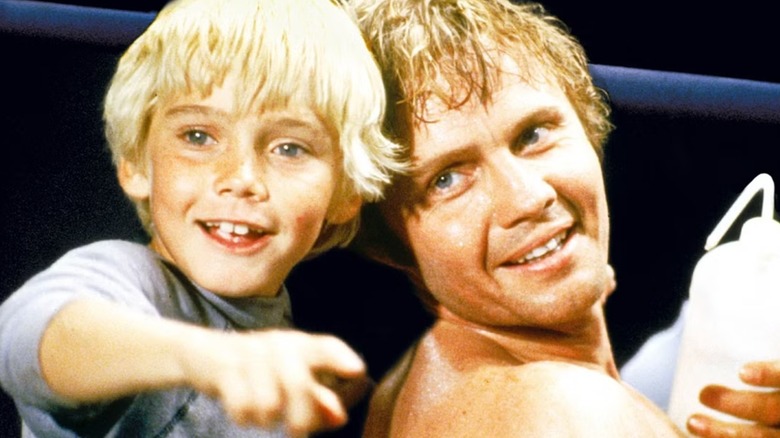
It's an art to get audiences teary-eyed. A good film might squeeze out a few tears, but some of the greatest movies of all time can leave us ugly-crying in the theater, rushing to compose ourselves before the lights come back on. Whether it's watching Emma Thompson have a silent sob to herself in "Love Actually," or seeing Arnold Schwarzenegger's flaming thumb descend in "Terminator 2: Judgment Day" (we know we're not the only ones), some films have left us a mess. However, after careful review and presumably a truckload of tissues, one movie has been verified through scientific study to leave us unable to see the credits due to the volume of tears that are pouring down.
In 1988, a series of studies was conducted by Robert Levenson, a psychology professor at the University of California, Berkeley, and his graduate student, James Gross. Together, they gathered movie recommendations and, more importantly, specific clips from those films that reliably triggered emotional responses in a lab setting. The investigation spanned years, with Levenson reviewing 250 films and clips before trimming the list down to 78 finalists. Leading the charge thanks to its heart-wrenching death scene, however, was the 1979 movie, "The Champ" starring Jon Voight.
The Champ even topped Bambi as the go-to movie to get the waterworks going
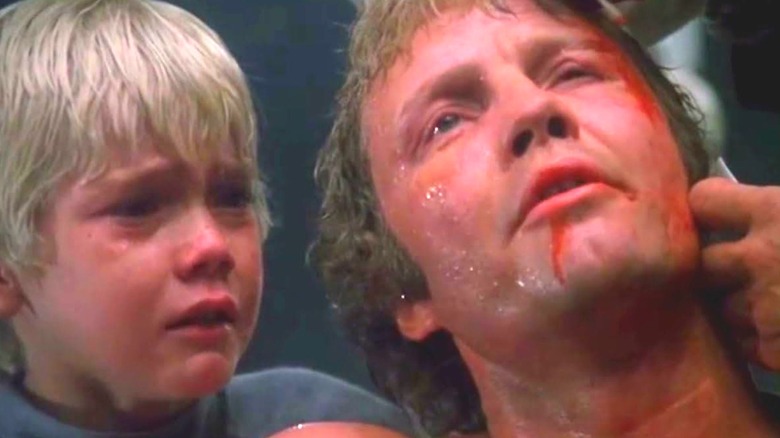
Though their study began in 1988, it was only in 1995 that Gross and Levenson published their findings, which revealed that Franco Zeffirelli's father-and-son story was a go-to option to get their subjects welling up. The underdog boxing story that was released shortly after Sylvester Stallone's "Rocky" arrived on the scene was a remake of a 1931 film in which Billy Flynn (Voight) gets back in the ring in order to support his son. Sadly, things don't go well and the film ends with Flynn being severely beaten in a fight while T.J. (Ricky Schroder) begs his father to get back up. The almost three-minute clip sparked large amounts of sadness among subjects, edging ahead of even Bambi crying for his mother in Disney's 1942 animated movie.
The reaction from "The Champ" proved to be so solid that other researchers resorted to using the aforementioned sequence for their own experiments, leading to Gross and Levenson's work being cited in more than 300 articles. Everything from studies on sleep deprivation to the amount of puffs smokers took during sessions went a few rounds with "The Champ," proving that if you want a good cry, there really is only one film you need to sit through. Just be warned that once you've seen it, you'll never be able to unsee it.