

Ferrari Just Invented One Of The Most Clever F1 Car Features Ever
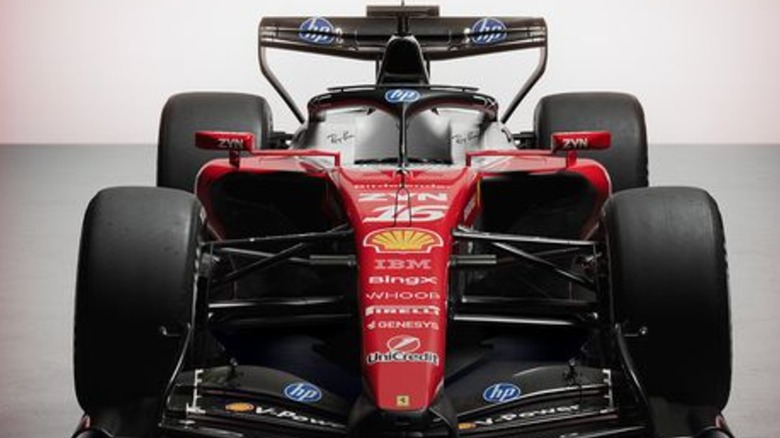
Formula 1 (F1) cars are immediately recognizable thanks to their unique designs, which are intended to make them speed past even the fastest (and most expensive) commercially available supercars. F1 cars are all long and low to the ground with a single seat in their open cockpits and "wings" in the front and back. However, advancing technology and ever-changing regulations lead to many new features that alter how the cars look and perform. One of the latest examples is the rotating rear wing on Ferrari's SF-26.
The official F1 YouTube page has posted a video of Lewis Hamilton driving the SF-26 during a 2026 preseason training session in Bahrain. In the video, you can clearly see the vehicle's upper rear wing flip a full 180 and become "upside-down." According to F1's technical analyst, Sam Collins, this feature helps generate lift and reduce drag, not unlike an aircraft's wing. Theoretically, this design should make the SF-26 go even faster on straightaways and overtake the competition at 220 mph or more. And when the car needs to manage turns, the rear wing rotates back into the standard orientation so the driver doesn't figuratively (or literally) fly off the track.
Ferrari is obeying the letter of the law, not necessarily the spirit
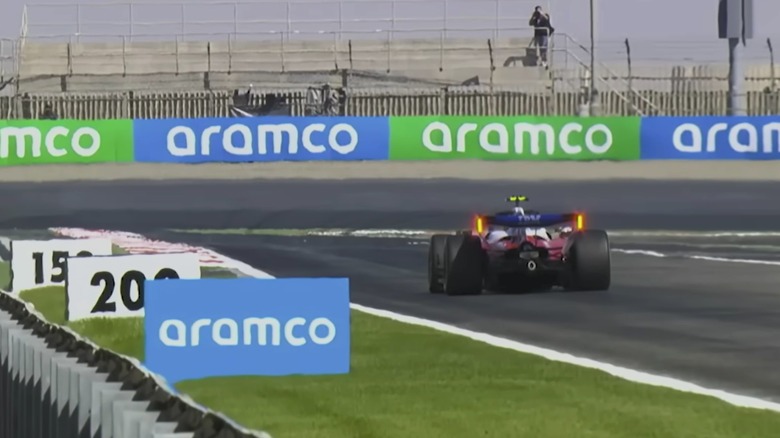
In the video, Sam Collins claims Ferrari is the first F1 participant to use such a novel mechanism, which raises the question of why nobody tried before. The answer lies in new regulations. In January of 2026, the F1 website posted a primer on the latest regulations and how they affect car aerodynamics. One of the key points is the new moveable "active aero" elements in the front wings. When deployed, they decrease drag and downforce, and when closed, they increase drag and downforce. However, as Collins pointed out, the regulations don't "specify that the wing has to be mounted the right way up when the active aero is deployed." Ferrari is merely exploiting a loophole in the regulations' wording to minimize drag as much as possible, as constantly as possible.
While Ferrari came up with a mechanism that can turn the upper rear wing upside down and back again on the fly, the company didn't come up with the idea of using an upside-down wing to reduce drag. According to Collins, a Formula 3000 team tried mounting a rear wing plane upside down during a race in Monza. The idea was the same: Reduce as much drag as possible. The car didn't win, but it put on a good show. However, the body in charge of the races banned this practice, and nobody has tried it until today due to F1's new regulations.
Only time will tell if more teams install rotating rear wings on their own cars or if Ferrari adds them to upcoming commercial vehicles like the Ferrari Luce.