

Keanu Reeves And Robert Downey Jr.'s Animated Sci-Fi Movie Was Way Ahead Of Its Time
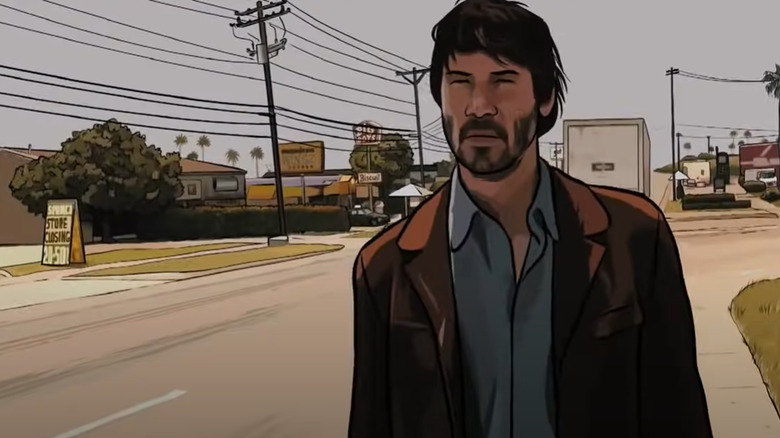
Richard Linklater's box office flop "A Scanner Darkly" was surely a strange sci-fi film to come out in 2006. Then again, the writer-director often tends to make movies that come with either an unusual idea or some intriguing concept designed to lure the viewer in. Think of the "Before Trilogy" that he shot with 9-year intervals, reflecting on the time that has passed through his recurring main characters, or "Boyhood," which he filmed over almost 12 years to deliver the ultimate coming-of-age flick that tracks the evolution and change of a young boy from age 6 to 18 in real time.
"A Scanner Darkly," based on a Phillip K. Dick novel (just like this underrated series starring A-listers), marked his first venture into science fiction and his second into adult animation. Starring Keanu Reeves, Robert Downey Jr., Winona Ryder, and Woody Harrelson, the film was initially shot digitally as live-action and later converted into animation by using the interpolated rotoscope technique, which Linklater first implemented in his 2001 feature, "Waking Life."
The plot follows a utopian world in the near future where America's war on drugs was lost, and the highly addictive drug called Substance D runs rampant among the population. Bob Arctor (Reeves) is an undercover government agent and narcotics officer who attempts to infiltrate a small group of addicts by becoming one of them. However, his use of D significantly alters his brain and causes him to develop a split personality. The film essentially depicts his mental and emotional unravelling while undercover in a totalitarian society.
A Scanner Darkly was probably too obscure and weird for the mid-aughts
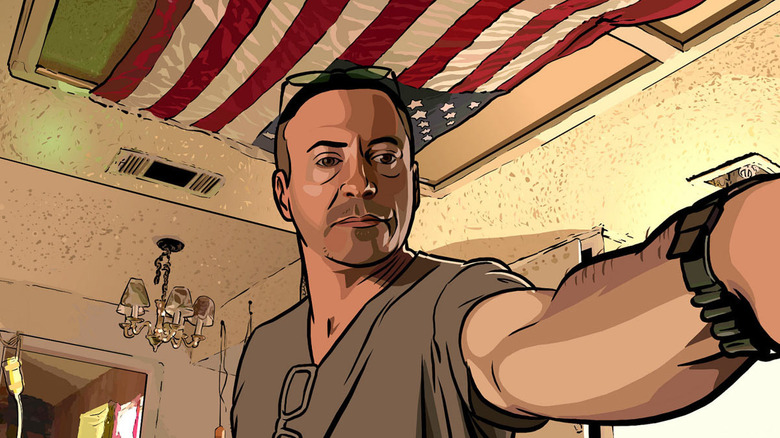
Whether it was Phillip K. Dick's trippy and paranoid vision of a dark future, the peculiarity and newness of the animation style that hadn't really been seen in other mainstream movies back then, or the somewhat convoluted script that Linklater at times felt lost in, "A Scanner Darkly's" landing in cinemas was far from smooth. Made on a low budget of $8.7 million, the feature ended up making only $7.6 million worldwide (via Box Office Mojo), unable to cover even its production costs.
Like most audiences at the time, critics were similarly divided by it upon release, although they praised the movie's singular style and faithful approach to the source material (it currently holds a 68% rating on Rotten Tomatoes). However, the years have been good to Linklater's flick, and it slowly developed a cult following, now regarded as a true gem of the aughts with a certainly unique visual flair. Given the direction the US (and the whole world in general, to be honest) has gone in since 2006, it's hardly a surprise that such a thought-provoking, paranoia-laden, and condemning vision of society has gained new appreciation by now — for better or worse.