

5 Historic US Missions To Space That Weren't NASA
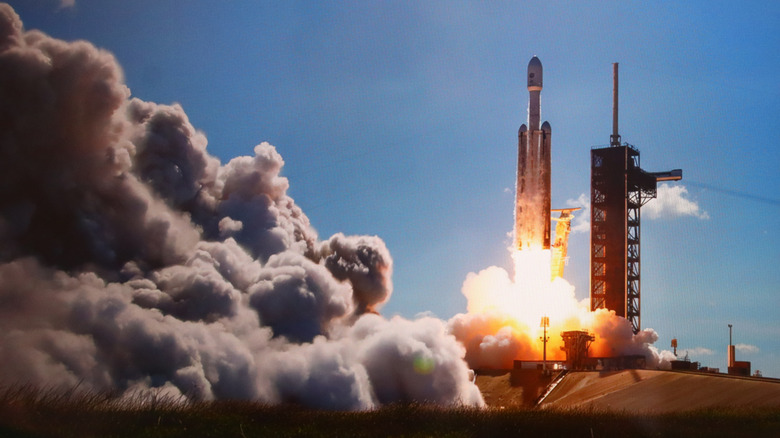
When you think about space exploration, cool rockets, astronauts in bulky white suits, and grand, government-funded NASA space missions to the moon and beyond likely come to mind. Yet beneath those familiar visuals lies another story, one in which U.S. space ventures operate entirely without NASA in the driver's seat. We're talking about secretive military trials like the X-37B Orbital Test Vehicle, the commercial fleets of Earth-imaging CubeSats, suborbital thrill rides, and even asteroid mining tech demos. Such bold acts are reaching orbit and beyond under their own banners.
These missions don't ride on NASA's coattails. They're independent projects that deploy novel technologies, serve new markets, and reshape what "going to space" means. As the landscape of space broadens beyond the government's reach, it's time to put some standout U.S. missions into the spotlight. These historic missions managed to sidestep the famous space agency entirely. In doing so, they hinted at the future of space: operated by private enterprise, military innovation, and infrastructure systems, rather than the established astronaut-agency model.
X-37B Orbital Test Vehicle - U.S. Space Force (2010 - present)
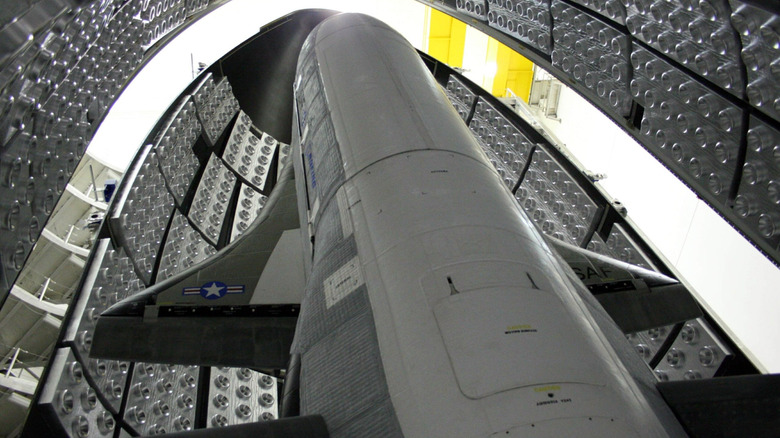
The X-37B Orbital Test Vehicle of the U.S. Space Force is among the most technologically advanced space planes ever launched in the U.S. This test vehicle and its mission are operated entirely outside of NASA's control. The X-37B was built by Boeing, and it flew for the first time in 2010 as a reusable spaceplane without a crew. The vehicle is something between a satellite and a spacecraft. It's capable of orbiting the Earth for a very long time before it needs to land. The missions X-37B is sent on are typically classified, so we don't know much about its performance. However, each flight is another step towards achieving reusable space technology.
The latest mission, designated OTV-7, was launched on December 28, 2023, and the spacecraft returned on March 7, 2025, after spending more than 434 days in orbit. During that time, it tested the radiation effects of advanced materials and space technologies. The spacecraft also demonstrated cutting-edge aerobraking maneuvers used to alter its orbit with minimal fuel. A service module was added to the X-37B for its 6th mission, allowing the vehicle to expand its role, which now includes a laboratory for science experiments.
Global Positioning System (GPS) - U.S. Space Force (1978 - Present)
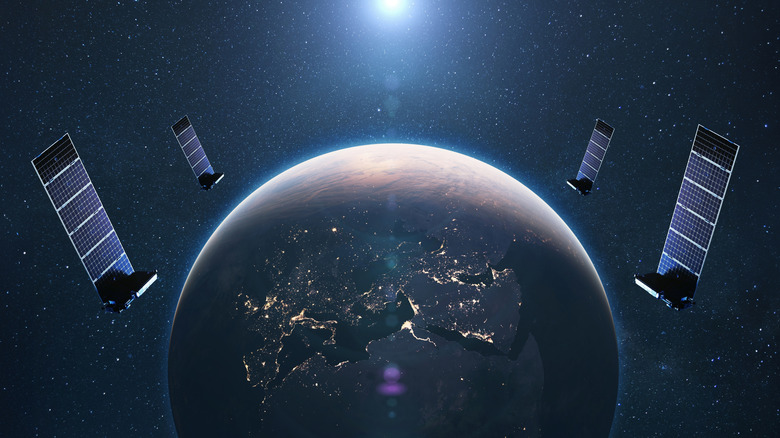
The Global Positioning System, better known as GPS, is one of the most revolutionary technologies we have ever created. That said, most people have no idea that NASA had nothing to do with it. GPS was developed and is still operated by the U.S. Department of Defense, now falling under the United States Space Force. This project was started in the 1970s as a military navigation network designed to provide precise location and timing data anywhere on Earth. A GPS cluster of satellites orbits at roughly 12,550 km, maintaining a baseline of at least 24 operational spacecraft. However, more than 30 are typically active at any given time. This way, our entire planet can be covered.
GPS reached its full capability in April 1995, after a decade of development and testing. It's considered the backbone of modern navigation. The current generation of satellites, known as GPS III, delivers strong signals, has enhanced resistance to jamming, and should have a longer lifespan. These updates proved to be critical not only for military operations but also for civilian use. GPS may have started as a defense project, but we all rely on it on a daily basis. GPS is used with everything from personal smartphones and aircraft navigation to banking systems and power grid synchronization.
Dove Constellation - Planet Labs (2013 - present)
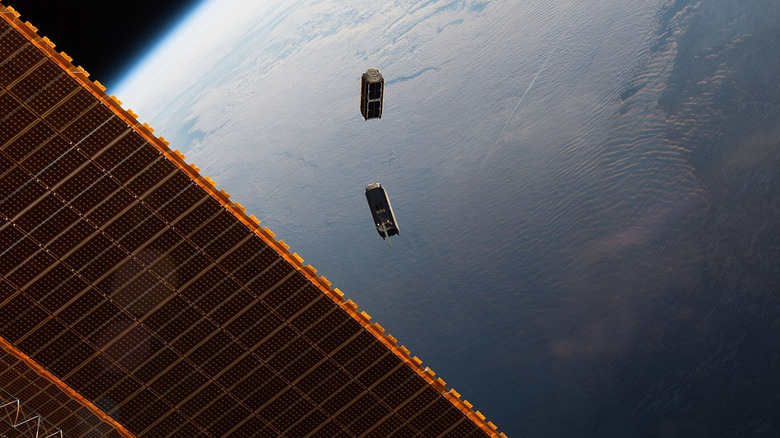
A group of former NASA engineers decided to start a private company, and by 2010, Planet Labs was founded. The company uses its Dove satellites, which are a small fleet of shoebox-sized CubeSats that capture daily images of nearly every point of Earth's landmass. Each satellite is capable of producing imagery with a resolution of about three to five meters per pixel. That's enough detail to monitor crops, forests, cities, and coastlines in almost real time. The result is a living, continuously updated portrait of our planet.
Dove satellites are orbiting at altitudes between 280 and 360 miles, with each cluster of satellites orbiting at different altitudes. They're launched in large batches, with a record of 88 launched at the same time. However, Planet Labs doesn't have its own launch system, so it relies on commercial rockets for the launch. The complete independence from NASA or any other government agency makes Planet Labs stand out. All the spacecraft designs and mission operations are run entirely in-house.
New Shepard - Blue Origin (2015-present)
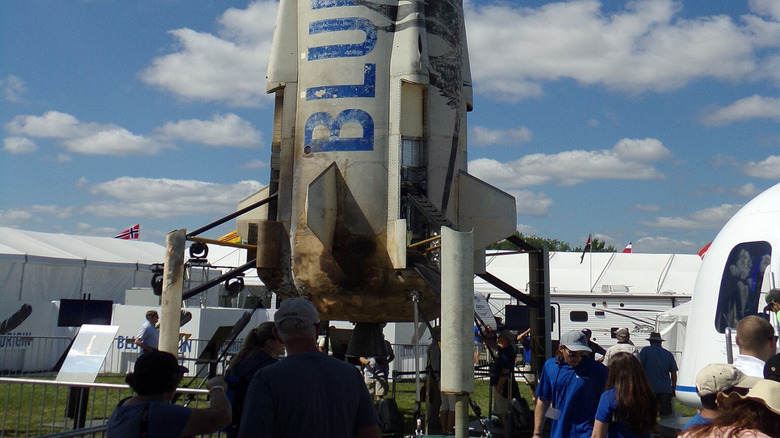
New Shepard is the reusable suborbital launch system developed and operated by Blue Origin, the commercial company founded by Amazon's Jeff Bezos. The system has carried paying passengers and research payloads to the boundary with space (known as the Kármán line), in a vertical-launch, entirely without NASA's involvement. Each flight lasts about 10 minutes, allowing passengers to experience weightlessness and sweeping views of Earth before the capsule returns safely by parachute to the West Texas desert.
In a recent milestone mission designated NS-36, Blue Origin announced the completion of its 15th human flight and 36th overall launch. As of October 2025, the program has flown 86 people into space. Beyond its commercial tourism appeal, New Shepard also carries research payloads for universities and various startups, providing valuable microgravity data for science and technology development.
New Shepard is all about commercial human spaceflight in the United States. It illustrates how private companies are leading missions once reserved for federal agencies, pushing the boundaries of accessibility, reusability, and cost efficiency. This program is the beginning of a privately driven era of space exploration, where reaching space is no longer the exclusive domain of governments.
Arkyd-6 - Planetary Resources (2018)
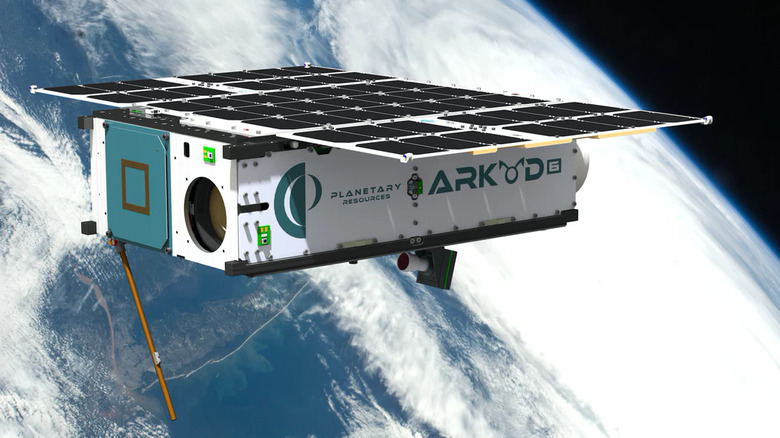
Arkyd-6 was a small 6U CubeSat built and operated by Planetary Resources, a private U.S. company with an ambitious goal to pioneer asteroid mining. Launched on January 12, 2018, aboard India's PSLV-C40 rocket, the satellite served as a tech demo, testing instruments and systems designed to locate valuable resources such as water and minerals on asteroids that are relatively close to home. Among its 17 onboard experiments, the most important was a mid-wave infrared (MWIR) imager, built to detect water vapor and other volatiles.
The mission operated successfully in low Earth orbit, establishing two-way communication with ground control and testing all systems. Planetary Resources' dream of mining asteroids hasn't materialized yet, and in October 2018, the company was acquired by blockchain firm ConsenSys. The Arkyd-6 mission proved that a small, privately funded satellite could perform sophisticated missions on a shoestring budget. While the spacecraft's journey was short, its legacy endures as one of the earliest real steps towards commercial resource exploitation beyond Earth.