

How Long Do OLED TVs Actually Last? Here's What Experts Say
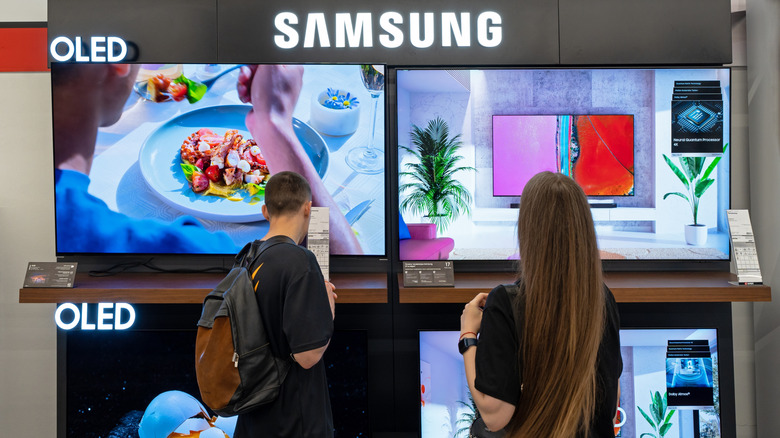
The technology of TVs continues to change rapidly, with new screen formats and better and better quality visuals, so the question of how long your TV will last still remains important. OLED TV screens are among the best in visual quality, thanks to rich colors, deep, inky blacks, and vibrant visuals that are truly impressive. However, OLED-style panels do have some reasons why they may not last quite as long as other types of screens like LCD.
There are other factors that contribute to your TV's longevity that aren't just about the display. To ensure your TV lasts, it's best to consider a brand that has a solid track record for durability, as well as a model that isn't known for failure. This isn't a guarantee, of course, but some TV models have anecdotal evidence of higher failure rates. It's also important to be wary of the burn-in effect with OLED panels, which can be triggered by leaving them on with the same image for long periods of time. As you factor these two variables in, you'll be able to get a sense for how long your specific TV lasts.
OLED screens and burn in
Chances are prospective buyers are worried about the dreaded burn-in effect for your high-end OLED panel. What is burn-in? In simple terms, this phenomenon describes OLED panels' tendencies to show lingering artifacts from images that have been left on the screen, uninterrupted, for a long time. OLED stands for "organic, light-emitting diodes," which essentially means that each pixel has its own light. Therefore, if one of these pixels is forced to stay illuminated at the same exact brightness and color for too long, it could cause this state to linger, thus "freezing" an image on a screen.
Many reviewers maintain that today's OLED screens are much more resistant to burn-in than previous models. Take the review site RTINGs, for example, as they ran a recent test of modern TVs where they left these screens on for thousands of hours on peak brightness. Their findings are mixed on what type of content causes burn-in most: Broadly, the risk shows up most prominently in content that features static visual elements such as news chyrons or video game UI. That said, these tests were run for thousands of hours over a condensed period of time; the average consumer's "thousand hours" will likely be spread over years of use.
So what is the takeaway from tests like these? In general, OLED screens do have a tendency to "burn in" when pushed to extremes, largely due to the pixel diodes losing lighting capabilities over time. For heavy TV watchers, it's important to activate any of the TV's pixel-saving functions (accessed through the TV's settings menus) in order for the TV to last for years.
Other ways a TV can fail
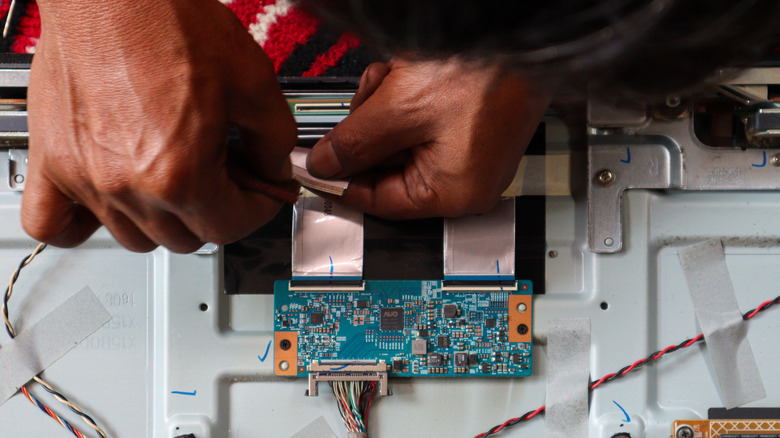
While the OLED burn-in factor is one of the most talked-about failure points, there are a lot of ways a modern OLED TV can fail. While these TVs don't have backlight arrays like LCD panels, it is possible that the OLED panel itself could short or fail, causing dead zones or artifacts.
Then there's all the other stuff inside TVs; from power-delivering circuit boards that run the actual energy needed for the full device, to "main" control boards that feature a smart TV's computer processor, which delivers instructions to all the components. In speaking with Geek Squad representatives, we confirmed that TVs that fail often do so due to a failure in one of these two boards.
Overall, TVs tend to come with a one or two-year warranty depending on the manufacturer, so it's a safe assumption that a TV's components will last at least that long. Consumer Reports did find that, in 2019, "20 percent of Hisense and Vizio TVs will experience a problem in the first five years." Samsung TVs have also received a lot of anecdotal user evidence of failure within a few years as well. With possible volatility at play, if having a working TV for a set period of time is important to you, it might be good to grab a retailer's protection plan, with many offering up to five years of coverage.