

Microsoft Discontinued One Of Its Only Useful Smartphone Apps After Only 4 Years

Just a few months after Microsoft announced it would discontinue Publisher, one of its oldest Office applications, the company revealed it will stop supporting its Microsoft Lists mobile app. The tech giant first detailed the move in June 2025 with a banner inside the app. Since then, the mobile version of Lists has been slowly phased out every month, culminating in its removal from app stores in November 2025.
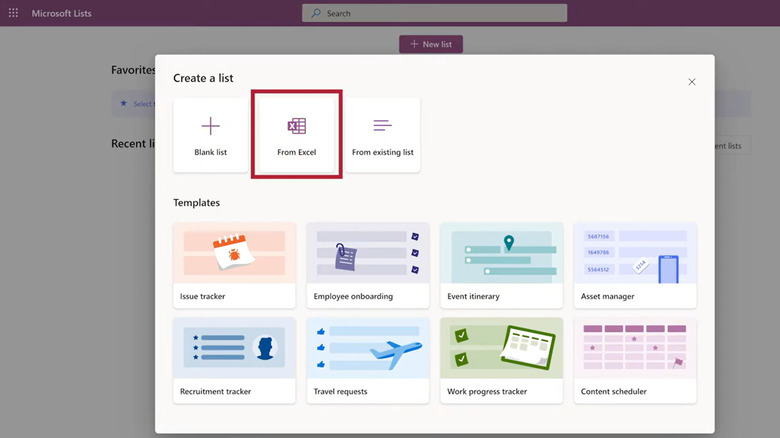
Since its introduction in 2020, Lists has been one of several Microsoft 365 products catered towards enterprise customers. Microsoft markets Lists as a one-stop shop for business professionals to create, share, and track a variety of workflows across organizations. The product features templates ranging from event itineraries and onboarding checklists to detailed issue trackers, and Microsoft views Lists as a do-it-all information tracking application. Lists has garnered a following amongst project managers, who treat it as an evolution of SharePoint Lists due to its integrated functionalities within the company's 365 suite of software, including Outlook and Teams. Lists' mobile application, in particular, was a useful tool for operating on the go, although it lacked some of the key functionalities of the desktop offering.
To Microsoft's credit, Lists will continue to be accessible through both its desktop application and mobile web browsers. To access Lists on a mobile browser, users need to visit their team's SharePoint site and find the app in the top-left menu. Luckily, users will not need to take any extra steps to migrate their information away from their mobile application.
Why is Lists gone and what to do next?
While Microsoft has yet to announce why it discontinued Lists, the move fits within a broader company trend of consolidating its software offerings. From unceremoniously ending Windows 10 in October 2025 to discontinuing the Microsoft Store's support for its Office applications, the tech giant has spent the last few months systematically condensing its applications. The reasoning behind many of these moves makes sense: Instead of developing and supporting multiple versions of the same application, Microsoft will now only focus on the most efficient versions. Another key example is Microsoft's shuttering of video-conferencing application Skype in favor of its in-house Teams software. It's unclear if this logic applies to the Lists mobile app, but the reasoning makes sense.
While the discontinuation of the Lists app can be a thorn for some managers, companies have several alternatives at their disposal. For one thing, users can follow Microsoft's prescription and stick with the company's web browser version of the software. This route is particularly appealing if a company depends on other Microsoft 365 products. However, if a team is willing to move outside the Microsoft sphere of influence, several options are strong alternatives. One such application is Airtable, which reinvented the data management space when it was released in 2012. Other popular tools include Asana, Jotform Tables, and Zoho.