

What's The Difference Between Wi-Fi And Wireless Internet?
It's pretty common that people mix up Wi-Fi and wireless internet because they both feel like the same thing. However, Wi-Fi and wireless internet are two different technologies. Wireless internet means cellular networks like 3G, 4G, and 5G, with each "G" referring to better stability and higher speed. Devices connect to the internet through these networks, and you can hop on them anywhere your device gets a connection as long as you have a cellular data plan.
Wi-Fi is a local network technology. It takes an existing internet connection (like fiber, cable, or the aforementioned cellular wireless internet) and broadcasts it wirelessly around your house or office through a router. According to Interbrand (via Quartz), Wi-Fi was a term invented by marketers because the actual name — IEEE 802.11 — wouldn't fit on the sticker. People asked about what Wi-Fi stood for, and the answer they got was "wireless fidelity," but this was a complete invention meant to carry on the ruse that Wi-Fi was a real name.
The easiest way to picture this is to think of your internet service as like the water supply coming into your house. Wi-Fi is the plumbing that distributes that water to different rooms. Mobile data is the expensive bottled water you buy when traveling. Each of these serves specific purposes, but are at their core different technologies.
Wi-Fi distributes internet in a limited space
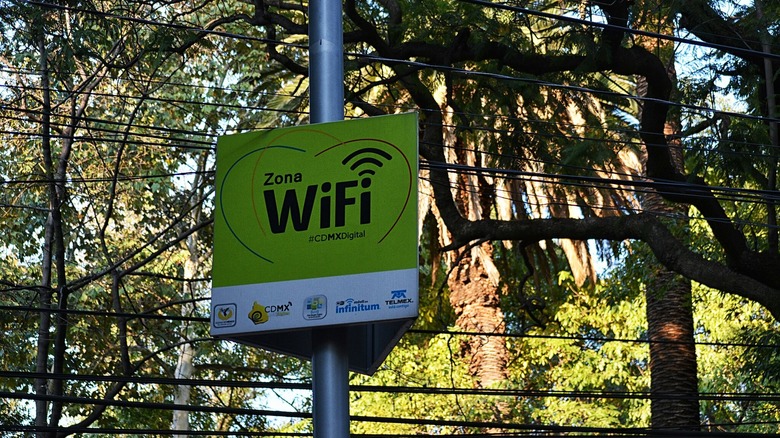
Wi-Fi needs two things to function: A direct internet connection from an ISP (usually cable, fiber, or some other broadband connection), and a router which broadcasts the signal to all nearby Wi-Fi capable devices. The coverage distance isn't massive, topping out at around 150 feet (46 meters) indoors and up to 300 feet (90 meters) outdoors. Wi-Fi is faster than cellular data within that range, which is why even people with unlimited data plans switch to Wi-Fi at home. It's just more reliable, and it costs a lot less.
The IEEE notes that Wi-Fi first appeared in 1997. Engineers figured out they could transmit data wirelessly in the 2.4 GHz spectrum, which didn't require licensing at the time. Today, Wi-Fi uses both 2.4 GHz and 5 GHz bands, and it's an open standard, meaning anyone can run a Wi-Fi access point.
What's more, routers don't need a SIM card, since they're only concerned with distributing data across connected devices. It's also why you can have a Wi-Fi connection to your router and still get the pesky, "no internet" icon.
Wireless internet connects you everywhere
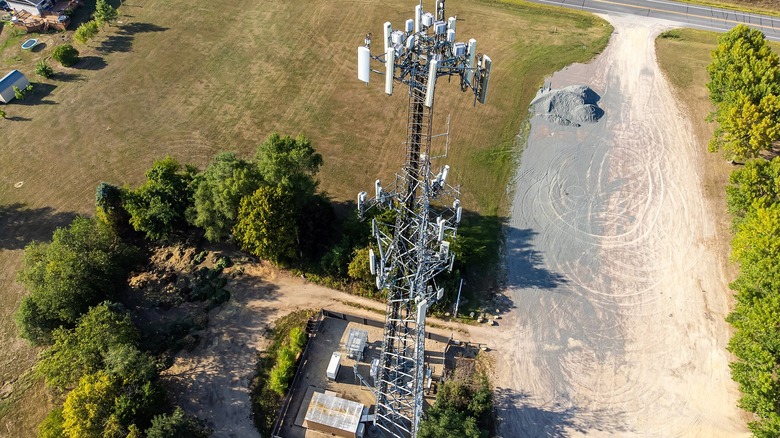
When you leave your Wi-Fi coverage zone is when your mobile device switches to wireless internet. This internet is distributed through cell towers spread across a massive area. A single cell tower can cover as much as 25 miles (40 kilometers) in rural areas, but the coverage distance varies based on obstacles. The system works by dividing up the land area into "cells," each with its own tower transmitting and receiving signals. Your mobile device connects to the tower and sends and receives data from it, without needing a router.
Wireless internet needs a SIM card from your carrier and a cellular data plan. If you have coverage, you're connected. You can even share that connection through tethering or Bluetooth. Additionally, wireless internet is typically more expensive than Wi-Fi. Data caps and monthly cellular fees add up fast, especially if you're traveling and receive international roaming charges. It's also a lot more portable than Wi-Fi, since it can be used almost anywhere your phone has a signal. Unfortunately, it is less stable than Wi-Fi, since its operation and speed depend on your proximity to the tower.
The best thing is that your phone switches between these connections automatically, meaning you don't really need to worry too much about which one you're using when.