

Why Did Most Cars Switch To Electronic Parking Brakes?
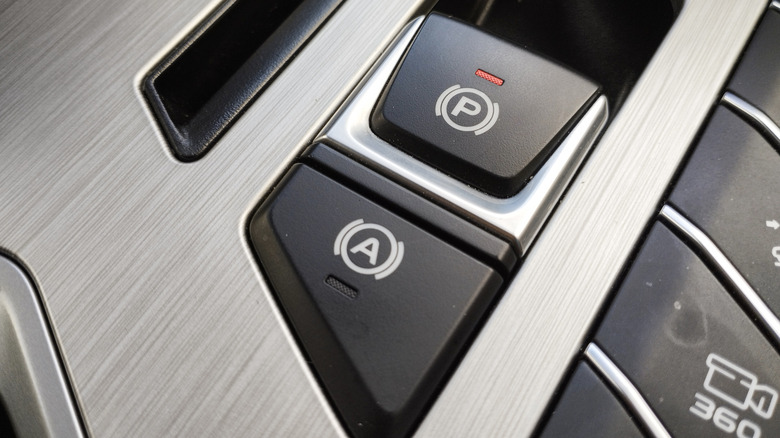
Where the previous norm for most cars was to have a large manual parking brake jutting out of the center console next to the driver's seat, many modern vehicles are instead equipped with electronic parking brakes, or EPBs for short. These discrete electronic switches have a much smaller profile than their cable-powered counterparts, and take substantially less effort on the driver's part to operate. There are a variety of factors that have influenced the mass-adoption of this framework by the automotive industry, but by far, one of the most important is the size of EPB switches and their ease of installation.
Traditional hand brakes, while fun for making wild turns in an empty parking lot, do take up a lot of a car's internal real estate, both in terms of presence in the cabin and its inner workings. The switch to EPBs has given automakers a much greater degree of freedom when it comes to designing new cars, as well as introduced convenient features for drivers — like automatic parking brake engagement and disengagement.
EPBs are easier for automakers to design around
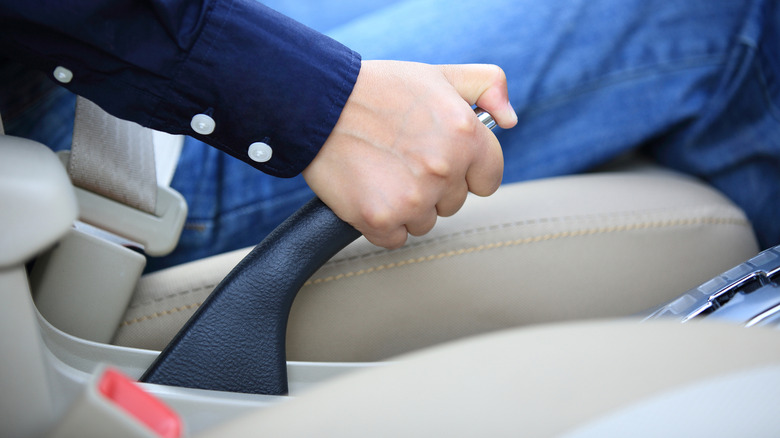
A lever-style hand brake is operated via a series of cables, independent of the existing hydraulics that power your regular brakes. When you engage the emergency brake lever, these cables forcefully press braking shoes into a set of drum brakes, or disc brake pads directly into the wheels' rotors. It's an effective means of physical braking, but it's annoying from a design perspective, largely because the car's interior and layout need to accommodate both a series of braking cables and the large hand brake itself.
Because an EPB engages brakes via an electronic motor rather than hydraulic cables, it requires far less consideration in the car's design. You can put an EPB switch just about anywhere on the console or dashboard, which frees up space for other switches or gauges. Additionally, an EPB's digital nature allows it to tie in directly to a car's onboard system, which manifests as consumer-friendly features like automatic parking brake engagement and disengagement. In short, automakers like EPBs because they're easier to design around and provide features that make their vehicles more attractive to potential buyers. It's rather telling that all of the top-rated EVs use this framework instead of traditional hand brakes.