

Over Half A Million Windows Users Are Switching To Linux - Here's Why
Windows 10 is on its last legs: The predecessor to Windows 11 has already reached its official end of support in October 2025, and will continue to limp along with free Extended Security Updates (ESU) until October 13th, 2026 (paid ESU lasts until 2028). In other words, Microsoft is looking to responsibly end support for Windows 10 as soon as it can, despite the fact that Windows 10 was supposed to be "the last version of Windows" ever made.
Clearly, this has not held true. Microsoft has also made it difficult to move old hardware to Windows 11, thanks to its rigid TPM 2.0 security chip requirement, which many older desktops and laptops lack. This has left quite a few Windows 10 users without an upgrade path to Microsoft's latest OS on their hardware, and Linux is picking up the slack, with distros like Zorin showing the numbers to prove it.
Microsoft's loss is Linux's gain
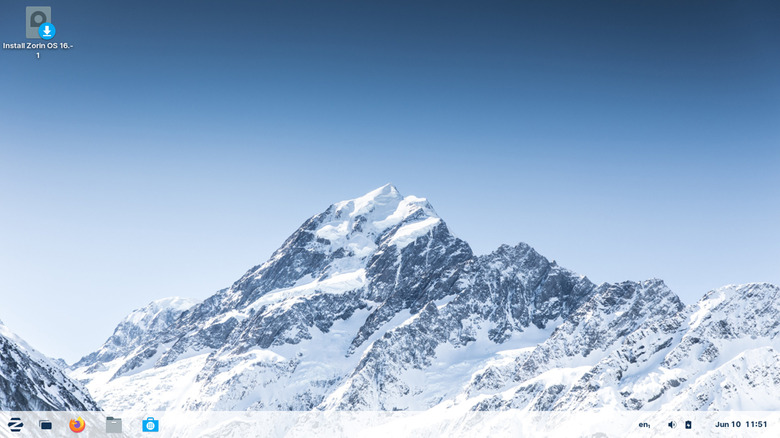
Among the many Linux distributions, from Fedora to Ubuntu, Zorin (based on Ubuntu) very much aims to be a replacement for Windows, and has been for many, many years. From its Windows 11-like taskbar to its very familiar-looking start menu, Zorin is built to make the transition from Windows to Linux as painless as possible.
In a world where many Windows 10 users are looking to jump ship to an OS that respects their privacy, not to mention their hardware (no matter its age), Zorin is likely one of the first distros a Linux-curious Windows user will look at. Given that Zorin has already crossed a million downloads, with 78% of those on Windows machines, one can assume that a good portion of those are users who have permanently switched from Microsoft to Linux. It would appear that the year of the mainstream Linux desktop may be upon us, and poetically, it's Microsoft's doing.
Some users argue that Microsoft limited Windows 11 by requiring TPM 2.0 to make more hardware sales, rather than for user safety. Sure, the security benefits of TPM, like Secure Boot, are good for preventing malicious software from loading at startup. However, when the choice is to either replace your perfectly functioning hardware so you can run Windows 11, or switch to a Linux distro; for many, the choice was seemingly pretty easy. This is especially true when no OS is truly secure to begin with.
Thank Valve for improving gaming on Linux machines

Thanks to Valve's push with the Steam Deck, a handheld gaming device that runs on Linux rather than Windows, Linux has become that much more viable. Not only has GPU driver support come a long way, thanks to Valve's push into Linux gaming (just look at AMD as a perfect example), but even AAA games like "Cyberpunk 2077" and "Baldur's Gate 3" have been developed with the Steam Deck and Linux in mind. Gaming on Linux is now that much more comparable to gaming on Windows, rounding out the OS as a full-time alternative. No longer can one claim there is a lack of games on Linux to hold them back from switching.
This is all thanks to WINE, a Windows emulator Valve forked into Proton, which is the meat of how Windows games run so well on Linux. Of course, WINE has its own usefulness, especially in distros like Zorin that aim to close the gap between Linux and Windows. So, for the same reason games work so well on Linux these days, it's also why you can run many of your favorite Windows apps directly in Linux. Zorin even takes this to the extreme with a user-friendly app called "Windows App Support" that can easily install .exe or .msi files as if they are native applications.
Web apps have closed the gap
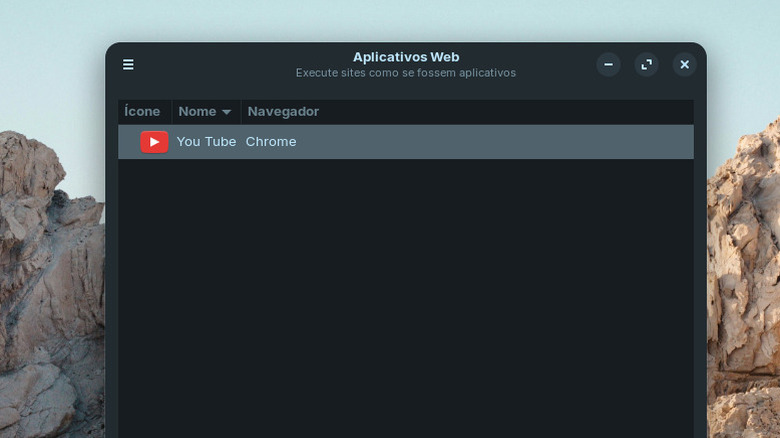
Linux distros like Zorin have grown exponentially in popularity by targeting Windows users, and web apps have easily filled the gaps where native and WINE apps fall short. Linux is famous for not offering native applications like Photoshop, which comes down to Adobe refusing to make a Linux version, likely thanks to its low user count. The same goes for apps like Microsoft Office. The good news is that a lot of these job-dependent applications now offer web apps, which is why distros like Zorin include the ability to install progressive web apps out of the box, rather than relying on Chrome's built-in functionality.
This way, you can run Zorin, which looks a lot like Windows, and add apps like Microsoft Office, Google Drive, Grammarly, and any other online services as a web app. That's the beauty of Linux (thanks to a feature from ChromeOS, which is built on top of Linux), rather than a corporation and its software controlling you. You instead control the OS, from what apps it uses, to what games it can play, all while mimicking a familiar user interface.
At the end of the day, it's easy to see why so many Windows users are checking out Linux distros like Zorin. When the choice is between spending a bunch of money to replace perfectly functional hardware, or simply moving to a new OS, many will opt for the latter. Now that Linux has finally caught up to the big boys in terms of drivers, games, and apps, there is little reason not to make the switch.