

OnePlus 15R Review: An Amazing Battery At A Lower Price
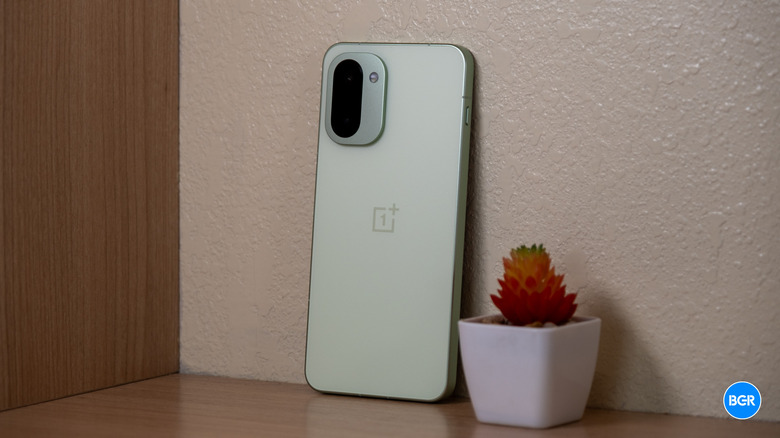
The OnePlus 15R launch may come a few weeks after the standard OnePlus 15, but the strategy of the "R" phone remains the same: deliver similar performance and quality at a lower price point. As usual, OnePlus has cut some corners and made some compromises to hit that lower price point, but at $200 less than the standard OnePlus 15, it could have a lot going for it.
Meanwhile, the OnePlus 15 has carved out a clear position as a flagship contender in nearly every category except perhaps the camera. So, what else does the OnePlus 15R strip back in order to hit the $700 price point? And should you just pony up an extra $100 for a device like the Samsung Galaxy S25?
Design
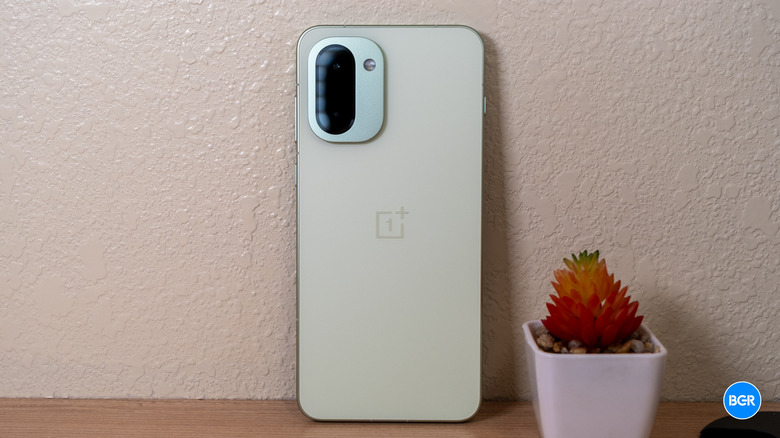
The OnePlus 15R is clearly a relative of the standard OnePlus 15, offering a largely similar design. In fact, apart from colors, the only real design difference is the smaller camera module — but it still follows the same overall design language of the camera module in its more expensive sibling.
The other difference, of course, is in the color selection. The OnePlus 15R comes in two colors — Charcoal Black and Mint Breeze. I'm reviewing the Mint Breeze, and I quite like it — it's kind of a light green. Both have a frosted glass back that feels premium and does a decent job at keeping fingerprints away. The look is minimalistic — just the OnePlus logo and camera module on the rear, nothing more.
OnePlus has matched the flagship 15's durability ratings here, which is very impressive for a phone at this price (or, frankly, at any price). The 15R carries IP66, IP68, IP69, and IP69K certifications — better protection than you'll find on almost any other smartphone. That means the phone can handle high-pressure water jets, dust, and submersion. Basically, if the OnePlus 15R gets wet under normal circumstances (not things like deep sea diving), it'll survive just fine.
The design follows the flat-edge trend that's become ubiquitous in smartphones, though OnePlus has added subtle curves along the edges to make it more comfortable during extended use. The camera module sits in the now-standard top-left position on the back, protruding slightly from the body.
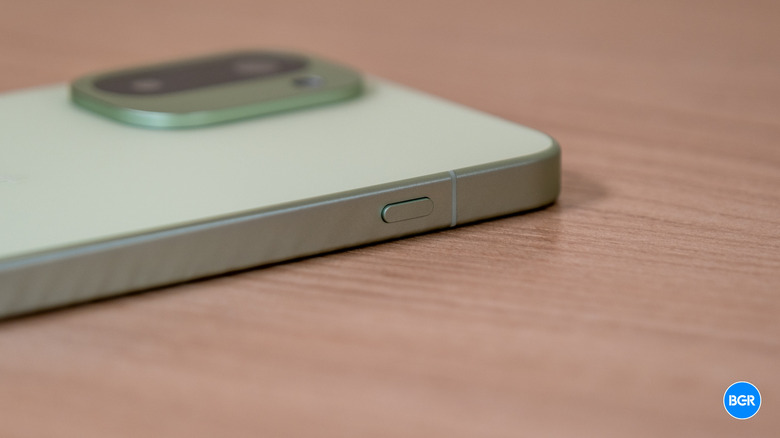
One major addition is the "Plus Key" on the left edge, mirroring the OnePlus 15's implementation, and replacing the ringer switch. This customizable button is designed mainly for OnePlus's Mind Space feature but can also be configured to launch the camera, toggle the flashlight, and a handful of other functions. That said, "customizable" oversells it — it's nowhere near as powerful as the iPhone's Action Button, which can connect to Siri Shortcuts for basically infinite possibilities. You can't even set the Plus Key to open an app of your choosing.
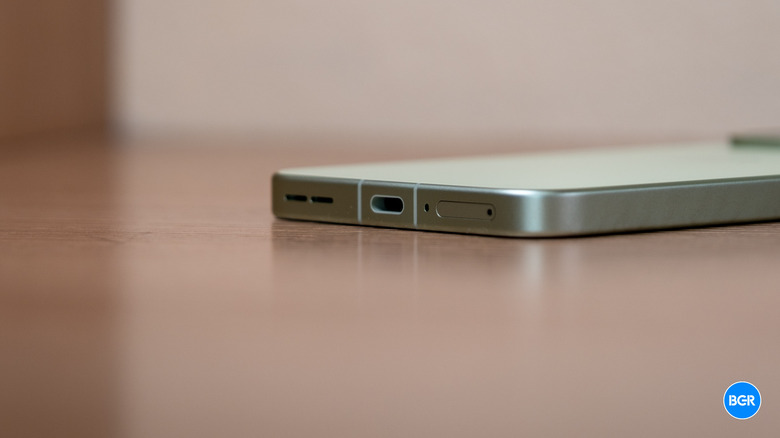
Everything else is standard fare: USB-C port on the bottom, power button and volume rocker on the right edge. The front glass is Corning Gorilla Glass 7i, which isn't Corning's top offering but still provides reasonable scratch and drop resistance. Overall, it's a stylish, well-built phone that doesn't scream "budget" in any way.
Display
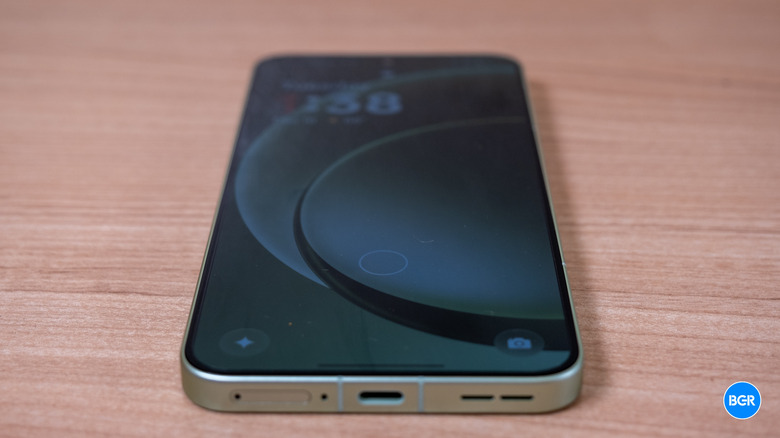
The OnePlus 15R has a 6.83-inch AMOLED display with a resolution of 2800 x 1272, working out to 450 pixels per inch. Text is crisp, images are detailed, and there's nothing to complain about in terms of sharpness.
The headline feature here is the 165Hz refresh rate, which is exceptional for a phone in this price range. Even the most expensive flagships typically top out at 120Hz. That said, whether this matters to you is another question entirely. When we shifted from 60Hz to 90Hz, I could tell a big difference. I can also tell the difference between 90Hz and 120Hz. But if you gave me one phone with a 120Hz refresh rate and another with 165Hz, I'm not sure I could tell you which is which. Maybe you're a gamer who cares deeply about that extra smoothness, but that's not me.
Peak brightness reaches 1,800 nits, making outdoor viewing in direct sunlight perfectly manageable. On the other end, minimum brightness drops to just 1 nit with Reduce White Point activated, so late-night scrolling won't burn your retinas. OnePlus has also included a custom Touch Response Chip that the company claims enables touch detection at 3200Hz. I couldn't perceive any difference in responsiveness, but it certainly didn't hurt. Regardless of the marketing extras, the screen simply looks great — bright, responsive, and easy on the eyes.
Performance
Under the hood, the OnePlus 15R runs on the Snapdragon 8 Gen 5 processor — not to be confused with the Snapdragon 8 Elite Gen 5 found in higher-end devices. It's still a high-end chip, just not the absolute top of Qualcomm's lineup. It's paired with 12GB of RAM.
In daily use, the OnePlus 15R handled everything I threw at it without breaking a sweat. Apps launched quickly, multitasking was smooth, and mobile gaming ran beautifully. I genuinely couldn't notice a difference in real-world performance compared to phones with the highest-end processors. You might notice the gap years from now as the phone ages and software demands increase, but that's speculative. For anything you're likely to do with a smartphone in 2025, this phone is more than capable.
It performed pretty well in benchmarks too. It achieved a Geekbench single-core score of 2,862 and a multi-core score of 9,554. These numbers don't quite match phones running the Snapdragon 8 Elite Gen 5, particularly in single-core performance where that chip pulls ahead. Still, benchmarks only tell part of the story, and again, the phone performed well in daily use.
Battery and charging
Battery life is where the OnePlus 15R shines. The 7,400mAh cell is the largest consumer smartphone battery in North America (according to OnePlus), edging out even the OnePlus 15's 7,300mAh pack. OnePlus achieved this using Silicon Nanostack technology, which allows for greater energy density without dramatically increasing the phone's size.
In practice, this translates to multi-day usage without any anxiety. If you charge every night, you'll never come close to seeing a low battery warning. OnePlus claims the battery will retain 80% of its original capacity after four years of use — impossible to verify at this point, but quite good if true.
Wired charging tops out at 55W using the included charger, or up to 80W if you purchase OnePlus' 100W Dual Ports GaN Power Adapter Lite separately. What you won't find here is wireless charging, which is a major omission. It's hugely disappointing that in 2025, phones at this price point (or any price point, really) still ship without wireless charging. I understand that some markets don't rely on wireless charging as heavily, but North American consumers have largely embraced it. Any $700 phone released in this market should include it as standard.
Camera
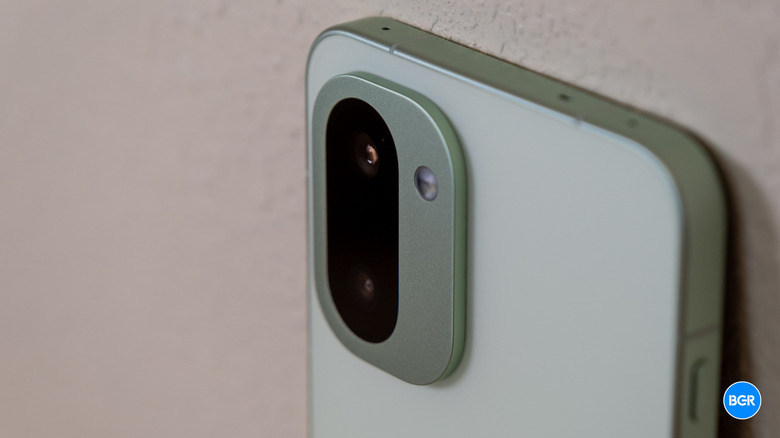
The camera system on the OnePlus 15R is where corners were cut a little — even from the OnePlus 15, which didn't have the best camera system in the first place. The phone features two rear cameras: a 50-megapixel main sensor and an 8-megapixel ultrawide. For a $700 device, this is underwhelming. Some competitors at this price offer triple-camera setups including a telephoto lens, and even those that don't typically include a more capable ultrawide sensor.
That said, the cameras aren't terrible — they just don't compete with the better options available. Photos from the main camera are reasonably bright and vibrant, with decent performance in low-light conditions. The ultrawide camera is fine. It captures usable images when you need a wider field of view, but it's nothing to write home about. Detail drops off a little compared to the main sensor, and low-light performance suffers more significantly.
On the front, there's a 32-megapixel selfie camera that produces pretty good results. Skin tones look natural, and there's enough detail for social media use without aggressive smoothing. If you're primarily concerned with front-facing photography, the 15R delivers adequately, but if camera quality is a priority, competitors like Samsung typically offer superior systems at similar or slightly higher price points.
Software
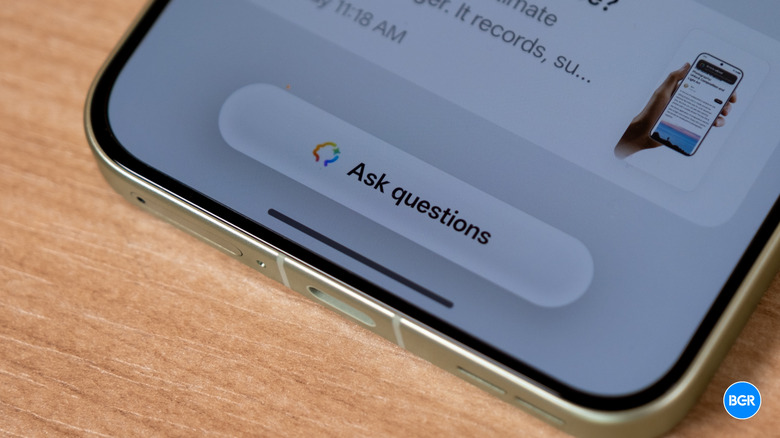
The OnePlus 15R runs OxygenOS based on Android 16, and it's a good implementation of the operating system. The interface is scaled back compared to some manufacturer skins, making navigation straightforward and intuitive. There are some preloaded apps and services, but OnePlus hasn't gone overboard — it's far from the bloatware-heavy experience you might find elsewhere.
AI features, of course, are front and center, headlined by OnePlus's Mind Space. Designed to integrate with the Plus Key button, Mind Space acts as a hub for information like screenshots and voice notes. You can capture content using gestures — three fingers swiping up stores a screenshot, for example — and then search through your collected information later.
Mind Space also integrates with Google's Gemini, which is neat idea. This integration means Gemini automatically has access to the voice notes and screenshots you've stored. If you use Mind Space frequently, having your primary AI assistant be able to access the information stored in it could be a nice addition — though many will prefer to just use Gemini as-is, since it can already access much of your data on your phone.
Even if you have zero interest in AI features, the overall software experience remains solid. OxygenOS stays out of your way, and you can easily ignore Mind Space and its associated features if they don't appeal to you. The phone works perfectly well as a straightforward Android device.
Conclusions
The OnePlus 15R is an excellent phone in some respects and merely adequate in others. The battery life is exceptional — truly best-in-class. Software is clean and functional, performance handles everything current apps and games demand, and the display is bright and smooth. But the camera system is only fine, not great, and the lack of wireless charging is frustrating at this price. If those things don't matter all that much to you and you have $700 to spend on a phone, then the OnePlus 15R is definitely worth considering.
The competition
The $700 price point is awkward for smartphones. Most flagship lineups start at $800, which means spending just $100 more opens up significantly better options. The Samsung Galaxy S25 and Google Pixel 10 both offer triple-camera systems at their base prices, providing a more versatile photography experience than the OnePlus 15R can match. Outside of the Android ecosystem, the iPhone 17 also starts at $799.
If battery life is your primary concern, the OnePlus 15R makes a strong case for itself — unless you're willing to step up to the standard OnePlus 15 at $900, which adds wireless charging and camera improvements while maintaining a similarly massive battery.
Should I buy the OnePlus 15R?
Yes, if you want a phone with exceptional battery life at $700 or less.