

Essential '70s Fantasy Movies Everyone Needs To Watch
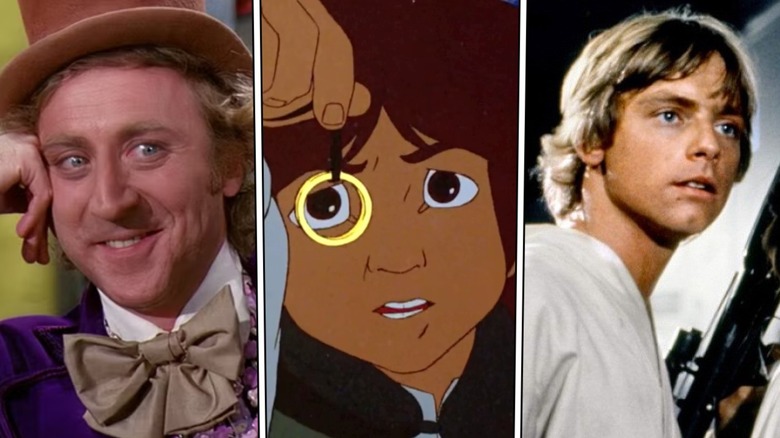
The 1970s were wild, right? The Beatles said "Let It Be" and broke up, Walt Disney World opened its doors, and the world became obsessed with two sticks battling over a game of "Pong." It was almost the stuff of fantasy, and Hollywood was making a dent in it as well. Swords and sorcery, magic and myth, and actors in latex costumes pretending to be creatures from other worlds were more prominent than ever. It was during the 1970s, though, that a select band of fantasy films made their mark in movie history.
While one particular fantasy movie changed the industry forever during this decade (and is included on this list), other daring entries were bursting with imagination. They pushed past the limits of their production budgets in incredibly creative ways. Through the brilliance of animation, detailed set design, and Gene Wilder's almost palpable concern for children's safety, these films became gems to some and cult classics to others. Should you have missed out on this very special era, worry not. Once you watch the best modern fantasy shows, you'll realize they really don't make them as they did in the '70s.
Willy Wonka and the Chocolate Factory
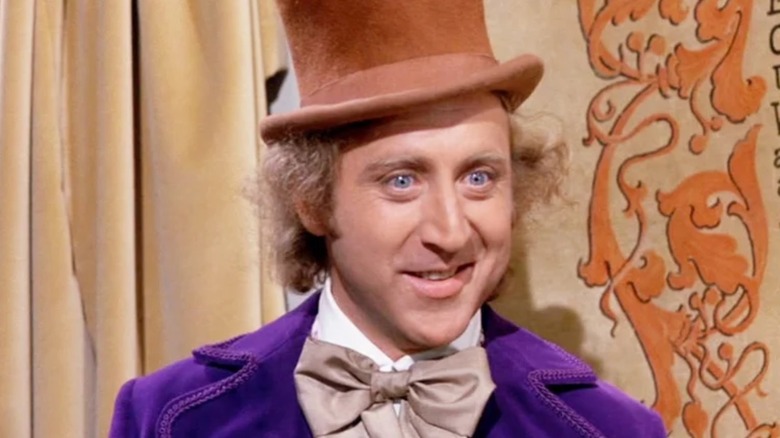
Johnny Depp in "Charlie and the Chocolate Factory" and Timothée Chalamet in "Wonka" might've donned the hat and cane of Roald Dahl's Willy Wonka, but they're not a patch on Gene Wilder's wonderful 1971 portrayal of this sweet-obsessed chocolatier in "Willy Wonka & the Chocolate Factory." The all-singing, all-dancing adaptation of the children's book, directed by Mel Stuart, follows goodhearted Charlie Bucket as he wins the ticket of a lifetime, sending him on a factory tour like no other. Along with a bunch of overly spoiled brats from around the world, Charlie learns what kind of magic goes into every fruit drop, every block of chocolate, and every carefully curated snozzberry (whatever they are).
Even after more than 50 years since its original release, nothing beats that sugary-sweet reveal of Wonka's factory set to the sound of "Pure Imagination," which never gets old and is only elevated by Wilder's brilliantly bonkers take. Legend has it that, before signing on for the role, he insisted on limping into the film, old and frail, only to tumble into what would become a career favorite role. We're so glad he did. Two parts family movie and one part straight-up acid trip (that boat ride is still nightmare fuel), "Willy Wonka and the Chocolate Factory" is an everlasting gobstopper of fun that shows no sign of losing its flavor.
Watership Down
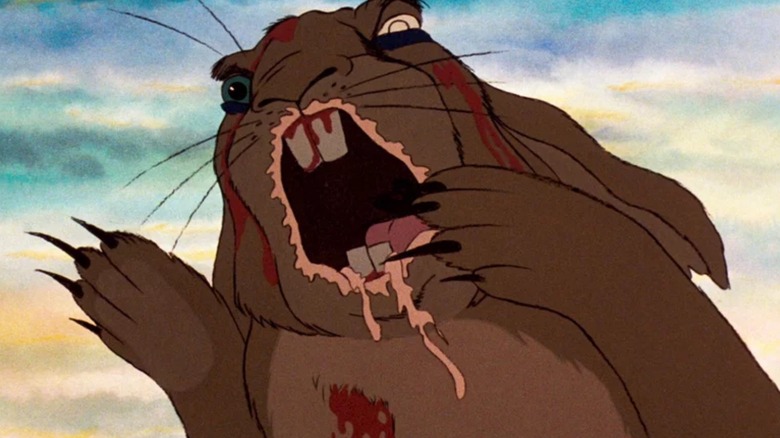
Pixar films might be prone to turning on the waterworks, but some '70s films can still give them a run for their money. "Watership Down" is an adaptation of the 1972 Richard Adams novel of the same name. The British-animated entry, directed by Martin Rosen, follows rabbits Hazel (John Hurt) and Fiver (Richard Briers) as they set out on a new journey to find a new home for their colony after humans (typical) decimate their old one.
Their journey takes them through many dangers, including an enemy group led by the bloodthirsty, absolutely monstrous General Woundwort, voiced by Harry Andrews. It's through this villain and other predators hunting Hazel and Fiver's pals that there's an abundance of red on the screen in an animated film that isn't afraid to get messy. An often bleak but equally beautiful fantasy about hope, heroism, and mysterious visions, the film is also accompanied by Mike Batt's ethereal song, "Bright Eyes," sung by Art Garfunkel, which is synonymous with the story of Black Rabbits and rabbit princes.
The book was adapted into a children's television series in 1999 and again in 2018 on Netflix, featuring a voice cast that included James McAvoy, Ben Kingsley, and John Boyega. Even with that star power, it hasn't left a mark as deep as Rosen's startling and striking take.
Bedknobs and Broomsticks
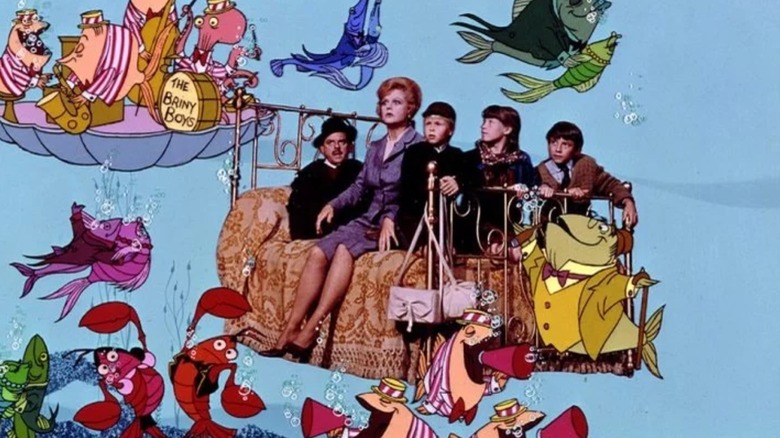
Before Disney had wowed the world in supercalifragilisticexpialidocious fashion with the live-action and animated hybrid "Mary Poppins," the studio had a similar film ready to go. It was "Bedknobs and Broomsticks," released in 1971. Based on the stories "The Magic Bedknob" and "Bonfires and Broomsticks" by Mary Norton, the film follows three young children evacuated during the Blitz in World War II and placed under the care of Miss Eglantine Price (Angela Lansbury). There, they learn that Miss Price is actually a witch in training, hoping to learn magic to help in the war effort.
From there, a magical trip to a faraway land and a battle between Nazis and magical suits of armor make up a charming Disney classic, led by the great pairing of Lansbury and David Tomlinson. While its songs might not be as popular as those from Julie Andrews' semi-animated spectacular, it's still a great fantasy film during a time when the legendary studio was perhaps entering its most adventurous era. At a time when live-action and fantastical characters could share the screen, films like this were leading the charge and doing so wonderfully. It's what has kept "Bedknobs and Broomsticks" a classic fantasy film, always worth a watch.
Star Wars: A New Hope
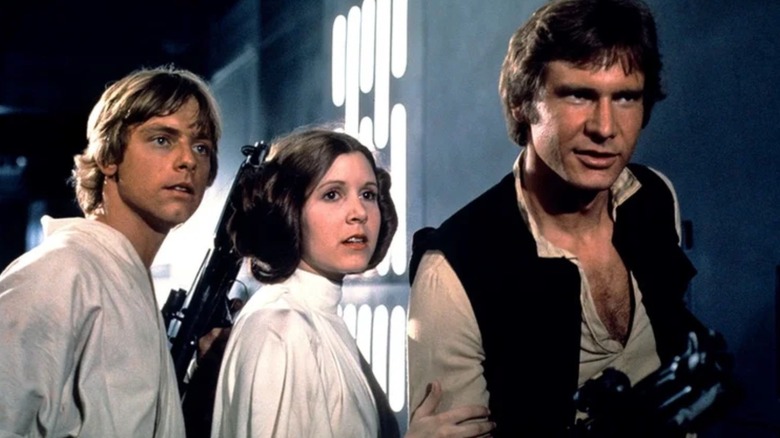
The 1977 "Star Wars: A New Hope" is a sci-fi fantasy that leans a little harder on the sci-fi side, yet it remains a magical movie everyone should watch at least once, if only to see what all the fuss is about. A brilliant balancing act by writer and director George Lucas, and a gateway that introduced the world to Mark Hamill, Carrie Fisher, and Harrison Ford, "A New Hope" didn't just define a moment in cinema but also made an almost incomparable impact on popular culture.
The story follows Luke, a farm boy who dreams of adventure and gets precisely what he hoped for when two droids with a secret wind up at his home. From there, he's whisked away on a dangerous rescue mission that involves dogfights, an introduction to a mystical energy, and a space smuggler you'd either love to be or simply come to love. Throw in a sassy but stupendously brave princess and a bear with a competitive streak, and you have one of the greatest fantasy stories ever. It might've appeared at the tail end of this special little decade, but it certainly dominated the rest of it and every one that followed.
The Lord of the Rings
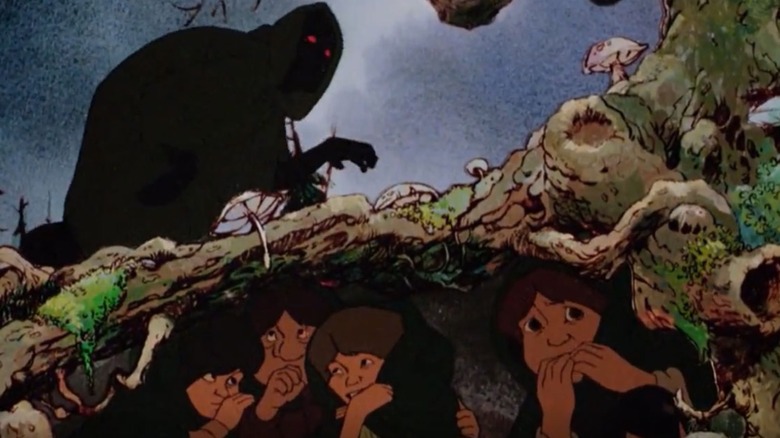
Ralph Bakshi's animated take on J.R.R. Tolkien's groundbreaking fantasy epic "The Lord of the Rings," while not quite as culturally impactful as "Star Wars," remains a standout moment of '70s fantasy for what it set out to accomplish. Merging "The Fellowship of the Ring" and "The Two Towers" books, "The Lord of the Rings" is an incredible achievement that honors Bakshi's revered storytelling style through live-action footage and rotoscoping over live-action performances. The result is a trippy yet impressive visual style that the director and animator became synonymous with.
Hokey in parts but visually arresting in others, Bakshi's management of a trip to Middle-earth feels like a product of its time in all the right ways. It's another daring filmmaker trying a new way of storytelling that would pave the way for so many in the years to come, with some sequences and shots even seemingly replicated in Peter Jackson's live-action iteration. While a sequel to the film was annoyingly canceled due to its reception, "The Lord of the Rings" is a daring bit of moviemaking in an era full of them. There might be a better adaptation to rule them all, and more popular animated stories like "The Lord of the Rings: The War of the Rohirrim" spin-off, but this one isn't bad either.