

Say Goodbye To Fossil Fuels With This Gas Alternative Without Petroleum

The pursuit for cleaner energy has come a long way in recent years, with tons of new and exciting developments like living solar panels made of bacteria helping to pave the way toward a greener future. While some brands like Tesla and Rivian have been focusing on creating cars that run off electric, though, others have been looking for more intriguing and unique ways to power the vehicles of the future — and the new setup would even work with current gas-powered vehicles, too.
We first heard about Aircela's game-changing "air-based" fuel system earlier this year, when the company made headlines showcasing the tech in real-time. Unlike regular gas systems, which require petroleum to generate gasoline, Aircela's machine pulls carbon dioxide from the air, then utilizes a system of water and air to create its own gasoline — which can then be poured into pretty much any gas-powered machine.
It's an intriguing design that is a bit slow to create gasoline at the moment, only creating up to one gallon of gasoline from the air each day, but considering the ingredients and the possible scalability, that's actually very impressive. This particular machine is also small when compared to the other machines that are typically used to convert raw materials to gasoline, so it would be small enough to fit in homes, businesses, and even industrial settings. This could make bringing fossil-free gasoline to the masses easier than ever.
How it works
According to Aircela's website, the machine works by first capturing carbon dioxide directly from the air. It does this using a solution that is water-based, which contains potassium hydroxide (KOH). This allows the machine to capture the carbon from the air efficiently, as it cycles it through the liquid-based solution.
From there, the company also needs to make the other major part of its required mixture, which is hydrogen. To make this happen, Aircela uses a process known as electrolysis to split water into both hydrogen and oxygen. The oxygen is released back into the atmosphere around the machine, while the hydrogen is stored up to help create the synthetic gasoline.
Finally, Aircela combines the carbon that has been gathered with the hydrogen, creating methanol, which is then converted to the synthetic gasoline through a method that they call methanol-to-gasoline, or MTG, which is a two-step catalytic process that helps render the fuel useable in existing engines.
Additionally, the company says that the liquid sorbent used to capture its carbon dioxide is recycled during the process, which helps keep the entire system running as a renewable option. Of course, it still needs electricity of its own, so you'll only truly be utilizing completely green energy if you're powering it with solar or other clean energy systems.
The question of scalability
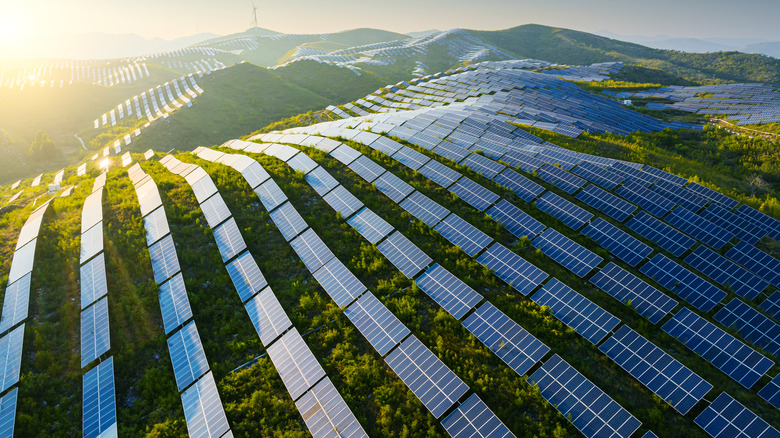
Of course, the biggest question surrounding technology like Aircela's machine is its scalability. As noted, you still need some electricity to power this process — especially since the machine relies on electrolysis to help create one of its primary ingredients. Whether or not it can be scaled is something that Aircela will likely need to prove before we see any kind of widespread adoption of the technology.
But, even without widespread adoption, it's still really interesting to see a device that can not only create synthetic gasoline on a rooftop — which the company proved in its initial showing earlier this year — but also that it can do it while only using resources it gets from the air around us. Sure, it might not be as powerful as the fusion reactors that scientists are striving to create, but combined with other clean energy initiatives, like hypothetically infinite energy produced via artificial photosynthesis, and even the discovery of a possible hidden energy source under the Earth, this is a good step toward a brighter and cleaner future for energy.