

Are 8K TVs Really Worth It Right Now?
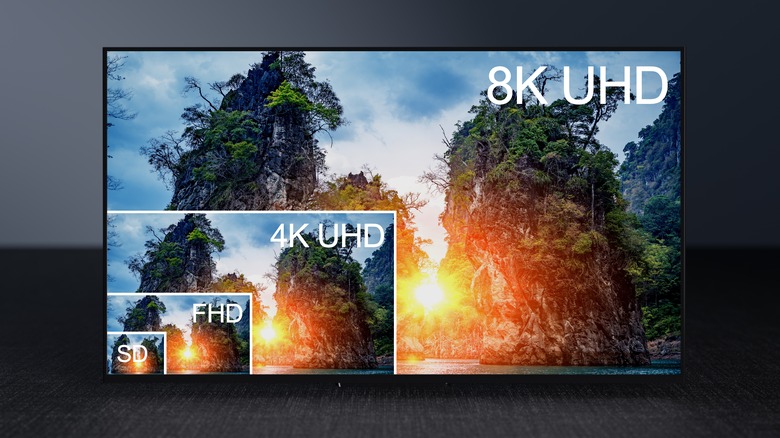
TV resolutions have gone from standard definition to high definition, 720p HD to 1080p Full HD, then 4K. Today, 8K TVs are readily available. But the resolution cart has come long before the content horse. There isn't an outpouring of 8K content yet to enjoy, but for a few 8K content promises for movies and video games. In theory, it's not a bad idea to future-proof your investment. A TV, after all, isn't like a phone. It's not something you replace every 2-5 years. So, you want something that will last.
So, should you opt for an 8K TV? There's a significant delta in price, especially with 4K TVs being offered now at all sizes for affordable price points. But a 4K TV will last for years to come, delivering a stunning picture with the majority, if not all, of the available content. Further, brand and TV type matter as much as the resolution when it comes to things to consider when buying a TV. What's more, some people have observed that there isn't a big enough visible difference with 8K to justify the price hike. Combine those factors with not enough, or really any, mainstream 8K content, and you can see why it may be best to stick with 4K for now.
8K vs. 4K TVs
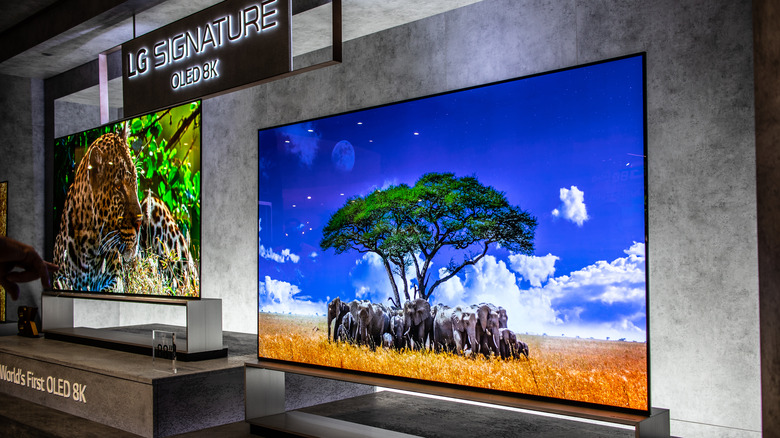
From a purely resolution standpoint, 8K offers four times the pixels of 4K at 7,680 x 4,320 versus 3,840 x 2,160. This results in a sharper and more detailed picture. But this also requires 8K content, and there isn't really any true 8K content available yet. It may come eventually, but there's no official word on when streamers, movie makers, or video game developers might start producing 8K content beyond just promises that haven't yet come to fruition.
Thus, while 8K TVs do technically provide the best resolution, this doesn't necessarily mean you'll get the best picture for the content you'll be watching — a common mistake people make when considering a new TV. Your best bet is to opt for a large-screened 4K OLED or miniLED TV from one of the most popular TV brands. You'll come out ahead with stunning picture quality, especially when watching readily available 4K content. Many 4K TVs also upscale 1080p content, so HD content will look better on a 4K TV, too. It's worth noting that many 8K TVs offer upscaling for 4K and 1080p content as well, but the difference in picture quality may not be significant enough to justify the extra cost.
What customers are saying
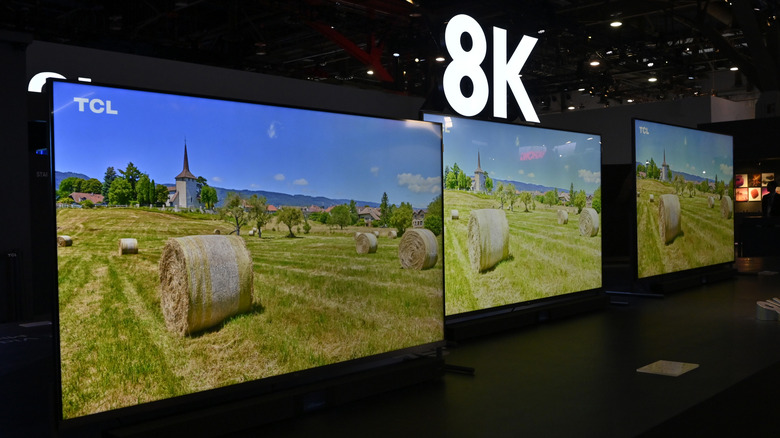
Further, even with 8K content, for many users, the difference might be negligible, depending on what your human eye can see. I have personally demoed many 4K and 8K TVs, and both look stunning with brilliant colors, great contrast, and wonderful detail. But it's not a night and day difference. Others have made the same observations, with a Reddit discussion that points to little visible difference in brightness and sharpness. "The pixel density is only interesting for bigger displays," writes one Redditor. Another Reddit discussion cites a blind test that claims most consumers couldn't tell the difference between the two. "Realistically, people will have smaller screens and sit further away," writes one Redditor, "which makes 8K even more pointless."
So, for now, save your money when buying a new TV and stick with 4K. You'll be more than pleased with the result. The only reason to buy an 8K TV is if you're getting a massively large display and plan to sit up close to it. Even then, until there's 8K content to warrant the price hike, sticking with 4K is the best bet for now, and likely into the near future as well.