

Scientists Have Discovered Something That Could Help Humans Live On The Moon
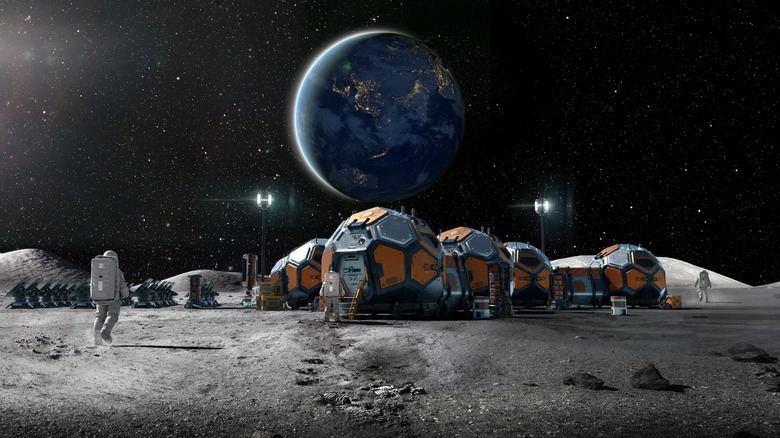
Settlements on the moon are classic science fiction settings, but despite purported attempts by NASA to build homes on the moon, we've never really come close to building one. It's not hard to see why the goal of lunar colonization has remained out of reach; Earth's natural satellite lacks the life-giving resources of the planet it orbits. Not only does the moon lack any liquid water, but its atmosphere is so thin that it's basically like being in a vacuum. The first requirement of any potential moon settlement would have to be a system for generating breathable air.
You can't create such a system without access to the elements in air. It has generally been assumed that in order to create breathable air on the moon, we would have to import particles from our own atmosphere to get the process started. Shipping a portion of Earth's atmosphere to the moon would be an unprecedented technological feat, and one dreads to think of the price tag. However, a recent study has revealed that natural forces have already done that for us.
In a groundbreaking paper published in the journal Communications Earth & Environment in December of 2025, a research team from the University of Rochester's Department of Physics and Astronomy revealed evidence that solar winds have steadily been blowing particles from Earth's atmosphere onto the moon, where they accumulate on the surface. If that's indeed the case, then the lunar solid could be key to both Earth's future and its past.
Computer models revealed an unexpected phenomenon
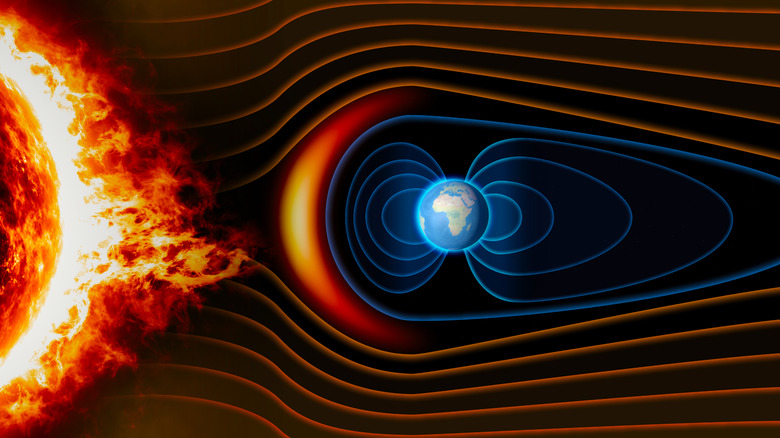
When the Apollo missions first brought back samples of the lunar regolith (the extraterrestrial equivalent of soil), analyses showed that the moon's surface contains traces of nitrogen, carbon dioxide, helium, argon, and even water. These are the same key elements that make up Earth's atmosphere, and the new research indicates that's no coincidence. The atmospheric elements found in the lunar regolith originated within Earth's atmosphere, and were then blown towards the moon by the force of solar winds, which flow through the solar system at a blistering 1 million miles per hour.
The idea that elements in the lunar regolith came from our atmosphere was previously proposed in a study 20 years ago, but the research of that day asserted that the transfer of particles from Earth to the moon ended when Earth's magnetic field developed roughly 4 billion years ago. However, when the research team from URochester ran a series of computer simulations comparing the effect of solar winds on Earth with and without its magnetic field, they found the opposite to be true. The planet's magnetic field may actually help to transfer atmospheric elements to the moon because charged particles can be carried by magnetic field lines that reach all the way out to the moon.
What is the significance of this discovery?
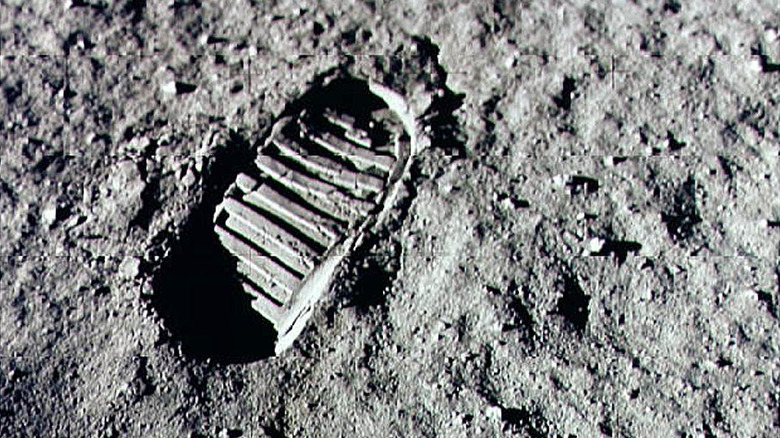
Up until now, it was thought that the transfer of particles from Earth's atmosphere to the moon ended 4 billion years ago, around the time life itself first appeared, but if the computer models created at URochester are accurate, that transfer has actually increased since that time, and continues to this day. This has major implications for both the past and the future. Regarding the past, if the moon has continuously been leeching particles from Earth's atmosphere, it could make the lunar regolith a time capsule of atmospheric history. This could reveal new insights into how Earth's atmosphere developed, and what conditions are needed to make a planet habitable.
Uncovering the history of Earth's atmosphere could provide vital insights for creating breathable airspace in future moon settlements. By using the lunar regolith as a time capsule, scientists might be able to construct a clearer timeline of the atmosphere's evolution, potentially turning into a recipe of sorts for breathable air. Plus, the presence of atmospheric particles on the moon means that the basic building blocks for breathable air are already there. However, it's a mystery as of yet how we might capitalize on those resources, and there are still a lot of other obstacles in lunar colonization. The whole place is radioactive, after all.