

3 Clever Uses For Your Old Smart Bulbs

We may receive a commission on purchases made from links.
As new devices launch, and old units fall by the wayside, they might end up being discontinued by brands, with software support ending and app access or smart controls being dropped. Some great examples of this are GE Link smart bulbs, the free version of Wink's smart home hub, or the 1st and 2nd generation Google Nest thermostats. Google actually discontinued the Nest name altogether in lieu of the Google Home line. What do you do with these old devices when support has reached end-of-life and they no longer work as intended?
Many, like smart hubs, could go in the trash or be recycled through an electronics program. But old smart bulbs are a little different. Not unlike traditional light bulbs, they can be repurposed in some ingenious ways. If you have a few old smart bulbs lying around and you're looking for clever ways to reuse them, that's precisely what this guide is going to explore.
Reuse them as a dumb bulb

The most obvious use-case for an old smart bulb, if it still works, is to simply place it in a lamp, lighting fixture, or outlet elsewhere in your home. For the most part, old smart bulbs will still work fine when used in a lamp or controlled via a wall switch. Some smart bulbs default to working as a "dumb" bulb without the wireless connectivity and app support. Sengled, for example, saw the smart features of its light bulbs discontinued, but they can still be used as traditional bulbs.
The clever part comes into play when choosing where to install the bulb. You might try to come up with some unorthodox fixtures. For example, I hollowed out an old electric guitar and used lamp components to build my own fixture that now has an old smart bulb installed. You might also consider a simple pendant plug-in lighting fixture to create an industrial mood in whatever space you use it in. There are plenty of other lighting solutions like this that allow you to reuse even the best smart bulbs.
Use a smart plug to retain connected features
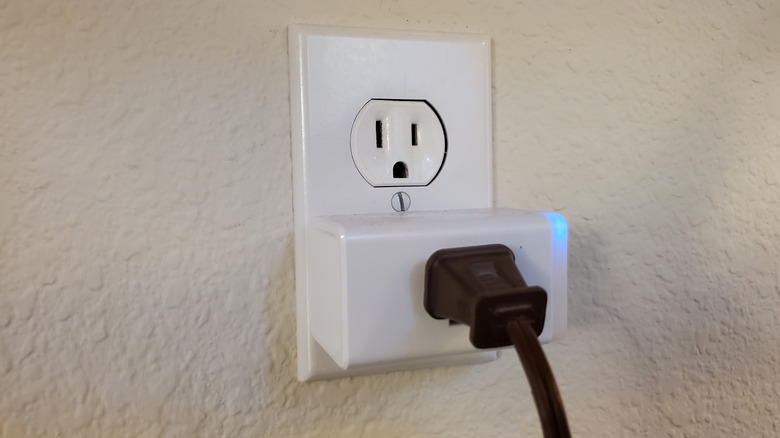
If the bulb still powers on, but you want to retain smart features and remote access, you can use a smart plug. To do so, you'd install the bulb in a lamp or fixture which is then plugged into the smart plug and an outlet. In fact, one of the cheapest ways to transform your house into a smart home is to use smart plugs placed throughout.
Depending on the smart plug, you should be able to still remotely turn the light on and off with an app, use voice commands through a connected assistant like Alexa, or setup schedules and smart scenarios. That effectively allows you to keep using the bulb as a smart device without access to the original features. And choosing smart plugs with Z-Wave, Zigbee, or Matter support means you won't have to rely on the big brands to sustain your smart home ecosystem as these are designed to be standalone.
Turn the bulbs into crafty decor

Smart bulbs often have a thicker, stronger casing than traditional light bulbs, making them an excellent candidate for DIY crafts. Did you know Amazon actually sells dedicated "craft bulbs" in a wide range of varieties? Smart bulbs that are blown or don't work can also be used in this scenario. Provided you can open up the bulb, which typically involves removing the bottom socket and thread, you can do all sorts of neat things with old smart bulbs.
Like turning them into small planters, vases, or terrariums, creating holiday ornaments to hang on your Christmas tree, or even repurposing them for practical use like salt and pepper shakers. Other ideas include using the hollowed bulb as a piggy bank for small change, a knick-knack or junk holder, incorporating them into structural art pieces, and converting these old smart bulbs into small oil lamps or candle holders. Bottom line: Don't be afraid to think outside the bulb!