

The Overlooked British Superhero Series That's As R-Rated As The Boys
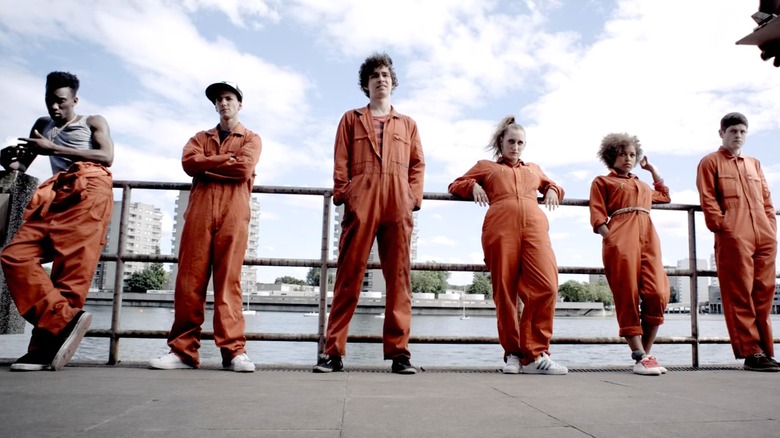
Long before the MCU (brush up on the Marvel Cinematic Universe with our in-depth guide) seeped into television — after a series of films like "Iron Man," "The Incredible Hulk," and "Captain America: The First Avenger" kicked off Phase One — the Brits were already long ahead of the curve. Howard Overman's "Misfits," which ran between 2009 and 2013 for five seasons on E4, channelled the kind of grittiness, nastiness, and raunchiness that Amazon Prime Video's "The Boys" became famous for 10 years later. Well, not exactly in the same way. Overman's show was much smaller in scale with an even lower budget, but thanks to those limits, "Misfits" aimed to awe its modest but dedicated audience with razor-sharp writing and a sense of dark humor that knew no boundaries.
Its core idea of giving a bunch of juvenile criminals various superpowers by accident was not only fresh but incredibly enticing, too. Forget bumbling and introverted nice guys such as Peter Parker or Steve Rogers, and instead think of down-to-earth, foul-mouthed, working-class teens with painfully relatable everyday problems and red-hot hormones. Here's a group of young delinquents put together as strangers doing community service — an obligation they loath equally but ultimately helps them bond and get to know each other — before then getting struck by lightning, which gives them unique supernatural abilities. "Misfits" was truly lightning in a bottle.
But since the series came out at the dawn of the superhero boom and featured no globally famous actors, nor did it contain epic action set-pieces at the time, it went under the radar of most viewers outside the U.K. It was also catered to a specific British audience, so its modest success mainly stayed inland until it became available in the U.S. on Hulu in 2011.
Misfits combined elements from Skins and Heroes to concoct its own unique cocktail
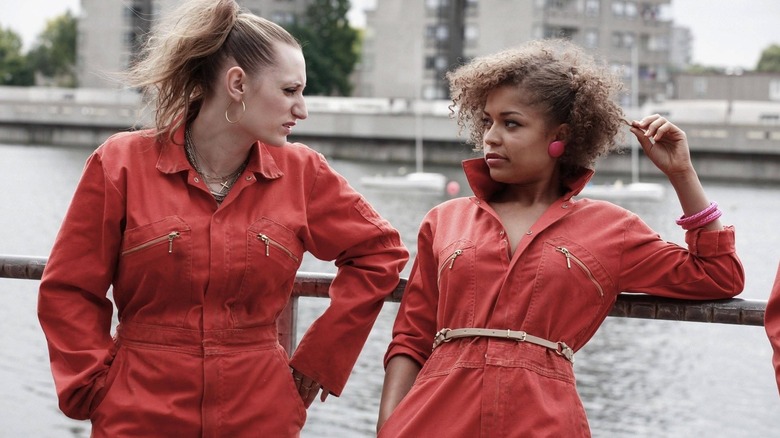
Although "Misfits" was hardly a trailblazer in the superhero genre — in fact, it built upon the growing popularity of such series like "Smallville" and "Heroes" — the show was undeniably among the first attempts on TV to be excessively gritty and grounded in reality. Similar to "Skins," another British teen dramedy series, its social setting of South East London was direct and distinct, populated by local characters who couldn't have been from anywhere else. Evidently, the writer-creator followed character-driven formulas like the one we saw in "Heroes," but he slightly tinkered them to fit his comedy sufficiently. Naturally, that applied to some of the superpowers, too. Beyond classics like time-manipulation and invisibility, "Misfits" offered intriguing abilities like turning someone extremely horny by touch, uncontrollable super-human rage, or the physical capability to control dairy products.
Seasons 1 and 2 expertly established the tone of the show — with 92% on Rotten Tomatoes — and garnered both a sizable and loyal audience. From Season 3 onward, however, after the fan-favorite Robert Sheehan left the series, a gradual cast overhaul was in effect with mixed results. The style, the R-rating, and the black humor remained, but the show slowly transformed into a slightly different version of its former self, with frequent replacements of original actors. In retrospect, it's no surprise that this happened since the initial cast had fantastic chemistry, and for many of them (like Sheehan, Antonia Thomas, and Joe Gilgun), "Misfits" was the show that propelled their careers and opened a vast array of opportunities.
If you're on the hunt for hidden gems that fit in the lane of "The Boys" or the "Gen V" spinoff, but with a more focused and low-key approach, you can't go wrong with "Misfits."