

Don't Miss One Of Netflix's Best Movies Of 2025 With 95% On Rotten Tomatoes
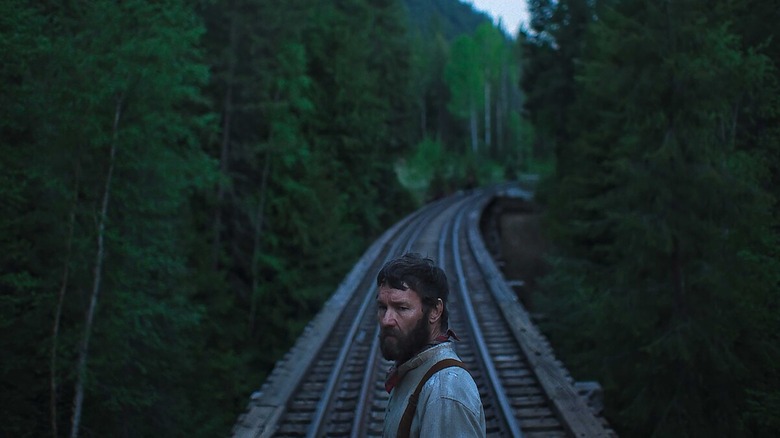
Clint Bentley's "Train Dreams" is the most devastating film of the year. Adapted from Denis Johnson's award-winning novella of the same name, it is an astonishing achievement that delivers technical prowess and emotional heft through breathtaking set pieces, heart shattering plot twists, and philosophical dialogues that will delight Netflix subscribers everywhere. Garnering rave reviews, including 95% on Rotten Tomatoes, the film is an underdog award-season contender. Its legacy will likely extend far beyond 2025, challenging the cultural malaise surrounding Netflix films the past few years.
A bildungsroman that squeezes the entirety of its subject's life into 102 minutes, writing a plot summary of Bentley's adaptation feels more like an exercise of understatement than criticism. "Train Dreams" interrogates the social, economic, and spiritual disruption at the heart of the 20th century's technological booms. The narrative follows a hermetic logger named Robert Grainier, played by Joel Edgerton, as he helps extend the railroads across the American Northwest. Specifically, it uses the life of a single man with all its joys and hardships to mull the existential questions plaguing America's unique brand of modernity.
It not only recounts the physical toll of the country's capitalist conquests, but the spiritual cost of a world hell-bent on consuming everything that makes us human. Edgerton's standout role should have him competing against Timothée Chalamet, Wagner Moura, Leonardo DiCaprio, and Ethan Hawke for Best Actor at the Oscars. Elevated by a cast featuring Felicity Jones, William H. Macy, Kerry Condon, and Will Patton, Edgerton's ruminative performance resurrects Johnson's novel with a dreamy realism matched only by the landscapes whose destruction it portrays.
A man at the intersection of history
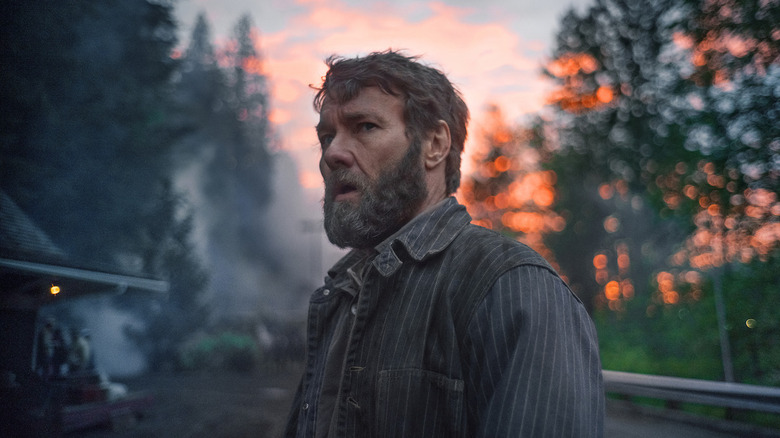
In "Train Dreams," Bentley takes a beloved novella — with a narrative breadth, thematic complexity, and compressed structure that made it nearly impossible to adapt — and delivers one of the strongest critiques of 20th century America in years. "Train Dreams" is a visual spectacle that uses the life of a single, unremarkable man to remark on an era of immense technological, social, and political upheaval. It follows Grainier from the post-Civil War westward migration to the popularization of flight and the Apollo moon landing. A backwoodsman spiritually removed from these changes, Edgerton's Grainier watches as the destructive forces powering America's "Manifest Destiny" obliterates mountain ranges, clears forests, crushes laborers, and lynches immigrants for the sake of its own logistical momentum. Both a perpetrator and victim of these tragedies, Grainier spends much of the film grappling with the consequences of such "progress."
Bentley's film is a shining example of historical fiction at its best. Using almost all natural lighting, it renders the impact of these historical trends with incredible intimacy, capturing raging forest fires and cascading canopies alongside fireside closeups and amorous entanglements. In this contrast, Bentley depicts America's destructive history with visual and emotional clarity, accomplishing the rare feat of fully rendering the intersection of personal and historical experience. This is best expressed by William H. Macy's character, Arn Peeples — a fellow logger who acts as a sort of spiritual guide for Grainier — when he laments, "We just cut down trees that have been here for 500 years. It upsets a man's soul whether you recognize it or not." At its best, "Train Dreams" is as much an interrogation of a single life as it is an excoriation of a historical epoch, and a beautiful reminder of our delicate place at the crux of history.
Eyes on the inexplicable
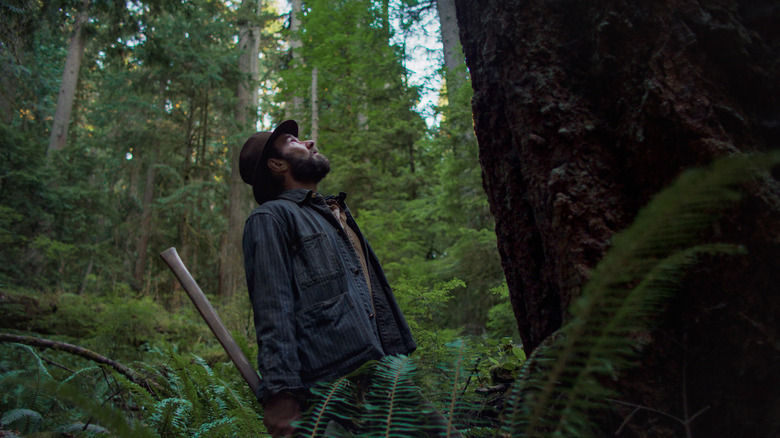
While "Train Dream's" procession of tragedies are visually and emotionally colossal, involving explosive set pieces and vast landscapes, the film's success lies in its unique ability to portray the beauty of the small moments that tie them together. Over the course of the film, Grainier lives the full spectrum of the human experience: he gets married, has a child, builds a home, and, ultimately, grapples with the losses made inevitable by his own mortality. Although his life is a largely miserable one, it is also perforated by moments of true connection and wonder.
As such, despite its apocryphal visuals and heart-wrenching plot, "Train Dreams" is ultimately a meditation on the vibrant delicacy of man and the persistence of the human spirit. Will Patton's masterful narration threads Grainier's odyssey together with the existential currents propelling it, turning the viewers eyes above the mountainous horizons towards the unanswerable questions behind their formation. Like Grainier himself, one leaves the journey a puddle of laughter, heartache, and awe.
Astute viewers will recognize these timeless questions in their own era of technological disruption, where "progress" increasingly sacrifices man's exterior and interior worlds to the gods of economic machinery. One can read the film as a grand protest against the further separation of man from his environment, loved ones, and self. However, "Train Dreams" is anything but a nihilistic doom train, eschewing pessimism in favor of a prevailing sense of wonder. In total, watching Bentley's film gives the uncanny impression of remembering a sourceless memory: simultaneously familiar and alien, it triggers an overwhelming sense of primordial reverence in the face of the ineffable. Furthermore, it reminds us of the inexplicable beauty of a world our modern lifestyles too often force from view.