

Wyze Scale Ultra BodyScan Review: Matching The Competition At A Fraction Of The Cost
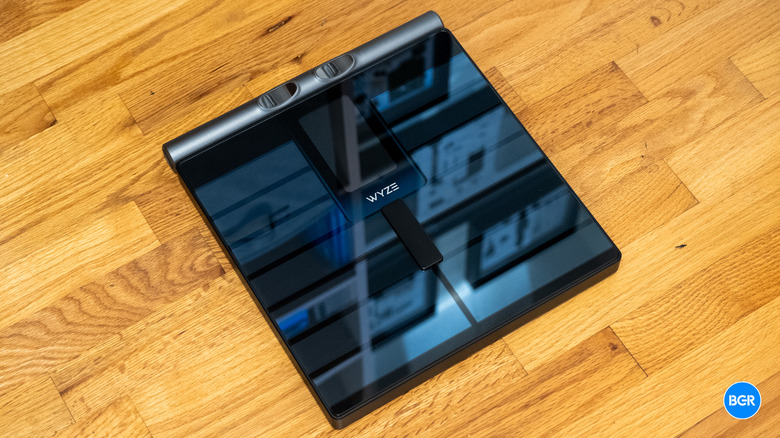
Smart scales have come a long way from the devices that just tell you how much you weigh. The latest generation can measure everything from body fat percentage to visceral fat levels to something called "metabolic age." What used to be a simple bathroom fixture has genuinely become a major health tracking tool. The Wyze Scale Ultra BodyScan is one of the latest takes on this category. It comes with a retractable handlebar that you grip during measurements, letting the scale take readings from your hands and feet at the same time.
Wyze says this scale offers "professional-grade body analysis," which is a pretty bold claim for something priced just under $120. The design is clearly going after the $500 Withings Body Scan, which also uses a retractable handle for comprehensive measurements. The question is whether Wyze actually pulled off comparable functionality at a fraction of the cost or if that lower price comes with significant compromises.
Design

At 15.43 x 13.39 x 2.13 inches, the Wyze Scale Ultra BodyScan is thicker and larger than your average bathroom scale, but it doesn't necessarily feel overly huge. The surface uses ITO-coated glass for the conductivity needed to measure body composition, and anti-slip contacts keep things stable while you're standing on it. You can get it in black or white, so it should fit into most bathrooms without looking out of place. I'm reviewing the black model.
The design looks reasonably premium, though it's not the sturdiest smart scale out there. Wyze has leaned on plastic to keep costs down, which does affect how durable the whole scale feels. It doesn't come across as cheap or flimsy — it just doesn't have the heft you'd get from pricier alternatives. While I wasn't using the aforementioned $500 Withings Body Scan before, I was using an alternative Withings scale, which definitely has a more premium build. But again, it's not a huge deal, and the build of the Wyze model is still acceptable.
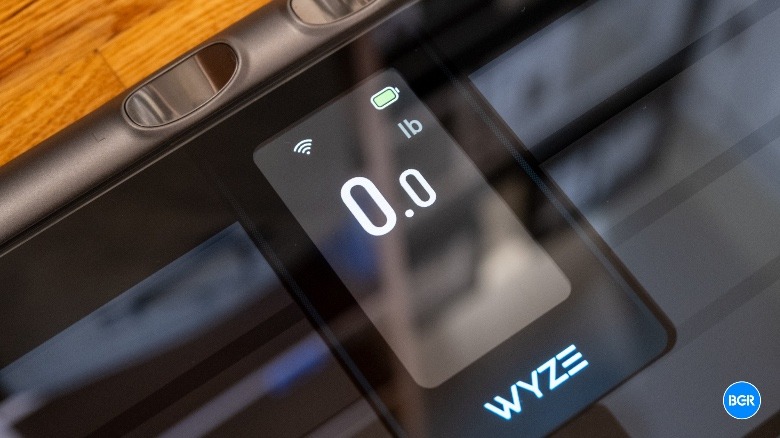
The 4.3-inch TFT color display is one of the standout elements here. It's bright enough that you can actually read your metrics right on the scale without pulling out your phone every time. That immediacy makes a real difference in the daily routine. You can customize what's shown on the screen during measurements as well, so if you have one metric in particular you're tracking, you can visually see your progress as you go. The only exception to that is your heart rate, which can only be viewed in the app.
 Christian de Looper / BGR
The extendable BodyScan handle houses the electrodes that measure your upper body when you grip it. The extension and retraction mechanism works smoothly, though you'll want to guide it back down gently rather than letting it snap back. It's not a huge deal, and you can still take basic weight measurements without picking up the handle if you prefer to only take comprehensive scans every now and then.
Four AAA batteries power the scale, and they're included in the box. Wyze claims up to eight months of battery life, which should be plenty for most people and means you don't have to worry about charging yet another device. I wasn't able to test the claims of battery life in my short time with the scale, but I might have preferred a rechargeable battery instead. I don't mind moving the scale to charge it if it's only once or twice per year, but I do mind having the batteries run out and having to buy more.
Features
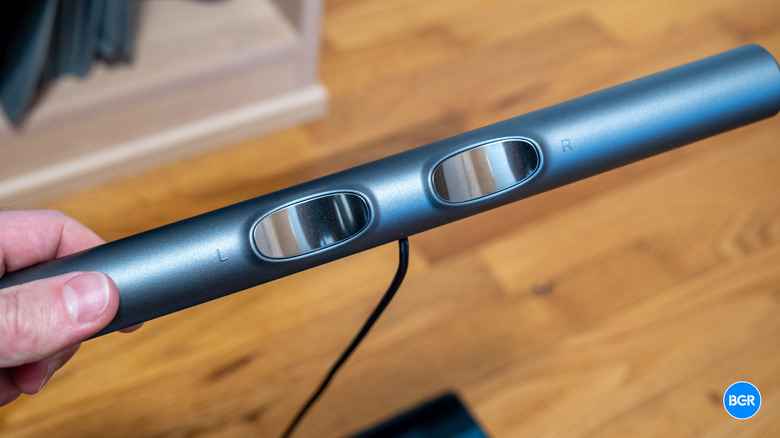
The eight-electrode system is really the centerpiece here, with sensors split between your hands and feet. This setup enables segmental body composition analysis, so you're not just getting an overall body fat percentage — you'll see the breakdown for each arm, each leg, and your torso individually. That granular data is particularly useful if you're tracking fitness progress or trying to spot imbalances, and in general I like the idea — though if you're prone to OCD, you might not love seeing that your arms or legs are slightly different from each other. It's normal though, especially if you're like me and play a sport like tennis.
In total, the scale tracks 13 different metrics, including weight, BMI, heart rate, body fat percentage, muscle mass, muscle mass percentage, lean body mass, body water percentage, visceral fat, bone mass, basal metabolic rate, protein levels, and metabolic age. Some of these, like BMI, are just simple calculations, and you may not find that metric particularly useful anyway. Others, like visceral fat measurement, represent genuinely useful health information detected through the sensors in the scale.
The scale does have Wi-Fi connectivity, which is very useful. Because the scale syncs your measurements directly to the cloud without needing your phone nearby, tracking becomes much more seamless — you don't have to pull your phone out and make sure it's connected through Bluetooth. As long as the scale can identify you (which it does by matching your weight against known users), your data uploads automatically. That said, relying solely on weight matching for user identification feels like an area that could use improvement. Maybe future versions could get smarter about recognition.
Up to eight users can be automatically recognized, and unlimited sharing makes the scale work well for households. Specialized modes expand what you can do beyond standard weigh-ins, too. There's a Baby mode for tracking infant weight, Pet mode for your animals, Luggage mode for travel prep, Pregnancy mode for expectant mothers, and Athlete mode for people whose body compositions differ significantly from the general population. Most of these modes simply disable most of the sensors, only tracking weight instead.
One thing worth checking after setup: the scale may be configured by default to only take detailed body composition measurements when the app is open on your phone. If you want fully automatic cloud syncing of comprehensive data, you'll want to disable that setting to get the most out of the Wi-Fi connectivity. You can do this by toggling it off in the profiles section of the app.
App
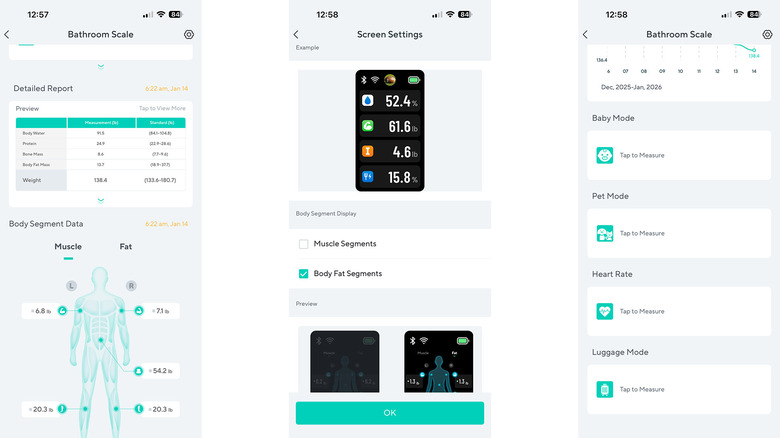
The Wyze App is where you go for detailed reports and historical data. The on-device display shows your immediate readings, but the app gives you the full picture with graphs tracking progress over time. There's even a filtering option for morning or evening measurements — helpful for maintaining consistency since body metrics can shift throughout the day.
The segmental body data is all easily viewable in the app interface. Arm, leg, and torso composition data are presented in an easy-to-read format. Beyond raw numbers, the app also runs additional calculations based on your data, like estimating how many calories you'd burn during 30 minutes of various exercises, for instance. It puts the data in practical context, which is kind of cool.
Through the app, you can also connect your data with other services. The app can sync with Apple Health, Fitbit, and Health Connect (including Google Fit), so your measurements can flow into those first-party health-tracking ecosystems, if you use them. As an Apple Health user, I appreciated this.
One minor annoyance: the app calculated my metabolic age as 33 instead of 32 because it only uses birth year rather than actual birth date. I suppose I'll have to live with being prematurely aged by technology until my next birthday catches up. A one-year difference hardly matters in any meaningful way, but it definitely made me question how old I was.
Conclusions
The Wyze Scale Ultra BodyScan is an excellent option if you want comprehensive body composition analysis without paying premium prices. At around $120, it significantly undercuts competitors with similar eight-electrode segmental measurement capabilities. It performs well in daily use, syncs reliably with popular fitness platforms, and provides genuinely useful data through both the on-device display and the companion app.
The tradeoffs compared to pricier options are relatively minor — mostly in build quality and materials rather than actual measurement capability. For most people, those compromises are more than acceptable given how much less you're paying.
The competition
The closest option in Wyze's own lineup is the $50 Wyze Scale Ultra, which has the same 4.3-inch display and tracks the same 13 metrics but doesn't include the BodyScan handle. With only four electrodes instead of eight, the standard Ultra can't do segmental body analysis, making the BodyScan version worth the upgrade if you want that extra detail.
At the high end sits the Withings Body Scan, which offers a similar retractable handle design and professional-grade measurements at around $500. The Withings adds features like electrodermal activity sensors and ECG capability, but if you're primarily interested in body composition analysis, the Wyze delivers comparable core functionality at less than a quarter of the price. The Wyze Scale Ultra BodyScan occupies a smart spot in the market — substantially more capable than budget scales while staying far more accessible than medical-grade devices.
Should I buy the Wyze Scale Ultra BodyScan?
Yes. It's an excellent smart scale, especially for the price.