

Your Smart TV Might Soon Be Replaced By This Emerging Technology
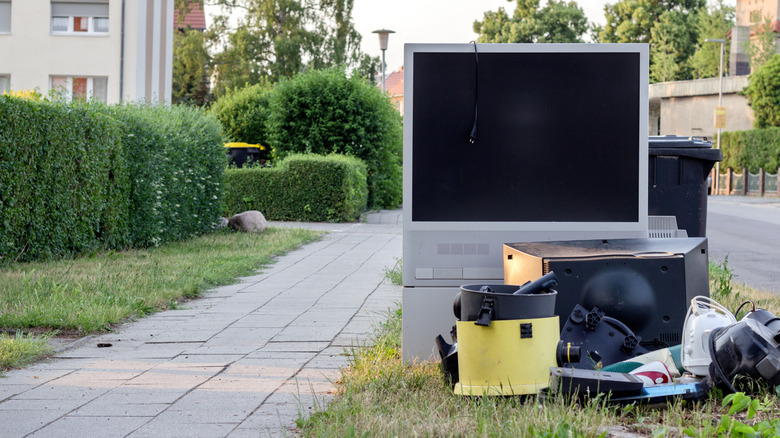
The days may soon be gone when you relax in the living room on your own or with friends and family to watch your television. Instead, a relatively new technology could replace physical TVs altogether, and that is virtual screens. These screens are seen by wearing headsets or display glasses, which will project a show into the world around you. For example, you could sit in your bed or hang out in your backyard and watch a show on a virtual screen without needing a physical TV.
Brands like Apple's Vision Pro headset or the Xreal One Pro display glasses offer a mix of augmented and virtual reality through their products. That being said, they aren't necessarily cheap. The Apple Vision Pro can cost thousands of dollars, depending on the model, and the Xreal One Pro is $649. Given that these rival the cost of more expensive televisions, the price can be a bit shocking. However, the technology itself is quite fascinating and futuristic, giving us something that seems like it is right out of Star Wars.
There are a handful of benefits these virtual screens offer over traditional television, with one being easy mobility to watch TV where you want to. However, there are some drawbacks, such as the isolation of this type of TV watching, that could hinder them from fully replacing the TV.
The advantages over a traditional TV
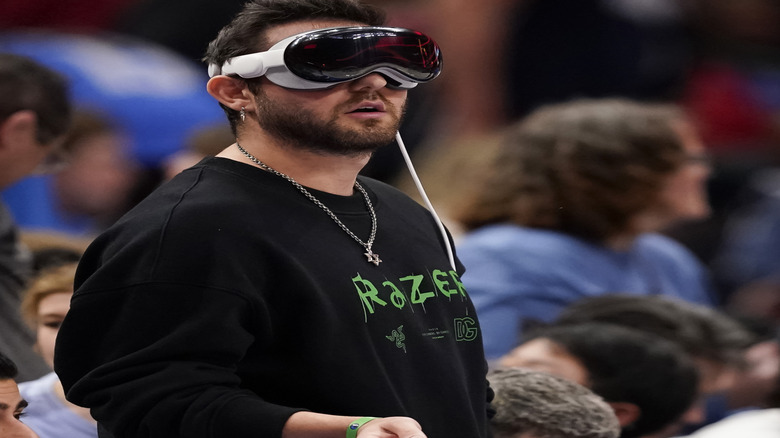
One main advantage these virtual screens offer is mobility. It doesn't matter where you are; you can still enjoy watching TV. This means you aren't limited to just staying in the living room, and you don't have to hunch over your phone's small screen to watch something when you just want some private time. For example, the Apple Vision Pro lets you create a screen that is up to 100 feet wide, bringing the feeling of a cinema wherever you go.
The mobility of this entertainment is a major plus. On long train commutes, during long waits at a doctor's office, or while pretending to pay attention in your college class, you can instead watch a movie. It's not necessarily easier to carry with you than your smartphone or a book, but it does offer a fun alternative to keep yourself occupied during normally boring periods.
The personalization of these products is also a major draw. You can watch what you choose on your own, rather than watch something you don't like with family. If someone is hogging the TV, it doesn't matter. You have your own way to watch on your own time. Not everything about them, however, has widespread appeal.
Drawbacks to these virtual screens
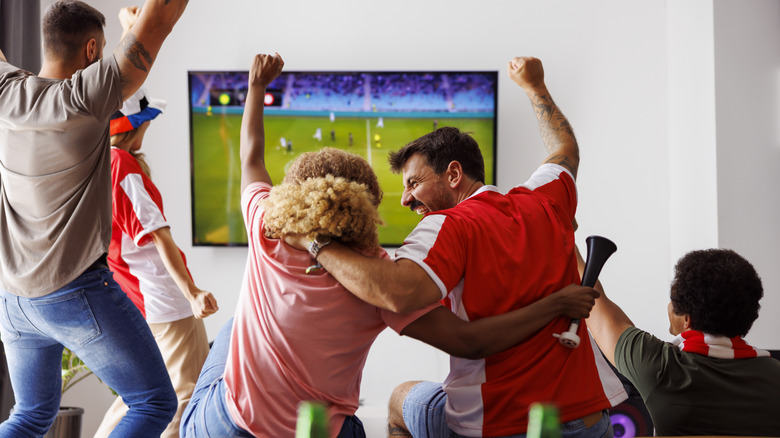
While it can be argued that these virtual screens are the future of TV watching, there are some challenges facing them that could prevent them from being adopted on a large scale. First, it is a very private TV-watching experience. This removes some of the social connection and fun of watching a movie with friends and family on the couch. If you are gathering together to watch a sporting event, bringing your virtual screen to watch it on your own rather than with the group would defeat the purpose of the activity.
Comfort can also be a concern with these products. While display glasses may feel more like wearing sunglasses or prescription glasses, the headsets are much bulkier and require straps around your head. It is not the most fashion-forward approach and could lead to neck aches, headaches, or eye strain, depending on the individual. Watching a movie is supposed to be a relaxing experience, so wearing something that isn't fully comfortable could dissuade some from purchasing these products.
Virtual screens are promoted as being able to let you watch TV anywhere, but is that such a good idea? Research says that daily TV watching could slowly kill you because of its sedentary nature. Watching TV too frequently has also been associated with cognitive decline across your lifespan, regardless of how active you are outside of TV time. Perhaps less can be more when it comes to enjoying movies and TV shows.