

Netflix Has A Terrifying Alien Invasion K-Drama With A Perfect Score From Critics
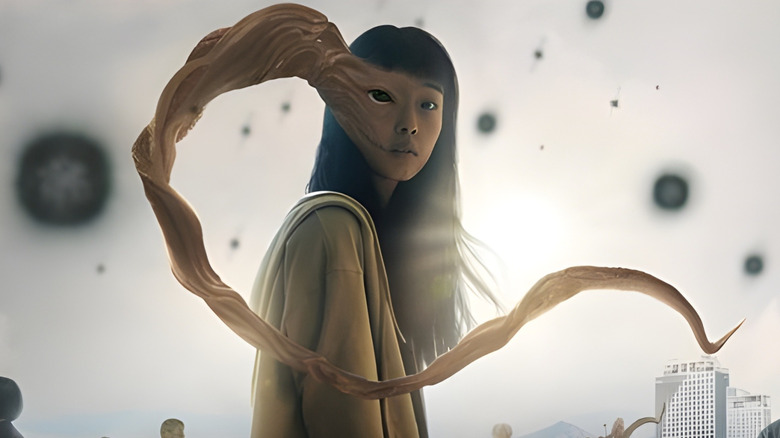
Netflix's "Parasyte: The Grey" is one of the most intense horror series on the platform. It came out in early 2024, and it continues to grip audiences' attention with its thrilling storyline and sci-fi setting. As soon as it came out, the critics embraced the show, which holds a rare 100% Tomatometer score on Rotten Tomatoes, highlighting the unanimous approval from critics. Even if we set aside their opinion, the audience also enjoyed "Parasyte: The Grey," as it hit No. 1 on Netflix's non-English TV charts in the same week it was released. In 68 countries, this series is ranked in the top-10 charts, showing strong success (via The Chosun Daily).
"Parasyte: The Grey" takes place in the world of the Japanese manga "Parasyte" by Hitoshi Iwaaki. Although true to the core concept and universe of the manga, "The Grey" tells a completely original story with new characters. Therefore, the show is not a direct adaptation, but rather a spin-off or continuation of the story.
Despite the show's success with the audience and critics, Netflix labeled "Parasyte: The Grey" as a "limited series." This means the show won't receive a second season, even though the director, Yeon Sang-ho (Train to Busan), told the Korean outlet News1 he has a storyline all worked out. While a limited series label means that the show was always meant to have one season, it doesn't mean it can't have spin-offs. After all, the "Parasyte" universe can support infinite storylines, as the whole world is open to the alien invasion.
What's all the fuss around Parasyte about?

"Parasyte: The Grey" weaves classic body-horror tropes with emotional stakes and philosophical undercurrents. The story is set in a South Korean city under attack by a mysterious parasitic creature that comes crashing down from the clouds. This creature takes over the human body and mind, transforming people into grotesque and violent monsters. The authorities are forced to assemble an aggressive anti-parasite unit known as Team Grey. They're led by Choi Jun-kyung, an officer whose personal losses fuel her determination to annihilate all the parasites. The theme is extra horrifying considering that mind-altering parasites that take control of their hosts are real.
At the heart of the series is Jeong Su-in, a young woman who is infected by the parasite but retains full control over her mind. She creates a unique symbiosis with the parasite lodged inside her, which she nicknames "Heidi." The two form an uneasy coexistence, learning to survive the world already drenched in panic. Although Su-in communicates with Heidi indirectly, they both discover that, even though profoundly different beings, they can live together in harmony. This plot mirrors the original manga's deep exploration of what it means to be human and whether moral absolutism serves us or blinds us.
Thematically, the series questions identity, fear of others, and the possibility of coexistence. But these existential questions are set as the background to the body horror and parasite mythology. The fear is not only external and shocking. It also comes from deep within humanity, as the audience is left asking what internal changes and crises a person can endure.
Parasyte: The Grey and its place in the world

"Parasyte: The Grey" was accepted with enthusiasm by worldwide audiences. The fans' affection for the series comes from several different key elements. The viewers are drawn in by the visceral thrill and the inventive visuals of the parasite-infested world. The action scenes are striking, and the CGI truly brings the horror creatures to life. But it's the emotionally charged moments that the audience reacted to the most. The desperate searches for the loved ones and the shocking transformation of the individuals suggest that the horror of this series is deeply connected to the human stakes. The superb acting and the compelling dynamic between the characters helped ground the sci-fi premise in a relatable emotional arc.
"The Grey" makes us feel that the horror is personal because it makes us reflect on fear, survival, and the connection between humans in crises. These themes are eternal, and they resonate with the modern audience just as they did in the past. The ideas of losing your identity and being vulnerable to outside threats translate well across cultures. That's part of why "Parasyte: The Grey" has such a diverse market and captures audiences in Japan, France, and Argentina equally.
But the cultural impact of "The Grey" extends beyond its sheer numbers. Its success highlights how K-dramas and genre-specific storytelling can resonate worldwide. The global streaming ecosystem is ready to accept boldly imagined horror, sci-fi, and speculative fiction more than ever. This might mean Netflix has the perfect scenario to take some generous creative risks and invest in similarly thrilling shows. That said, "Parasyte: The Grey" has secured a place in pop culture not just as one of the best Korean series to check out, but as a work that invites reflection, discussion, and anticipation of what might come next.