

Some New Cars Are Finally Adding Buttons Again - Here's Why
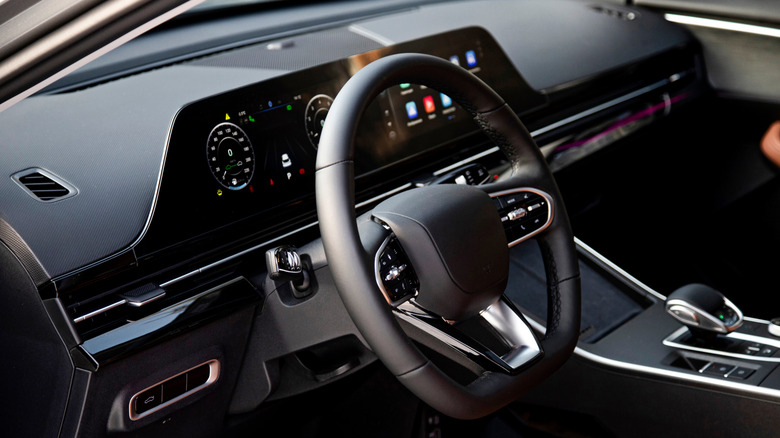
Arguably, one of the worst trends in modern cars has been the constant push to include increasingly large touchscreens and touch-sensitive controls on the dashboard at the expense of physical buttons and knobs. Automakers are prioritizing obnoxious (to some) screens over battle-tested buttons. Although the use of touchscreens in cars may seem like a new trend, it actually started decades ago, when Buick introduced its 1986 Rivera — the first car to have a touchscreen display.
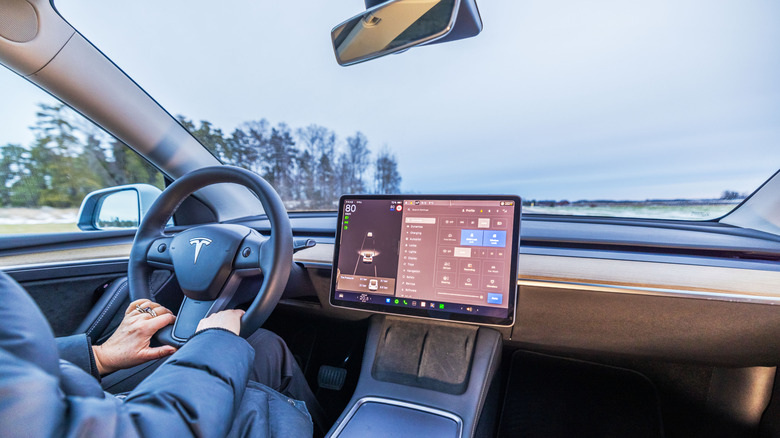
However, that tech integration didn't pick up steam until Tesla arrived on the scene with the Model S in 2012, featuring a mind-boggling 17-inch touch-sensitive screen that drivers could use to control most aspects of the car. The rest of the auto industry followed, and that's how we found ourselves in a situation where almost every new car includes large screens – some are even doing away with the trusted physical gauge cluster for a digital screen. However, these trends may be reversing.
Several automakers have been vocal about bringing back the physical buttons that many users love and adore. Some manufacturers aren't planning to do it in the future — they've already begun doing it, with at least part of the motivation having to do with safety. It isn't surprising, as even CarPlay and Android Auto have been found to be distracting when driving. If these two features are distracting, now imagine burying important car control features within menus.
Touchscreens may not be ideal critical driving control solutions
While launching a new car with more controls buried deep in digital menus, you'll often hear automakers praise how the new system is much easier to control. For instance, when Volkswagen launched its Golf Mk8 in 2019, the company said it was "moving to digitalized, self-explanatory operation" to allow anyone behind the wheel to operate the car "intuitively." However, according to a 2024 study from the University of Lisbon, the team found that drivers' reaction time while using touchscreen controls were "significantly higher" as compared to vehicle operators using more traditional physical buttons.
Additionally, the study also found that 80% of participants made more mistakes with digital controls compared to only 20% with physical controls. A 2020 study by the U.K.'s Transport Research Laboratory (TRL) also revealed reaction time increases when using touchscreen controls. With research showing most accidents are caused by human errors, it's logical that placing an array of in-car controls within digital displays could present a safety hazard. Car safety concerns surrounding digital controls is a worrying issue, and the European New Car Assessment Program (NCAP), an independent car safety assessment program in the EU, has started considering the availability of physical controls for certain features in its ratings from 2026.
A vehicle won't get the perfect 5-star safety rating unless certain functions – such as the horn, turn signals, and windshield wipers — use physical tactile knobs or buttons. The NCAP's counterpart, ANCAP (for Australia and New Zealand), has also followed suit. While these aren't legal requirements, car manufacturers love to brag about their safety ratings in marketing materials. But it's not just about safety; many people dislike touchscreen controls, too, as a matter of preference.
These car brands are set to bring back physical buttons
People have been vocal about disliking the removal of physical car controls, and automakers are finally listening. One automaker that admitted switching key controls to the screen was a mistake is Volkswagen, which has been criticized in the past over the same. In an interview with Autocar in 2025, the German automaker's design chief, Andreas Mindt, said, "We will never, ever make this mistake any more," promising to bring back physical controls for the most important features on every model — starting with the ID 2all. Sure enough, the 2026 Volkswagen ID. Polo proves that the brand listened, as it brings back more physical controls.
Although Mercedes-Benz is known for its digital-first cabins with gigantic screens, the popular German brand is also embracing physical controls. The company's software lead, Magnus Östberg, told Autocar that data has shown them that physical buttons are better. The company promised to bring physical controls back, starting with the GLC and CLA Shooting Brake EVs, including a new steering wheel boasting physical control elements. However, the German brand also plans to add more physical controls in other areas of the cabin to some of its future models.
Audi is also reinstating physical buttons starting this year and will ditch some of its touch-sensitive controls on the steering wheel. After learning of people's frustration with touch controls, Hyundai has already put these lessons into practice by including more buttons than ever before in the Ioniq 5, one of the cheapest EVs you can buy right now, as well as in the Tucson. Other carmakers, including Subaru, Genesis, Porsche, MINI, and Ferrari, are also bringing back some buttons to the cabin.