

Japan's Breakthrough In Biodegradable Plastic Could Change Everything
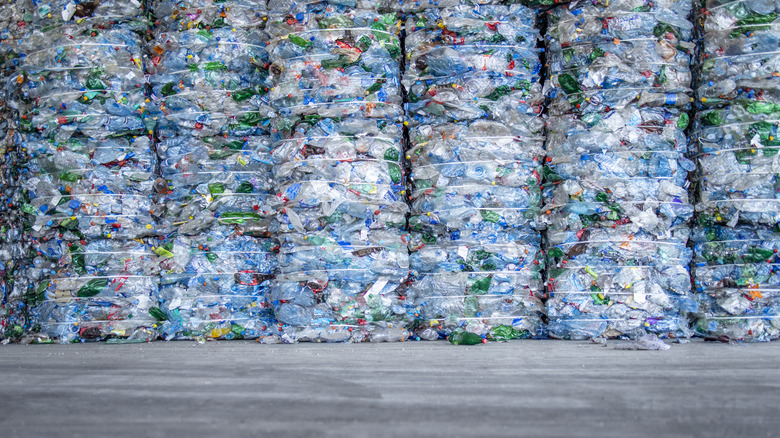
Plastic is pretty awful. Despite being in many reusable containers, or just in disposable containers like water bottles, plastic as a material is one of the worst for the environment. In fact, we're currently experiencing a longstanding plastic crisis in the oceans, with plastic pollution continuing to be a huge problem all around the world, with an entire island of garbage even making headlines back in 2017. Plastic has become so prevalent in our lives, that some even claim we're eating tiny chunks of plastic with every meal, a claim that has continued to gain even more traction with growing concerns about scary levels of microplastics being found in the human brain. Thankfully, researchers may have created a new plant-based plastic that is completely biodegradable.
One of the primary reasons plastic has become such a relied-upon material in our lives is because of how cheap it is to make, and how durable and versatile it is. However, that versatility and durability come at a cost. Scientists estimate that plastic can take anywhere from 20 to 500 years to decompose depending on the item. The material is so hard to break down because it isn't natural at all. Sure, it's made from natural components, but the actual bonds needed to make the material are a product of scientific breakthroughs. And while we have seen some experimenting with things like breaking down plastic with air and moisture, new research is taking things a step further and actually creating plastic that is biodegradable from the start.
A plastic designed to break down naturally
Now, it's important to note that this is not the first time we have seen scientists looking at making entirely new types of plastic. In 2024, we saw researchers creating a new plastic that could eat itself, allowing it to slowly biodegrade in landfills. This latest attempt, though, approaches the problem from a different perspective. Instead of relying on bacteria that eats the plastic, researchers in Japan started with wood, which then then injected with salt, to create an entirely new type of plant-based plastic that can be degraded quickly by exposing it to saltwater.
The researchers highlight their method in a recent study published in the Journal of the American Chemical Society. Here they note that the primary component used to build this conceptual plastic replacement is cellulose that was created from wood pulp. This allows the group to utilize an ingredient that is both FDA-approved and biodegradable. Taking the cellulose, the researchers combined it with an agent derived from ions of polyethylene-imine guanidinium. When mixed in with water, the opposite charges grew attractive, which allowed for a strong network of cross-linked ions.
These connected ions allowed for a strong connection. However, the material itself was both brittle and glass-like. The researchers improved its flexibility and strength by adding in choline chloride — a food safe additive that is often added to animal feed and even human supplements thanks to its anti-inflammatory properties. The material also includes a protective coating, which helps prevent accidental breakdowns if the material is exposed to saltwater before intended.
Flexible material with many uses

While the base material is abundant — some estimate that nature produces at least 100 billion tons of cellulose each year — it's the fact that the created material can be changed so drastically that makes it such a promising alternative to traditional plastic. Instead of relying on adding more hard-to-degrade components to strengthen it, the researchers can simply change the amount of choline chloride to the mixture to create different types of the plant-based plastic.
And, because it doesn't rely on the traditional components used to create plastic, there's no concern over microplastics being left behind after it degrades. Further, because of the sheer amount of cellulose generated by nature each year, as well as the prevalence of the additive required to make it stronger and more flexible, the researchers believe that the creation of this new plastic could easily be scaled up, allowing it to become a proper, widely-available alternative to traditional plastics; one of the primary researchers on the study, Takuzo Aida, said in a press conference (via AAAS) that the team has "created a flexible yet tough plastic material that safely decomposes in the ocean. This technology will help protect Earth from plastic pollution."
Let's hope it can.