

Here's What The Shark Fin On The Top Of Your Car Actually Does
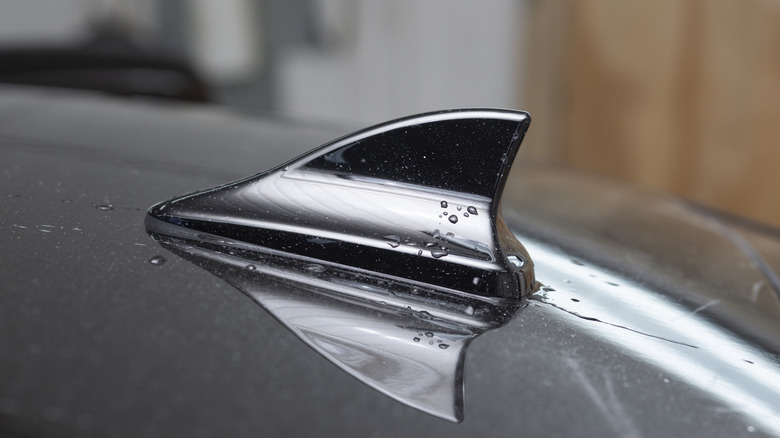
Motor vehicle technology is always evolving, with the dream of flying cars seemingly always right around the corner and new technology like flat electrostatic speakers keeping us excited about the future. Where once we saw large, boxy vehicles with metal antennas on their hoods, we now see sleeker-looking models with a distinct lack of a place to insert an antenna topper. You don't even need physical keys anymore thanks to digital car keys.
It's funny to think that there was even a time when making antenna toppers was big business, with people pulling in six figures every year selling the novelties. But those days are mostly behind us as modern design aesthetics have changed, leading to that little nub on top of most modern vehicles. Known as a shark fin antenna, this cute little feature is more than simply an aesthetic choice — it's a functional one.
It serves to house a lot of the communication features that modern vehicles rely on. Inside, you can find all manner of components that help connect your vehicle's Bluetooth, cellular, Wi-Fi, vehicle support, GPS, satellite system, and more. On top of that, it's designed in a distinctive fin shape that's theorized to help add to the aerodynamics of modern vehicles. But is this actually the case?
Shark fin antennas replaced whip antennas for modern tech
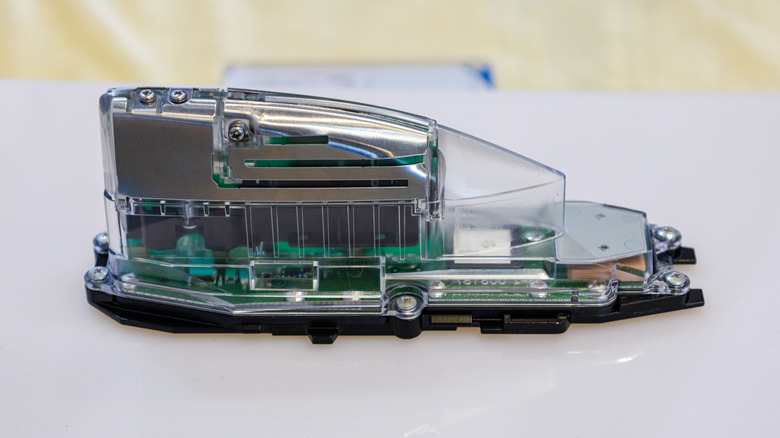
For many generations, vehicles used the traditional metal antenna that would protrude from the hood in order to help capture radio signals. In early cars, these antennas could only capture AM signals and were considered to be high-end luxury add-ons. Modern-era cars are equipped with a lot more complex communications technology, much of which is now housed inside the fin on top of your vehicle, as its location provides a clear line of sight to the sky.
Upwards of 14 different antennas can be housed inside this shark fin, providing all the modern communication features that a user may want or rely on. Its fin-like design is in response to vehicles becoming more and more streamlined: The shape is intended to blend into modern vehicle aesthetics while also helping to reduce overall drag on a car.
However, the results of reducing drag and improving gas mileage are negligible, with some engineers indicating no noticeable improvements outside of aesthetics. As recently as 2021, certain Chevy and GMC trucks still used old-fashioned whip antennas. GM Vice President Tim Herrick noted that this was done because whip antennas fed AM/FM signals better than those of the shark fin design.