

What The Percent Chance On A Weather Forecast Really Means
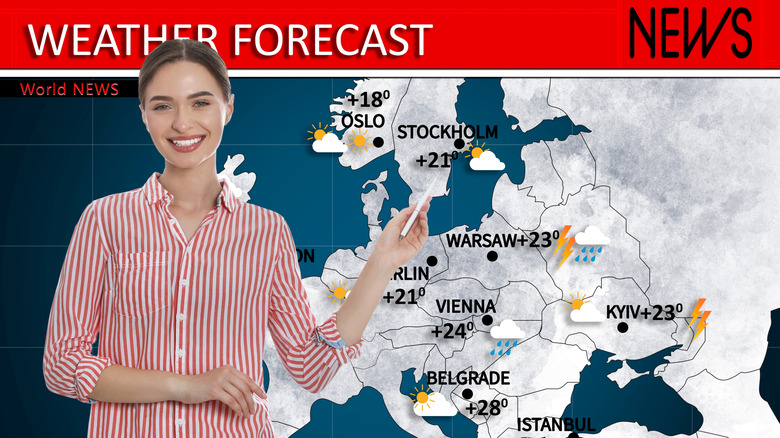
If you've ever checked the weather on your phone with an app like Weather Up — or just watched it on TV — then you've probably seen the forecasters talk about the "chance of rain" or "chance of snow." Most times this is broken down further to indicate a specific percentage. For example, you might see a news broadcast before a storm where the forecaster says that there is a 55% chance of storms in a specific county or city. But does that percentage chance mean that 55% of the region might see those storms, or that there is an actual 55% chance that storms will happen?
This part of weather forecasts has always stumped people, with some even taking to online forums like Reddit to ask exactly what it means. And the past few weeks of winter have been especially interesting since much of America has been facing down a huge winter storm, which affected several areas, including regions that don't typically see a lot of snow, like North Texas.
Up in New York, we even saw the forecast turned into memes, as the mayor of New York Zohran Mamdani found himself the butt of the joke as people took to social media to mock his forecast of 3 to 16 inches for the impending snowfall, with many even going so far as to connect it to WWE superstar Stone Cold Steve Austin's "Austin 3:16" catchphrase. So what does it mean when forecasters say there is a percentage of a chance of weather somewhere?
How to interpret the probability of precipitation
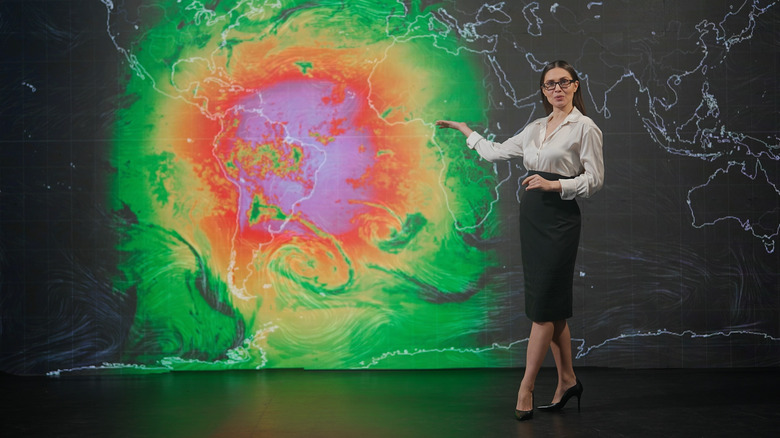
The "probability of precipitation" is essentially the measurement of the chance that the specified region will see the forecasted weather. So, if a meteorologist says there is a 45% chance of sunny skies in New York City, then that means that there is a 45% chance that all of that region will see sunny skies.
The same goes for rain, snow, and any other weather forecast that might pop up. In the case of rain specifically, the National Weather Service says that the probability of precipitation "describes the probability that the forecast grid/point in question will receive at least 0.01" of rain." This extends to other precipitation types, too.
So, it might not be hard and fast numbers, but it at least gives people an expectation of what they might see when they go out of their homes during that particular forecast. Understanding what the information in weather forecasts means is important, especially for planning your day. And, as scientists continue to research ongoing weather effects — like whether our seasons are out of sync or how tornadoes actually form — having a basic knowledge of what these different terms mean is going to be vital to knowing what you might be walking into when you head outside.