

Europe's Offshore Wind Parks Are Doing A Lot More Than Generating Electricity
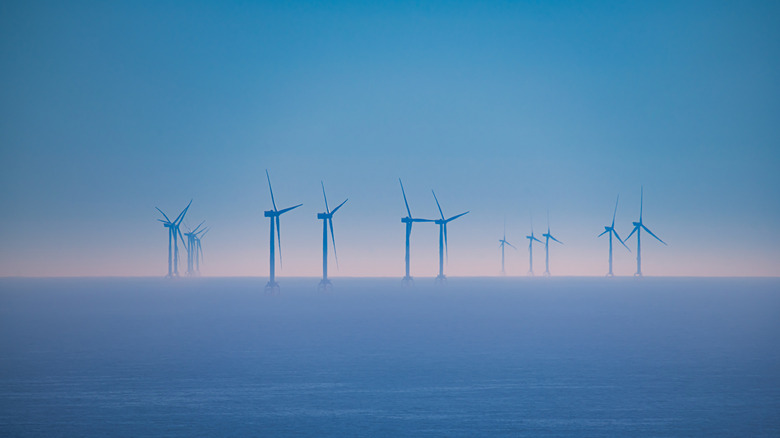
At first glance, offshore wind farms might not sound like a great idea. In fact, we've seen some concerns over the years about the effects they could have on animals such as birds — which can fly into the massive windmill structures. However, in the North Sea, we're seeing different reports. Reports that suggest the construction of wind farms off shore has actually helped marine life naturally develop and even thrive.
The focus of this revelation first hit headlines in 2022, when an expose in The Anthropocene magazine featured data from marine researchers working in the North Sea that suggested wind parks like those being built off the coast of Europe were actually offering new areas of protection for marine life, even nurturing some species including threatened ones like great seals and the North Sea cod. It's an exceptionally important finding, though, as it shows that offshore wind turbines can be less of a point of contention for conservationists, who previously believed that building into the seafloor would actually hurt marine life instead of help it.
The prospect of endangering marine life with the construction of new turbines has remained an big concern, especially as some reports suggest that larger fish can be completely distracted by the noise that these turbines generate, as well as the electromagnetic fields found around them. Additionally, when they are shut down, the massive pillars that were previously embedded into the seabed must be removed or completely replaced — which can be both costly and disturbing to the local environment.
Unexpected findings
So then, how exactly are these turbines helping marine life if there are so many concerns around it? Well, according to research by some projects such as the De Rijke Noordzee program, which began in 2018, the construction of these massive turbines has not only given marine life a new place to call home at times — thanks to the design of the turbines themselves — but the fact that fishermen cannot travel to those parts of the North Sea has also allowed marine life to flourish, where it might have previously been threatened by overfishing.
Thus, instead of simply negatively effecting the marine environment, many are coming to believe that these turbines could actually benefit it. In the North Sea, where reefs of marine life have begun to form all along the turbines in the area, as they find safe harbor in the protected marine zone. Additionally, reports from 2022 suggest that German researchers were able to locate cod and even planted lobster populations within the wind park areas, allowing them to expand and thrive thanks to the protected nature of the region.
This success has also spurred the construction of wind parks in other areas of the world, with North America even beginning its own construction of a park with its first large-scale operation in 2024.
The future for wind parks and biodiversity
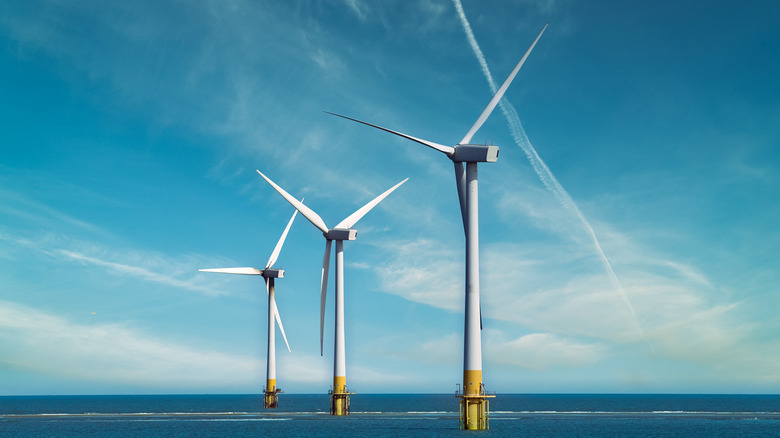
While wind farms are beneficial to the ongoing attempts to help combat climate change — a fight that we're currently losing — and generate clean energy, the unfortunate side effects are always something to keep in mind, too. However, as seems to be the case in the North Sea, it looks like the side effects for wind parks might actually be more beneficial than just reducing the carbon footprint we create with our huge reliance on energy. And, as companies find new ways to harness new technology — like the self-healing barriers we saw around a military base in 2024 — we may be able to expand how they help marine life as a whole if we start putting more artificial reefs out in these wind park areas.
As for the North Sea, projects like the De Rijke Noordzee program will no doubt continue to expand, with the designs used there giving marine life places to hide and call home (albeit with an abundance of careful planning). And, as a bonus, researchers will hopefully be able to get an even closer look at some of the marine life that calls these parts of the world home. This could give us an even greater understanding of the diverse marine life that calls our oceans home.