

China's Advanced GPS Alternative Isn't Just For Navigation
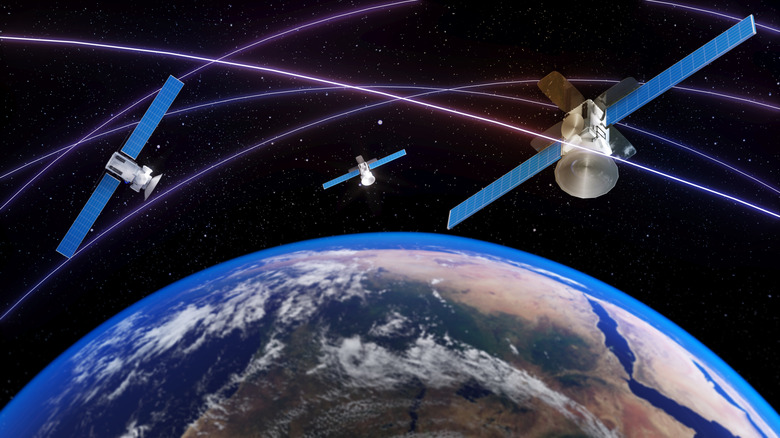
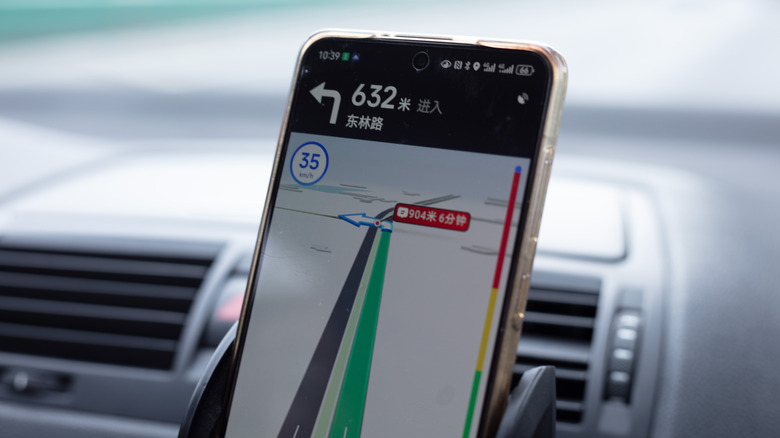
The term "GPS" has become ubiquitous in American life. You know it as the foundational technology of navigation apps like Google Maps and Waze, but in most of the world, GPS is just a meaningless trio of letters. The Global Positioning System is owned and operated by the U.S. military, and it is just one of many Global Navigation Satellite Systems (GNSS) in operation around the world. In the European Union, people find their way with help from a GNSS called Galileo. In Russia, they use GLONASS (GLObal NAvigation Satellite System). Japan has QZSS (Quasi-Zenith Satellite System), commonly known as Michibiki. But there's one system that matters more than people realize: China's BeiDou isn't just a GPS alternative, it's a fast-growing platform with uses that go far beyond navigation.
The first BeiDou satellites launched in 2000, and by 2020, it had achieved global coverage. Just like America's GPS, BeiDou is owned and operated by its home government, and the ruling Chinese Communist Party has kept most of its technological specifications secret. However, BeiDou has caught the attention of other governments, particularly the United States, due to its wide-ranging uses. BeiDou does a lot more than guide people on their way to work. Just as GPS is closely tied into the American military, BeiDou is becoming ingrained in China's military operations, used by guided missiles and bombs. It's also being used for monitoring and responding to natural disasters. BeiDou is already more advanced than GPS in many ways, and it's grown at a stunning pace.
A 1996 missile crisis helped launch China's BeiDou ambitions
BeiDou is much younger than GPS, which first launched in 1978 and achieved full coverage in 1993. However, the Chinese government has pursued progress on its GNSS much more aggressively than the United States. BeiDou was born with a competitive spirit, as part of a push to bolster China's military wing, the People's Liberation Army, at the end of the last century.
A defining moment for China's GNSS ambitions came amidst the 1996 Taiwan Strait missile crisis, when tensions between the Chinese and Taiwanese governments led to the PLA conducting a series of missile tests in the East China Sea. During one of the tests, the Chinese missiles missed their targets badly. They had been relying on a GPS signal that went out, and Chinese officials later suggested the signal had been disrupted. The CCP resolved at that moment to develop a GNSS independent of, and superior to, the Americans'. From the beginning, national defense, and particularly missile guidance, was at the forefront of BeiDou.
Since the 2010s, BeiDou has played a major role in China's Belt and Road Initiative (BRI), a massive infrastructure project aimed at expanding trade routes across the Eastern Hemisphere. In the process, China has begun heavily promoting BeiDou on the international scale. Their partnership with the military of Pakistan in 2018 drew particular attention. Amidst a steady air of tension between Beijing and Washington, China's ability to fortify its allies' militaries will have immense geopolitical consequences in any form of conflict.
BeiDou now outpaces GPS in satellites, ground stations, and accuracy
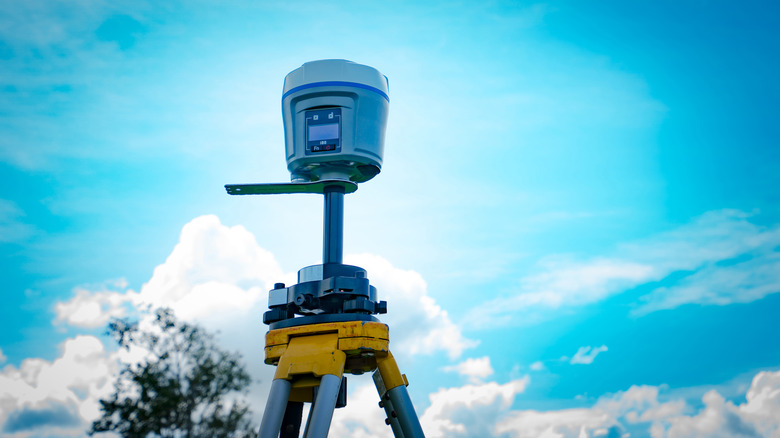
By 2023, BeiDou had 56 satellites in orbit around the Earth, dwarfing the 31 satellites used by GPS. The difference is even starker when it comes to ground support, with BeiDou operating 120 ground stations compared to GPS's mere 11. With this larger arsenal, BeiDou has been able to collect more accurate positioning, navigation, and timing (PNT) data than GPS can offer.
Meanwhile, the United States has been steadily rolling out GPS III. It will be an upgrade over the currently available GPS system, but it will probably still fall short of BeiDou on most fronts. GPS III will add more satellites to the GPS constellation, but the new satellites are only an incremental upgrade over what's already in use. In fact, GPS III was originally intended to launch in 2014, so the system is already outdated in some ways — and the first satellites for its planned successor, GPS IIIF, aren't scheduled to launch until Spring 2027.
BeiDou has raised alarms within the U.S. government amidst a tight competition with Beijing for tech superiority that has already shown the Chinese can outmatch our drone technology. Perhaps the most concerning comment about BeiDou came from within the U.S. government itself, in a memo from former Coast Guard Admiral Thad Allen from 2023, which plainly said, "GPS's capabilities are now substantially inferior to those of China's BeiDou."