

The Next Samsung Galaxy Watch Might Use This Groundbreaking New Tech
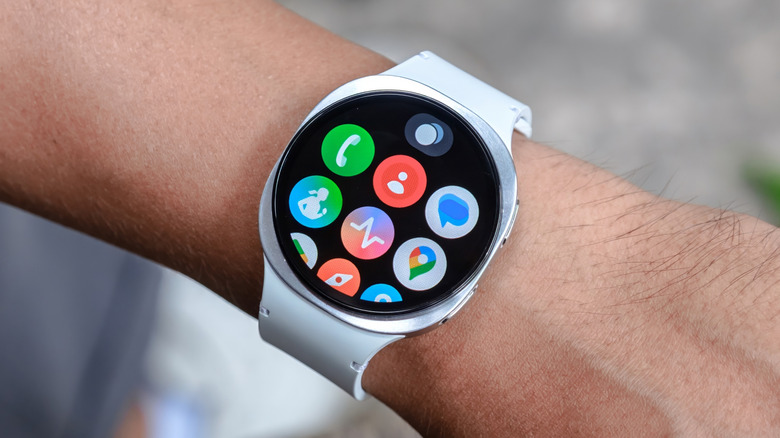
Battery life is typically a sore spot for smartwatches, as the tiny batteries don't store a lot of power, and you are forced to charge them regularly. For example, the Samsung Galaxy Watch 8 Classic, which is among the best Android smartwatches, is only rated for around 40 hours of battery backup. So, manufacturers are constantly working on improving technology to stuff more power into a smaller battery and speed up charging times.
Samsung Electro-Mechanics (SEM), a subsidiary of Samsung Group, is one such manufacturer that's actively working on solid-state battery technology specifically for wearables. This tech will enable smartwatches to feature larger batteries, a thinner profile, and improved thermal stability. It's possible that an SEM solid-state battery might show up in the next-generation Samsung Galaxy smartwatch.
The company originally announced this ultra-compact battery in 2024, revealing that it's an oxide-based unit and that customer tests were already underway. While no specific time frame of when this battery would be available in a smartwatch was given, SEM claimed on the sidelines of CES 2025 that it was eying 2026 for mass production. Here's how this new battery technology is different from existing Samsung Galaxy smartwatch batteries, and why that's a good thing.
Better than traditional Li-ion smartwatch batteries
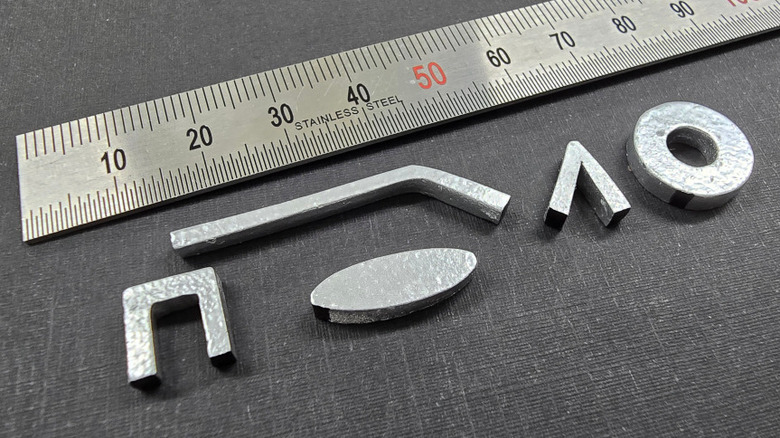
The newly developed oxide-based solid-state battery (SSB) for wearables is quite different from Li-ion batteries found in popular Android smartwatches, like the Samsung Galaxy Watch Ultra. As the name suggests, the SSB replaces the liquid electrolyte found in conventional Li-ion batteries with a solid, ceramic-like material. As a result, SSBs don't have to worry about leakage, and the physical expansion is minimal during charging.
So, they don't need a pouch to keep everything contained or a buffer space to account for expansion. Additionally, the solid-state units don't require a separator, which is found in Li-ion batteries to keep the anode and cathode separate, as the solid electrolyte itself serves as a separator. It's dense, stable, and doesn't melt at high temperatures, making SSBs safer than Li-ion batteries as well. The lack of a need for a separator and a strong casing allows Samsung to pack the unit's chemical compounds more tightly, giving the battery better energy density.
Another highlight of SSBs is that they can be made in custom, non-linear shapes, which is ideal for smartwatch space efficiency. The benefits of an oxide-based SSB would allow a Samsung Galaxy smartwatch to possibly include a bigger battery for a longer backup or a slimmed-down frame for a lighter build. However, for now, we'll have to wait for an official announcement on whether the next-generation Samsung smartwatch will indeed have a solid-state battery.