

Ditch Modern Messaging Apps For This Cool Retro Solution
We may receive a commission on purchases made from links.
Ham radio is an electronics and communication service people can use freely without the need for the internet or cell phones. The FCC recognizes it as a backup for emergencies, and it is often used by skilled hobbyists. It's typically used for voice and legacy communications, like Morse code. Amateur operators are called "hams," and must be licensed to transmit. But if you just want to listen in, you can connect to ham frequencies with a compatible device.
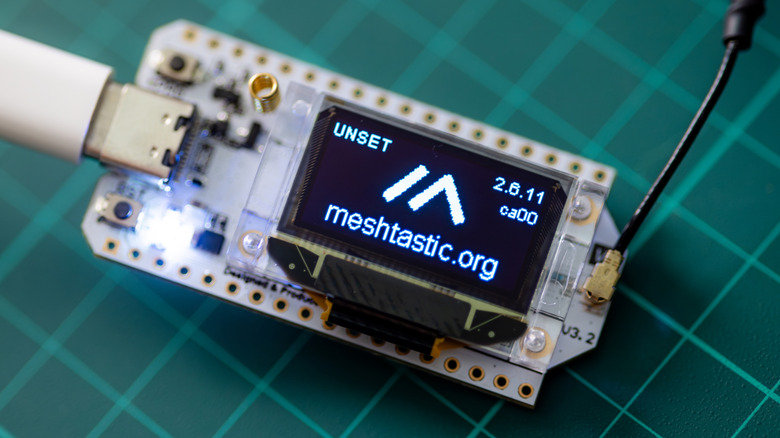
Another open-source network, called Meshtastic, works similarly, offering a walkie-talkie style communication system, but one that relies on texting, not voice. This cool retro solution is open-source, uses long-range (LoRa) radio technology, and, generally does not require licensing. That means anyone can set up a valid and compatible device to establish a node. Using the network is free, but you will need the right equipment.
Once you're set up, which requires hardware and software tinkering, you can effectively stop using mobile messaging apps and use Meshtastic, sort of. You'd also have to get friends and family onboard, but that's a different matter. It's a neat, low-power option that's available wherever there's a signal and can also be used in remote areas, making it a great choice for emergencies. The Meshtastic team actually describes it as "off-grid communication for everyone." Of course, you could consider some apps that turn your smartphone into a survival tool while you're at it.
How Meshtastic works
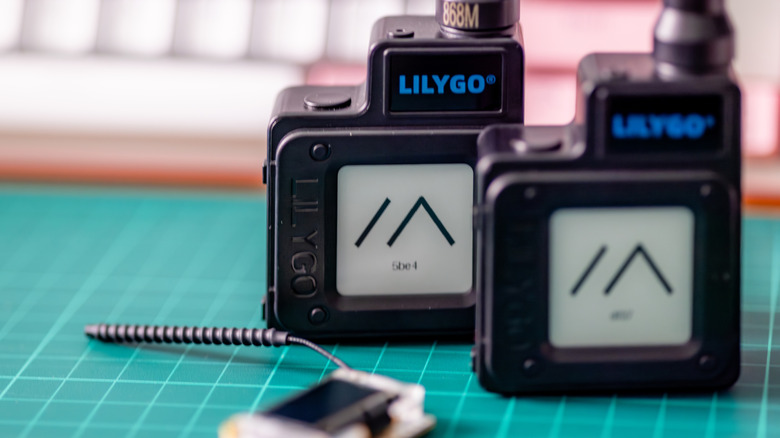
Meshtastic can be described as a peer-to-peer network, meaning it uses device connectivity rather than cell towers or conventional wireless access points and the internet. According to Meshtastic, there are over 100 community-supported devices, with over 26 regions available on the network. LoRa devices, or nodes, can transmit communication over distances measured in miles, and the data is encrypted using AES-256 bit encryption. So, messages are secure and private, similar to using encrypted mobile apps like iMessage or Signal.
Basically, it's one big peer-to-peer mesh network. You build a Meshtastic device, which acts as your node to connect to the network. Once in, you have access to the greater open-source signal for sending data — in this case the text messages. You can also connect to and control your Meshtastic devices on your Android or iPhone, using mobile apps. Or, you could connect through a web client on devices the software supports.
Using Meshtastic to talk to friends and family
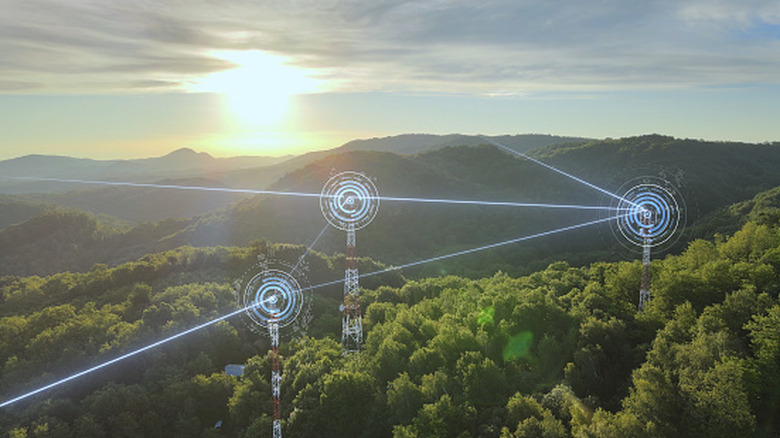
To manage your own, personal network, you would need to deploy enough microcontroller unit (MCU) nodes for Meshtastic coverage between your location, and friends and family. Imagine running around the countryside trying to make that happen? This is where Meshtastic's open-source design comes into play. The LoRa network makes use of local community nodes, and other active nodes, to send data. You can see a visualization of nodes in your area with MeshMap.
Ideally, you'd set up your MCU for broadcasting and then connect communication devices to that node. If you're using a smartphone, it sends messages to the MCU via Bluetooth, which then sends them over the LoRa network. You'll want to make sure the recipient can read your messages, which might mean showing them the ropes if they're not tech savvy. Active radios can be paired with a single phone, meaning you could allow someone on the other end to send you messages from their mobile device.
They could also use a computer with the Meshtastic web client installed. Many users set up their MCU to be solar powered. You can find a list of supported hardware in Meshtastic's official documents. Examples include the Atlavox M1 Meshtastic Radio and RAKwireless WisBlock starter kit. The RAKwireless WisMesh Pocket V2 is about as close as you'll get to plug-and-play solution, but still requires software tinkering to setup.