

China's Robot Dogs Do A Lot More Than Fetch
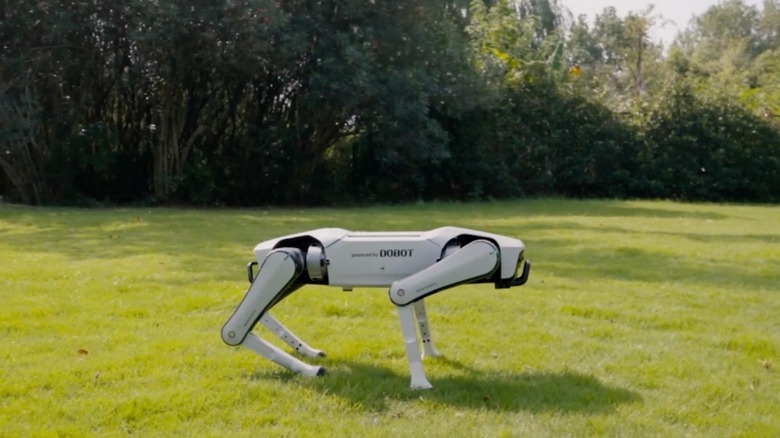
China is heavily investing in robots, and the quadruped models might soon become mainstream in the region. Specialized models like one that can run as fast as Usain Bolt have been grabbing headlines, but there are more general-purpose versions making their way to consumers. Some of these new releases can be used to transport lightweight loads, capture photos and videos with auto-tracking capabilities, or just be a fun companion for family time with kids.
Interestingly enough, while we have seen a push into humanoid models, which we might consider a more familiar application, it seems they have actually been outpaced by an "older" technology — the robot dog form factor. These products have started to evolve beyond the era of just being seen at trade shows as cool, distant devices, as Chinese companies are gearing up to start actually selling them.
Some examples come from startups Vita Dynamics and Dobot. Vita released a quadruped robot for under $1,500 at the end of 2025, while Dobot started pre-sales for its Rover X1 below $1,000. Both robots have similar functionality (transporting boxes, capturing videos, and acting like a dog), but with the Dobot Rover X1, users can even switch between regular legs and wheeled ones so it can adapt to more terrain, perform tricks, and work as a security guard. As the company describes it, this robot can light your path in a camp and be your "ever-vigilant sentinel." Still, these are not the only jobs robot dogs have been doing.
Robot dogs can be used for scientific research, nature conservation, and even war
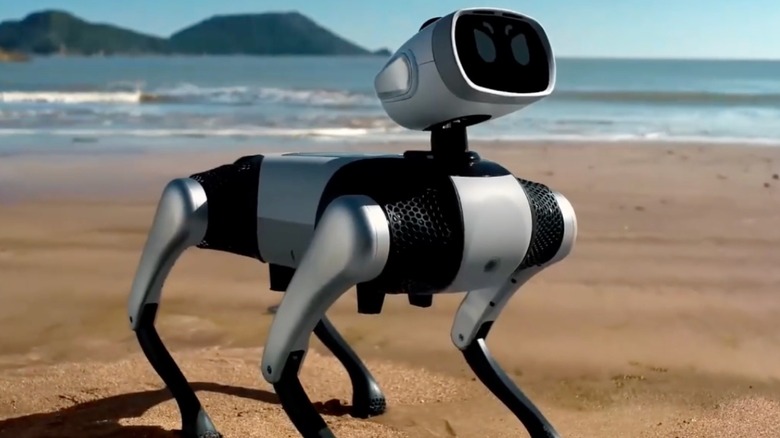
In the same way those old iPhone ads said there's an app for everything you might need, it seems these quadruped robots are covering a wide range of applications, from consumer creature comforts to business and research. Chinese state broadcaster CCTV, for example, reported on a robot dog navigating a simulated combat course, moving through barricades and obstacles — all while providing a real-time camera feed that can help troops scout enemy positions and move under cover.
Less-scary applications are being developed too, like a six-legged robot dog that is serving as an assistant for scientific expeditions in the Antarctic. This robot can carry heavier objects on the ice without slipping or falling due to its extra legs and anti-slip "shoes."
Another application comes from Hong Kong, where the Environmental Protection Department is using quadruped robots to detect bird species while also monitoring trees. So the list of their potential uses continues to grow: Robot dogs are poised to patrol streets and battlefields, help preserve nature, aid scientific research, and serve as all-purpose helpers around the house. While these are just a few examples, expect more brands to commercialize these kinds of machines going forward, like Xpeng's humanoid robot with synthetic skin, which is slated for release in 2026.