

5 Tricks To Keep Your Car's Windshield Washer Fluid From Freezing
We may receive a commission on purchases made from links.
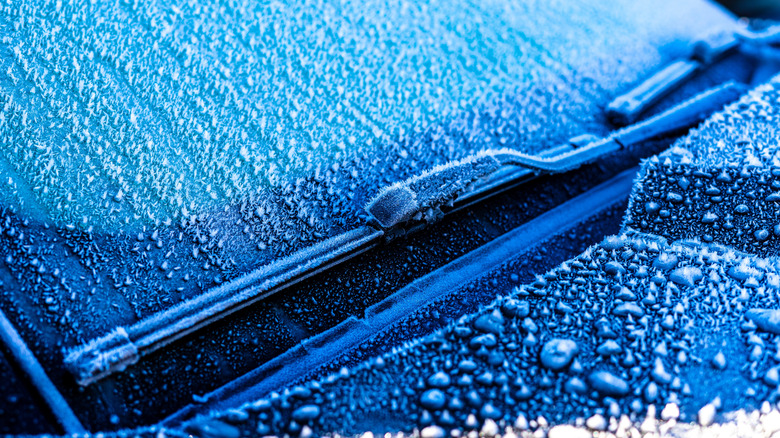
During the winter, your car can be regularly beset by freezing rain, accumulating snow, or even both. If this is happening while you're out driving, it's vital you have a full tank of windshield washer fluid, as its cleaning power can help dissolve and unstick stubborn winter elements. Unfortunately, while it doesn't freeze as easily as water, windshield washer fluid is still susceptible to solidification, rendering it useless.
Though you could use this phone hack to improve road visibility in bad weather, you're probably better off with a few proactive tricks, such as employing a winter-ready fluid and parking in a shielded spot. Windshield washer fluid is composed of various chemical agents, from alcohols to detergents, that make it more resistant to the cold and help to clean your windshield.
It does still have water content, though, which means the fluid can freeze in sufficiently cold temperatures, solidifying the moment it sprays out from your wiper jets. This could leave you with a significantly impaired windshield, an obvious hazard while driving that you may not be able to remedy on your own with DIY car tools like a squeegee. So, it's on you to take preventative measures and ensure the fluid never has the opportunity to freeze.
Use low-temperature washer fluid
The first and foremost thing you should do to prevent windshield washer fluid from freezing is employ a product that is less likely to freeze in the first place. Regular windshield wiper fluid for warm seasons contains a relatively low concentration of cleaning agents. That may be fine for the summer, but when winter rolls around, it will have substantially less protection against freezing.
When the temperatures start dropping, it's time to replace whatever's in your washer reservoir with a winter-ready alternative. Many windshield washer fluid brands make alternative varieties of their products that are specially formulated to be resistant to the cold. For example, a bottle of Prestone De-Icer fluid from Amazon is formulated to not only resist temperatures up to -34 degrees Fahrenheit, but also melt any ice or frost it comes into contact with.
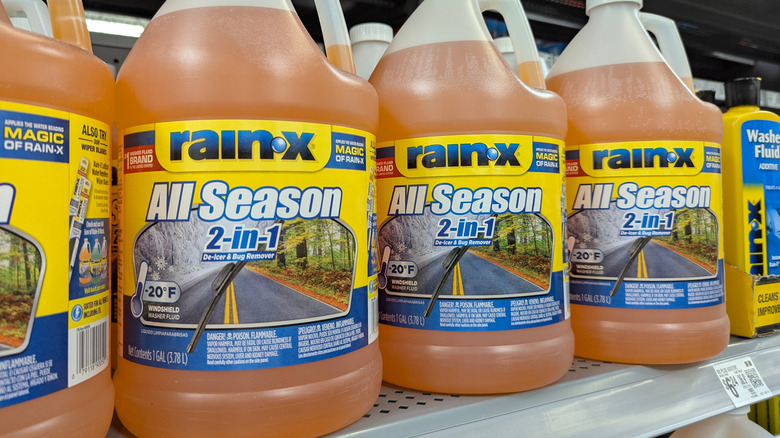
With this stuff loaded into your reservoir, the odds of it freezing in the reservoir or when deployed from your jets is drastically lowered, and you get higher-efficiency frost-clearing power in the bargain. If you don't like the idea of having to swap out washer fluids every season, there are also all-season fluids like Rain-X All-Season, which can resist low temperatures, while maintaining the bug splat-busting efficacy of summer-formulated solutions.
Add isopropyl alcohol to your washer fluid
If you can't get your hands on winter-ready washer fluid and are stuck with the warm-weather stuff, don't give up hope just yet. Windshield washer fluids contain chemicals that alter their properties, including alcohols like ethanol and methanol. These particular chemicals are what make wiper fluid good at cleaning and dissolving, but not so much at resisting the cold.
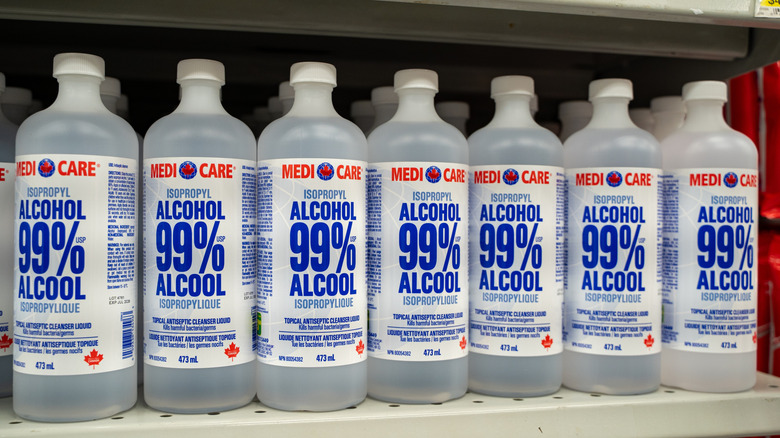
If you've got wiper fluid that's missing this crucial component, you could just add some yourself: Isopropyl alcohol, the all-purpose substance perfect for removing stickers from electronics, cleaning phone screens, and shoring up against the cold. Get a bottle of 99% isopropyl alcohol from your local grocery or drug store, and add 8 ounces (1 cup) to your windshield washer fluid reservoir.
Isopropyl alcohol has a freezing point of about -129 degrees Fahrenheit, so needless to say, it would take some truly bone-chilling cold to solidify. A little bit mixed into your existing fluid will help protect it against the cold. Just remember, a proper winter-ready washer fluid is still the preferable choice. Isopropyl alcohol alone can't keep your washer fluid ice-free forever, especially in bitter cold temperatures.
Park somewhere shielded from the cold
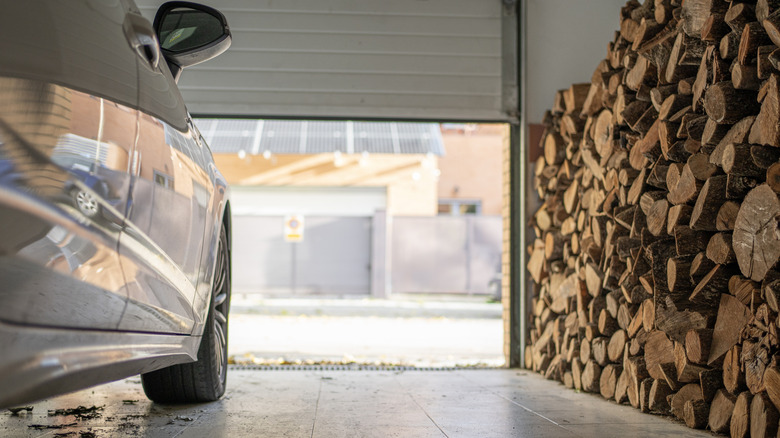
In addition to using the ideal types of windshield washer fluid in your car, the places you park your car can go a long way toward keeping things from freezing over. Specifically, if you are able, park your car somewhere insulated and protected from the cold during the winter season. A garage is of course ideal, but a parking space that's at least covered from snow or freezing rain would still help.
As long as your car isn't in a spot where it's being constantly exposed to unfettered cold, the odds of its washer fluid freezing are lower. If you don't have a covered parking spot, the next best option would be to employ some manner of protective cover, like the AstroAI Snow Cover. It secures tightly over your car's windshield and wipers with an insulated inner section, protecting both from ambient cold, accumulating snow, and bitter wind chill.
The fluid reservoir may be in the engine bay, but the wiper jets are the most exposed areas for the cold to seep its way in. Using a windshield cover seals off those exit points and makes it more difficult for the cold to attack the fluid.
Keep your reservoir topped up
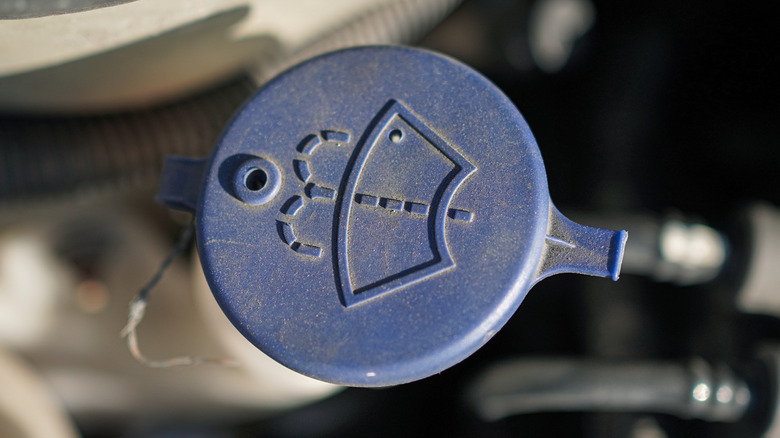
Speaking of your car's windshield washer fluid reservoir, it would be in your best interest to keep it topped up, especially if you're using the washer jets frequently. There's the obvious reason for this, that you don't want to run out of fluid while on the road. But in addition to that, keeping the tank full helps to protect the reservoir and its related components from the cold.
Windshield wiper fluid acts as an insulation agent, with its cold-resistant properties circulating around the system. As the fluid drains out, this efficiency gradually decreases, increasing the risk of the remaining fluid freezing and the tank becoming cracked and brittle from the cold. This is why you should never drive with a completely empty reservoir. If you have to flush your washer fluid system for any reason, make sure you refill it completely before driving again.
Install a wiper fluid heater
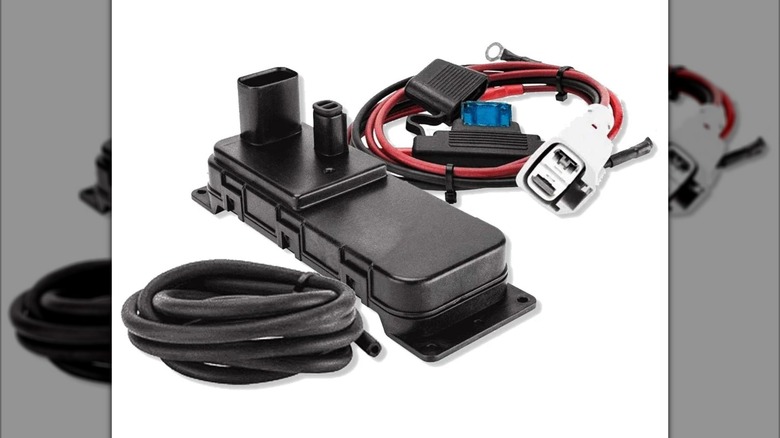
If you're really worried about your windshield washer fluid freezing and don't mind performing a bit of tinkering on your car, there is a system you could add for some extra security: A wiper fluid heater. It's exactly what it sounds like, a small heating element that's attached to the fluid reservoir, heating the liquid as it circulates. These kinds of accessories are primarily used for vehicles that work in very cold climates.
Unfortunately, it appears you can't get a reputable fluid heater off of Amazon as easily as you could a gallon of washer fluid or a windshield cover, for example. You would likely need to special-order the parts from an automotive supply company, as well as pay a garage to have it professionally installed. Consider this a last resort if you don't seem to be having any luck with the other solutions, and talk to an automotive professional before you go through with it to ensure the investment is worthwhile.