

California's Orange Highway Stripes Are Already Changing How You Drive
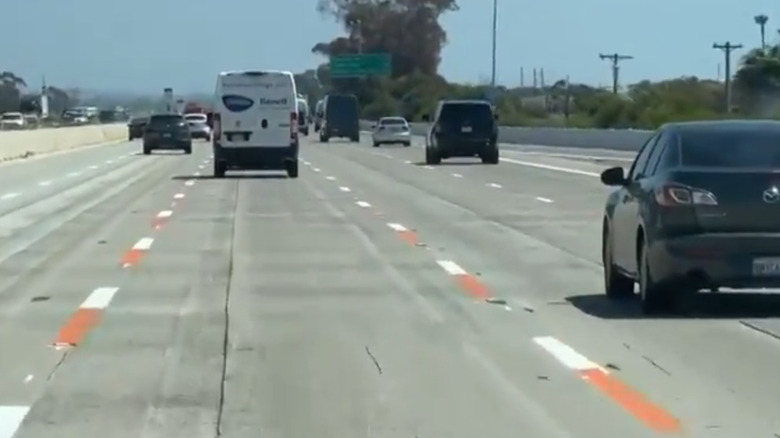
A California road construction project near San Diego introduced road markings that many drivers were not familiar with. Where normally you might see white or yellow stripes on the road and dividing the lanes, in this project, they were instead white and orange lines painted one after the other. The purpose of these marks is to alert drivers that they are in a construction zone to encourage slower and safer driving.
This was a pilot project from Caltrans and SANDAG Build NCC. The stripes are temporary, only used in times when drivers need to be alerted to special road zone rules, such as reduced speed in construction zones. Safer roads are something often sought after, such as the driving tracking app that makes people drive more safely. The benefits proposed for these stripes are that they are attention-grabbing, telling drivers that they have entered a construction zone. They are more visible at night than orange cones. They also more easily mark where construction zones end and begin rather than relying entirely on road signs.
The stripes are also used to better distinguish lane shifts that may be temporary during construction times, helping drivers know where to go. This pilot project was met with success, with more drivers aware of when they were in a construction zone. Though not everyone knew what the stripes meant, the color matching the standard orange and white cones helped to get the message across.
California isn't the first to try these orange stripes
California is actually following the models of other states successfully using these orange and white road stripes. Wisconsin was the first to implement them about a decade ago. The state decided to try the orange stripes due to the more severe winters experienced there. Snow and road salt could make lane shifts during construction hard for drivers to see, so the orange was chosen to be bright and catch attention.
Kentucky was the next state to try them out in 2019 in an interstate construction project. That was followed by Texas in 2020, Michigan in 2022, and Washington in 2023. The Indiana Toll Road is being considered to try out these orange and white stripes for an unknown future date. The United States isn't the only country to implement these stripes, either, as they've been successfully tested in Canada and New Zealand.
The benefits for human drivers are clear to see. With the rise of self-driving robotaxi services and autopilot cars, it's interesting to consider if these high-visibility stripes will better help those systems, as well. The robotaxi service Waymo recently had a safety recall because its cars illegally went past a stopped school bus. Perhaps pilot programs like this can make both human and self-driving cars safer. Since both robotaxis and the orange stripes are so new, there is no data on how the systems respond to temporary striping.
Are the orange stripes improving safety?
Accidents in construction zones are an ongoing problem. According to data from the National Work Zone Safety Clearinghouse, in 2023, there were 899 fatalities from crashes in construction zones. Of those fatalities, 40 were pedestrians doing road work. These numbers have not significantly improved since 2015, fluctuating each year but consistently staying between 700 and 1,000 fatalities.
Research was done in 2023 on how these orange and white stripes help prevent construction zone crashes. It was published through Purdue University under the title "Effectiveness of Contrast Markings on Roadways and Orange Markings in Work Zones". The study found that these markings reduced lane-departure crashes by 74%, and that a high majority of drivers approved of the markings and found them helpful. The orange markings also contributed to a reduced speed of about four miles per hour when compared to construction zones that did not have orange stripes.
As the use of these orange stripes spreads from California to other states, it will be interesting to see if future crash data reports any significant reductions in work zone fatalities. Whether or not drivers are aware of what the stripes mean, the correlated safety habits seem promising. A future where all construction zones use orange stripes may be on the horizon.