

4 Electric Vehicle Trends We're Worried About In 2026
Every year, vehicles are given a small refresh to entice people to upgrade. EVs, especially, are pushing the boundaries of what's possible and what's being included in the transport cabins of the future. Longer effective fuel and driving ranges, sweeping screens and entertainment options, heated or ventilated seat upgrades, unique steering wheels, tablet-based controls, we're already seeing a lot of unique stuff inside currently available cars. But for every new feature that offers a positive experience, there are one or two that have everyone questioning that very future.
A perfect example is BMW's controversial heated seats subscription that was eventually discontinued due to customer backlash. It would have had vehicle owners paying a monthly subscription to use the heated seats, already included in their car, but disabled altogether if they let the membership lapse. It's not the only type of feature that has everyone questioning where future vehicles are headed. There are a few other vehicle trends in the EV industry that we're worried about, as we head into the latter half of 2026.
1. Comprehensive virtual assistants
Using voice commands to control modern electronics can be hit or miss. Simple commands work out great, like when you want to adjust volume quickly, skip music tracks, or search a location via your GPS app of choice without plugging away on a non-touch screen with a frustrating knob or dial. But there are also a lot of actions you can engage quickly with a simple button press. Why ask a virtual assistant to answer an incoming call when you can quickly press a button on your steering wheel, for example, or press another to dismiss it just as quickly.
Alternatively, why ask a virtual assistant to turn down the in-cabin air when you can turn a knob or press a button? It doesn't make sense for those super-simple, quick actions. And when those actions are more complex, often, the virtual assistant just makes things more aggravating. In the office or at your desk, you might have a little more time to fiddle around and argue with the disembodied voice inside the tech, but while you're driving, trying to keep your eyes on the road, ultimately, it's better to get it done as fast as possible, or ask a passenger to handle it.
That's why Renault's Reno avatar sounds like something no one is really asking for inside their EVs, or vehicles of any kind, really. Comprehensive virtual assistants or interactive characters and avatars have us a little worried about future drives.
2. Dashboard screens that cover the entire console
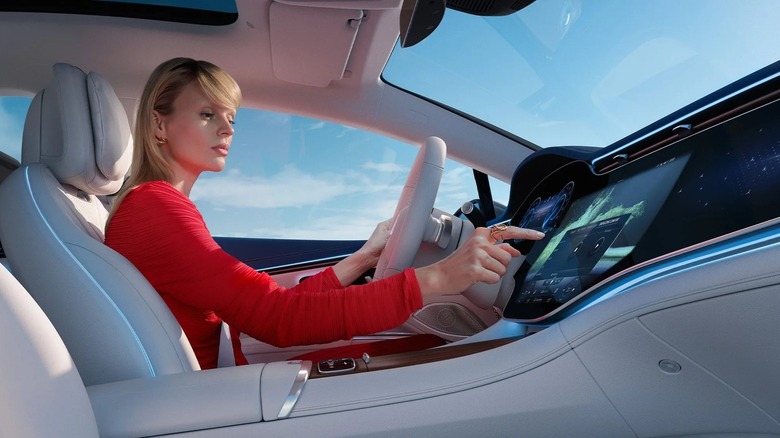
Infotainment displays in vehicles are continually getting bigger, which, on some level, makes sense. They're being used for more and more tasks, beyond GPS and music information for the track that's playing. Some displays can even be used for streaming on the go to keep passengers entertained, which can help keep the kids occupied on a long drive. But those screens can also be awfully distracting for drivers. Even more so when they stretch across the entire dashboard, which seems to be a trend that's taking hold in recent years. Digital screens are also replacing physical gauge clusters, leading to even more screens overall, when they're not made bigger.
The Mercedes-Benz EQS features a 56-inch MBUX Hyperscreen that stretches from pillar to pillar, meaning across the entire center of the dash. Meanwhile, the Cadillac Escalade IQ has a 55-inch curved display, the Lucid Air has a 34-inch "Glass Cockpit," and Teslas, while not stretching totally across the dash, have long been outfitted with large, touchscreen displays front and center.
While there are no arguments against how beautiful these large-screen setups can be, there are some to be made about how unsafe they are. Studies have shown driver distractions to be increasing with new technologies. Moreover, people don't really seem to like touchscreen displays in vehicles, especially big ones, at least not in their current forms.
3. No more DIY repairs (proprietary components)
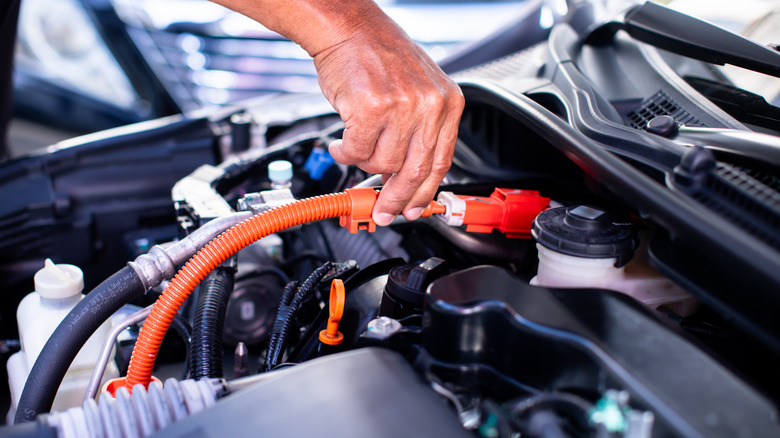
Right to repair laws are a series of regulations that enforce consumer rights to repair their own products, and exist to keep repair-related competition viable so consumers have options when it comes to repairing devices, products, or, in this case, their vehicles. But if manufacturers have their way, many of these regulations would be ignored. BMW is already looking to install proprietary screws in its vehicles that need a special tool to loosen or adjust and may not be available to consumers or even mechanics.
Hyundai also faced allegations that it was blocking Ioniq owners from doing their own brake repairs. But when it comes to hybrid and EVs, which often have more complex systems in use, it's not necessarily about the automakers blocking access directly. The complexity and security of the systems in question can make DIY repairs outright impossible. Even experienced mechanics might not have the specific knowledge or appropriate tools to repair or service some modern vehicles. Some shops even refuse service outright due to that lack of training or knowledge.
This could lead to more costly repairs and maintenance. What has us worried is this trend becoming more prevalent, locking out car owners from opportunities they should have by right. If the EVs are reliable and need fewer repairs, that's great, but with some of the least reliable EVs spanning brands like Lucid Air to Rivian and Kia, it's going to be important to keep those repair costs down.
4. No more Apple CarPlay or Android Auto
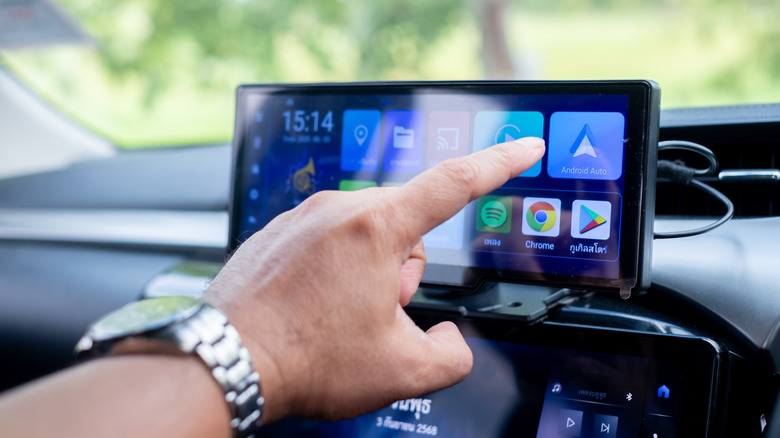
GM recently announced it will no longer be offering Apple CarPlay or Android Auto in its future EVs, instead opting for in-house software. While GM did make it clear that it would be working with Google to develop that software, it could still be bad news. Both of these platforms are designed to smooth out the wireless sync and connection process with modern phones and, despite what GM says, they make it easy to do so. GM is not the only company moving away from these platforms, however. Audi, Volvo, and Polestar are just a few other brands moving away from Apple CarPlay.
Some proponents think it has to do with the data gathered by these systems, particularly that it's not available to the automakers and locked to the mobile systems in use. GM also says it will be able to "go beyond what's possible with just phone projection," using the new systems, citing enhanced functionality. It remains to be seen how this will play out or how compatibility will be handled, especially for Apple users, but one thing is certain: it has us worried, and that's why it's here on the list. Hopefully, Tesla's Apple CarPlay support will come sooner rather than later, as it has promised.