

These Are The Best Portable Chargers For Laptops, According To Consumer Reports
We may receive a commission on purchases made from links.
Buy one of the newest MacBooks, Windows laptops, or Chromebooks, and you're likely to get good battery life, with manufacturers often advertising all-day battery life for their newest notebooks. Long battery life will improve your productivity, as you won't be tied to a wall socket for some last-minute energy top-up. But a battery life estimate of over 12 hours isn't a guarantee that you'll always have enough juice in the tank, as life can get in the way. Emergencies, like power outages or bringing the wrong adapter on an overseas trip, can also turn your depleted laptop into a temporarily useless computer.
If you own an older laptop model that never offered all-day battery life, or one whose battery has aged significantly, you'll also run into battery issues and deal with the inevitable anxiety that comes with that. A portable charger is the solution for many of these scenarios, and Consumer Reports has identified the best models that can serve your laptop. While these power banks may charge other devices, including your smartphone and tablet, they're not the same as the regular battery pack you may carry in your bag. The power bank you use for your phone is usually light and can offer at least a full charge for the handset.
But while it can charge the phone, it won't be good enough for your laptop. You'll need slightly larger and heavier devices for notebooks, as they have to pack more energy than the average phone power bank. Unfortunately, some that CR recommends may already be out of stock with some vendors, even though Consumer Reports released its rankings in September 2025. However, the vendors have already released newer devices that can serve as replacements.
What you need from a laptop portable charger
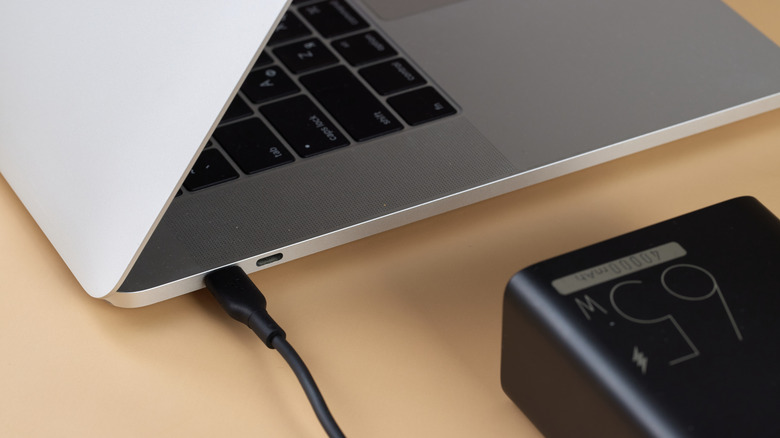
Consumer Reports recommends a battery pack with a capacity of at least 20,000 mAh for laptops. Comparatively, smartphone power banks may come in 5,000 mAh and 10,000 mAh varieties, which can provide one or several top-ups for the phone (the larger the better). The portable chargers also need to support the charging speeds of your laptop. That may mean a charging power of at least 100W, which should cover 14-inch MacBook Pro models that need at least 70W of power. A laptop power bank should also support fast recharging speeds, so you can quickly charge the battery once it's depleted.
Consumer Reports also recommends looking at the available ports on a battery pack made for laptops. These gadgets may feature multiple connectors, including USB-C and USB-A, which can come in handy for charging multiple devices. You'll also want at least one USB-C port to support USB-PD (USB Power Delivery up to 240W) to ensure it can support the 100W output your laptop requires. Also, some power banks that can serve laptops may feature an AC outlet that lets you plug in your laptop's power adapter.
Finally, you need to take into account the weight of the laptop battery pack you may want to buy. The larger the battery, the heavier it'll be. If you have to carry the battery pack around every day, you may choose a lower capacity model. If you're buying it to keep at home or at the office for emergencies, then you can go for heavier options. Consumer Reports' choices for best portable chargers for laptops contain both types of models.
Anker PowerCore 3 Sense 20,000 mAh Portable Charger
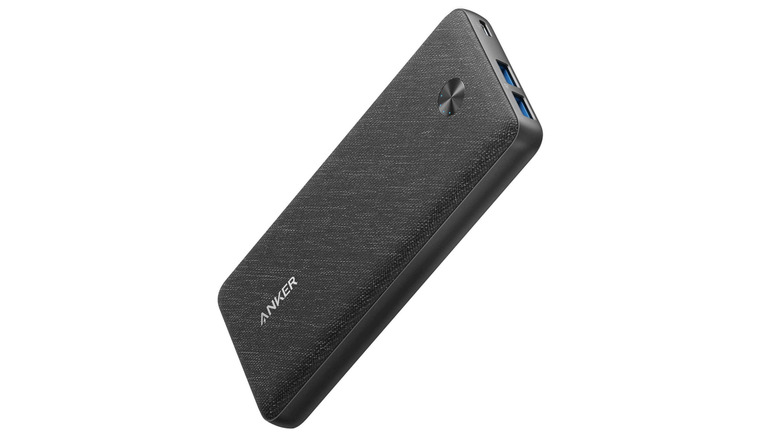
The third-best laptop charger in the list is the $50 Anker PowerCore 3 Sense 20,000 mAh Portable Charger, a battery pack that may or may not be available for purchase at the time of this writing in places like Amazon or from Anker's website, but similar models are available. Consumer Reports praises the portability of the battery pack, which weighs 0.8 pounds and features a compact design (6.25 x 3 x 1 inches). The battery offers a capacity of 20,000 mAh and supports USB-C and USB-A devices. Consumer Reports says that's enough energy to recharge a phone four to five times and a laptop once or twice. When it comes to charging speeds, the USB-C port supports up to 20W USB-PD. That type of speed may not be enough for certain laptops. For example, the 13-inch MacBook Air requires a 30W power adapter. Consumer Reports also says the battery recharges fast when plugged in.
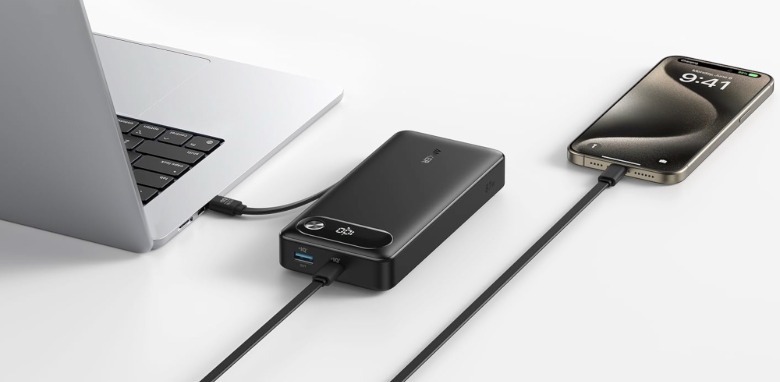
The closest thing to Consumer Reports' recommendation listed on Amazon and Anker is the 20,000 mAh Anker Power Bank (above) that retails for $49.99. It features a built-in USB-C cable, an additional USB-C port, and a USB-A connector. The portable charger supports speeds of up to 87W, which should support some notebooks. Anker says the battery can recharge a MacBook Air 1.2 times, with a 30-minute charge enough to give the laptop a 52% charge. The Anker Power Bank needs 90 minutes to reach a full charge itself with a 65W charger. It's about as big as the PowerCore 3, measuring 6.2 x 2.9 x 1 inches and weighing 0.97 pounds. The Anker Power Bank will work with smartphones, tablets, game consoles, and other devices.
Mophie Powerstation Pro AC
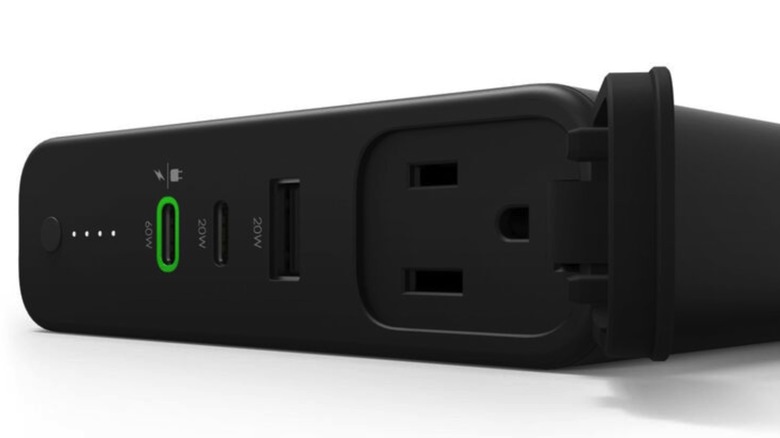
Mophie's $199.95 Powerstation Pro AC laptop charger is second on CR's list. It's a large power bank, at 27,000 mAh, compared to the Anker models above. It's also the only model in the list that features an AC outlet. However, the Powerstation Pro AC isn't as portable as the Anker models, weighing 2.2 pounds. Still, CR appreciated its charging speeds, which go up to 100W via the AC outlet, and up to 60W via the USB-C ports. The Mophie battery pack also features a USB-A cable, meaning it will work with older devices. The Powerstation Pro AC can also power small appliances if needed, thanks to that AC outlet, a feature that can be useful during emergencies or while camping.
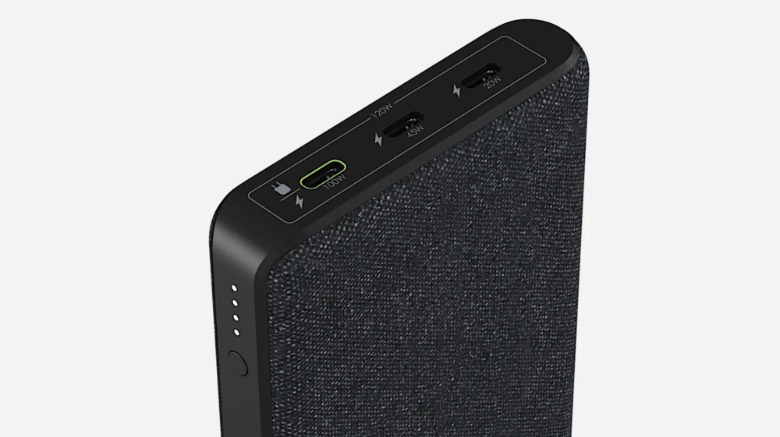
Unfortunately for buyers, Mophie doesn't sell the Powerstation Pro AC as of this writing, and retailers like Amazon don't have any stock left. Others, like B&H Photo Video, still sell it, though. Mophie has a new Powerstation Pro XL power bank (above) that can serve laptops. It has a capacity of 25,000 mAh, which is good for up to 12 hours of extra battery life for a MacBook Pro. It's lighter, at 1.19 pounds, but it doesn't feature a built-in AC outlet. There's no USB-A support either. Instead, the battery pack offers three USB-C ports with speeds ranging from 20W to 100W. The PowerStation Pro XL retails for the same price point, $199.95 from Mophie.
Anker Prime Power Bank 27,650m Ah 250W
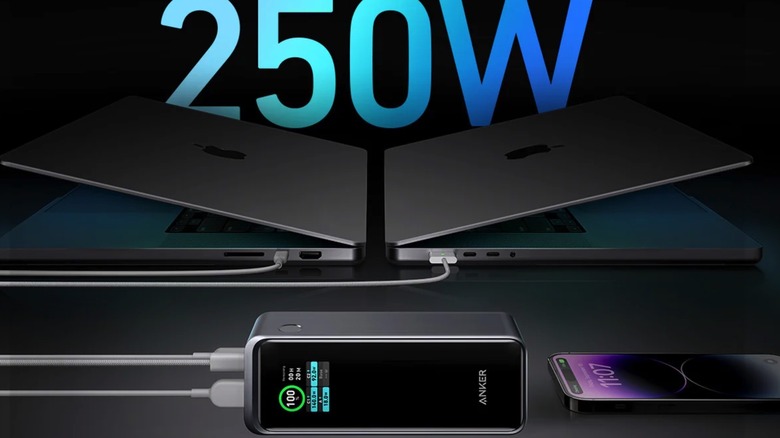
The portable charger from Consumer Reports' rankings that's still available for purchase on Amazon and from Anker's website is also the CR's best power bank for notebooks: the $179.99 Anker Prime Power Bank 27,650 mAh 250W. This Anker battery pack supports power of up to 250W, which should be enough to cover most laptop models and other devices. Out of that 250W total, one of its USB-C ports supports USB-PD fast-charging of up to 140W. This is the port you'll want to plug your laptop into. Anker says on its website that the laptop charger will charge a 16-inch MacBook Pro to 50% in 28 minutes.
The battery pack also supports fast recharging, up to 170W, but you'd have to use two USB-C ports at the same time. Like the discontinued Mophie charger above, the Anker Prime Power Bank is on the heavier side, weighing 1.4 pounds, but that's because it packs a similar capacity at 27,650 mAh. The battery also features two USB-C ports and one USB-A port, but it lacks an AC outlet.
The device is thicker than the previous Anker model in this list (6.37 x 2.25 x 1.96 inches), but it has a few extra perks. On the front, there's a screen offering quick information about the remaining capacity and the charging speed of connected devices. The charger also comes with Bluetooth support, which lets you connect the battery pack to your smartphone. The Anker official app will provide information about the battery in real time. CR highlights the app support in its rankings, noting that users can locate the device with sound alerts via the app.