

5 Health Problems Astronauts Have To Worry About In Space
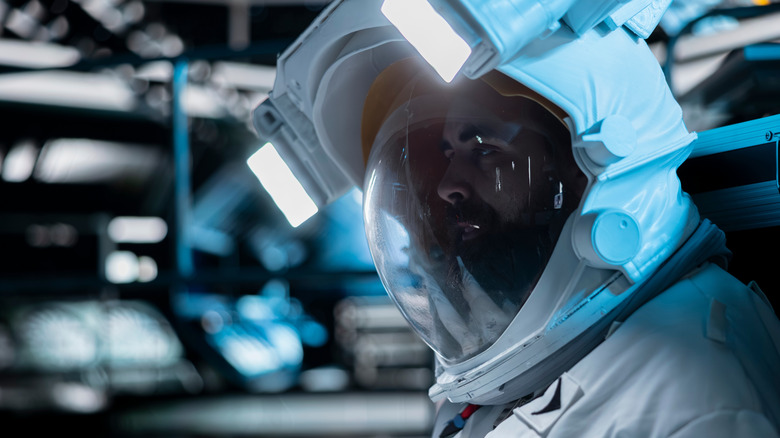
Space travel is one of the most hazardous things a human being can endure, and not just for the obvious reason of launching into an airless vacuum at 25,000 mph. The human body is an extremely complicated machine, one that is expressly built to survive on the surface of Earth. Just being beyond Earth's reach can induce a variety of unusual conditions like muscular atrophy or motion sickness, which is why astronauts need to be even more vigilant about their health than normal while up in space.
As part of the rigorous training and study that goes into becoming an astronaut, candidates need to be in both peak condition and have a strong understanding of their own physical needs to lower the likelihood of a medical emergency. Thankfully, there has only been a single instance of a medical emergency aboard the International Space Station to date, but outside of a worst-case scenario, astronauts can still endure a multitude of lesser health complications that one wouldn't normally experience down here on Earth.
Motion sickness and disorientation
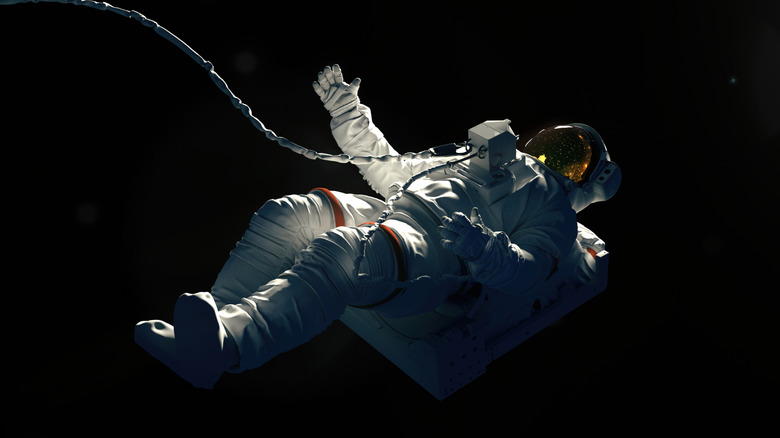
When hurtling into space at tens of thousands of miles per hour, a degree of physical disorientation or motion sickness sounds like it would be a given. However, while the initial launch process is certainly no picnic for astronauts, merely existing in microgravity can lead to more pronounced feelings of disorientation than you may expect.
Normally, your body, particularly your brain, parses information from its surroundings in order to establish your sense of equilibrium. Your eyes, inner ears, muscles, joints, and even internal organs all send little data points up to your brain to establish a baseline of what stillness is supposed to feel like. When an astronaut is in free fall, these data points can become confused and conflicted; their body, expecting certain specific stimulus brought about by the presence of gravity, is now missing it completely. This can lead to pronounced disorientation symptoms, including continuous motion sickness and even a complete loss of sense of direction. This usually fades as the astronaut's body gradually acclimates to the change in stimuli, though when they eventually return to Earth, they're forced to reacclimate all over again.
Muscle and bone density loss
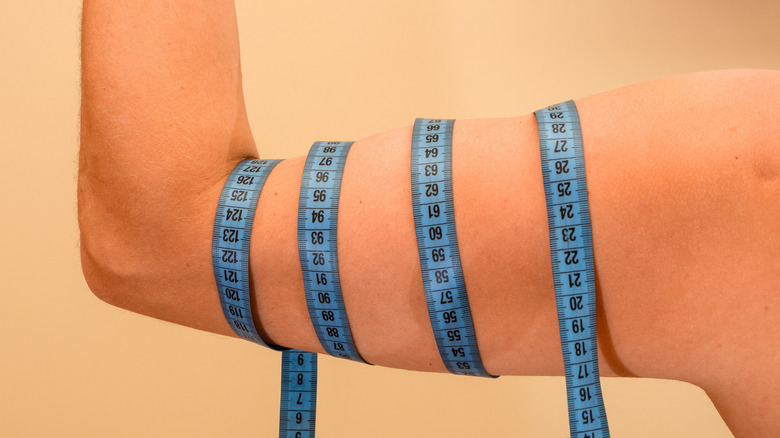
Exercise is vital for strengthening both your muscles and bones and building up a healthy body, and weight-lifting is a good way to address all of those. However, weight-lifting only works because we live on a planet and aren't in a constant state of free-fall. When up in microgravity, moving your body, as well as picking things up, takes substantially less effort, since there's nothing weighing anything down. As a result of this, an astronaut's muscles and bones are more likely to weaken and atrophy.
Based on NASA's estimates, the human body, while in space, loses about 1.5% of its bone density per month, with the bones in the lower body like the hips and legs getting it the worst. Muscles don't fare much better, atrophying at a comparable rate. In order to combat this, astronauts aboard the ISS engage in rigorous exercise at least once a day, every day. Even with these efforts, though, some loss is still unavoidable, with astronauts noting upon return to Earth that everything feels a lot heavier.
Baby feet

The bottoms of your feet are some of the most resilient patches of skin on your entire body. After all, your feet are regularly bearing the entire weight of your body as you stand and walk around on varied terrain. They need to be stronger than the rest of your skin to endure that much punishment. Of course, astronauts aboard the ISS aren't walking, they're floating in microgravity. When you stop walking entirely for an extended period, your feet gradually lose their natural resilience, becoming not unlike the soft feet of a newborn. This is a condition that astronauts have nicknamed "baby feet."
After an astronaut spends a few months in microgravity, not having to actually stand on any solid surfaces or walk along hallways, the callouses on the bottoms of their feet simply fall right off. In fact, due to astronauts' tendency to hook their feet on footholds around the station, new callouses may appear on the tops of their feet. This technically isn't a big problem while up in space, but upon return to Earth, astronauts may find it difficult to walk around due to the redoubled pressure upon their newly-sensitive feet.
Sinus problems
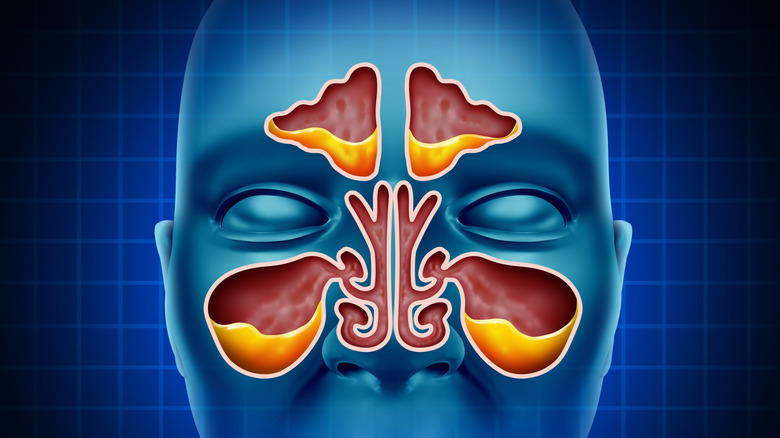
Your head has a complex system of sinuses running all throughout it, both the predominant ones in your face and many more dotted around your skull. When sinuses get packed with too much mucus due to an infection, your nose becomes stuffy and you may experience headaches. Since gravity is always pulling the fluids in your body downward, though, sinus congestion will usually work itself out with enough time. Without gravity to keep things moving, astronauts are prone to more frequent sinus-related issues.
A large portion of astronauts experience consistent sinus issues while in microgravity, including difficulty breathing and aches in the head and face. Without gravity's aid, the various fluids and mucus in your sinuses are just sort of floating freely, not getting flushed downward like they should be, leaving astronauts in a state of perpetual stuffiness. This condition can be worsened for astronauts that go on consistent spacewalks outside of the ISS, since extreme pressure changes can cause small injuries to accumulate on the sinuses. All of this can have knock-on effects on an astronaut's overall health, including reduced quality of sleep due to headaches and increased vulnerability to infection.
Emotional distress
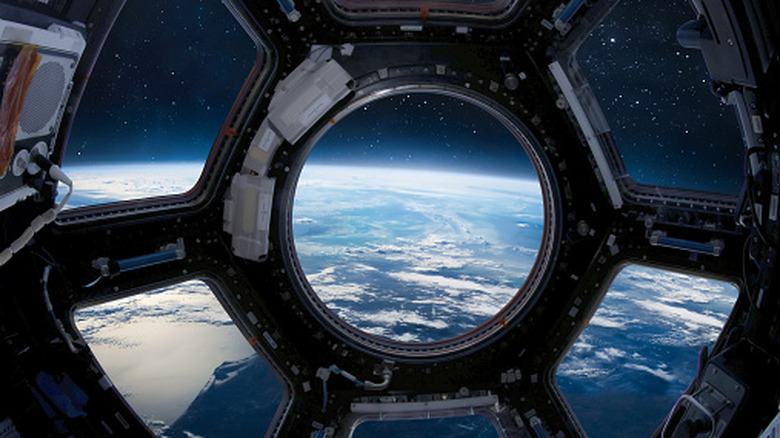
Astronauts don't just go through rigorous physical training, they're also subjected to psychological and emotional testing to ensure they can stand being cooped up in a floating hunk of metal for months, or even years on end, seeing nobody else but the same few people the entire time. Of course, training for isolation and actually being stuck in space, as far as you can possibly be from your friends and family, are two very different beasts. Humans are social animals, and that kind of severe isolation can have very real effects on an astronaut's overall health. Some astronauts have exhibited cognitive decline after just three days in space.
Astronauts consistently exhibit feelings of loneliness and homesickness, which can make them antsy and depressed on long-missions, not to mention irritable in the event of unexpected mission extensions, such as the individuals trapped aboard the ISS during the Boeing Starliner incident. It's absolutely vital that astronauts have an emotional support network, including a strong rapport with their crewmates and agents on Earth they can get in consistent contact with. If the situation becomes too stressful, it could impact their ability to conduct vital tasks, which could potentially endanger the rest of the crew.