

Android Auto And Android Automotive OS Are Not The Same - Here's What You Need To Know
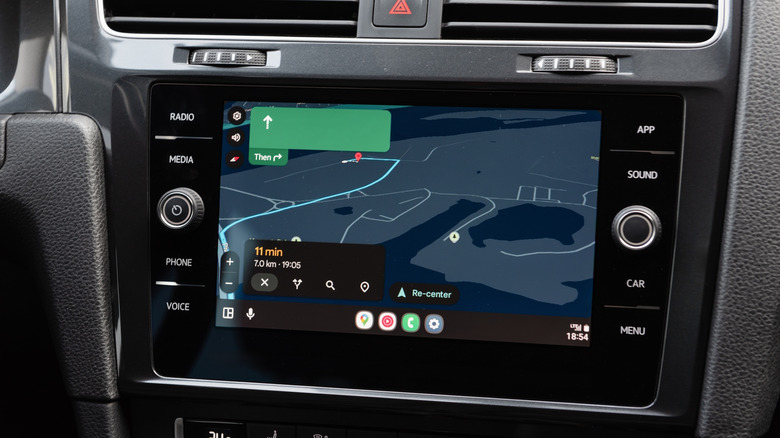
Android Auto, like Apple CarPlay, has become one of the most popular smartphone mirroring systems for modern cars. Support for Android Auto comes baked in most cars right from the factory and enables you to use your smartphone's apps and features on your car's infotainment system. All you need is to pair or connect your phone to your car, and Android Auto appears on your car display. It has much to like, and is often one of the major considerations for car buyers.
However, it's not the only way Google's Android is integrated into cars. The company also offers something called the Android Automotive OS, which is sometimes confused with Android Auto but is a completely different product. Although Android Automotive OS isn't as common as Android Auto, it's slowly gaining traction among automakers, who have started implementing it in some of their cars. Let's find out exactly what Android Auto and Android Automotive offer and how they are different from each other.
What is Android Auto?
Android Auto mirrors your phone's apps and features, including music, media, and messaging, to your car's infotainment screen. As your phone is essentially being mirrored to the car display, everything is done on your phone, and the infotainment system only functions as a monitor and navigation tool. All your Android Auto apps are installed on your phone, and once your phone's removed from the car, Android Auto also disappears. Depending on the car, it works by either connecting an Android phone to the car's USB port or by pairing the Android phone wirelessly.
Android Auto support isn't a given for all cars and needs to be added by the car manufacturer. Fortunately, it's more common than ever, and there is a good chance you'll get it in most modern cars. According to Google, there were over 250 million cars with Android Auto on the road worldwide in May 2025. You can also find a list of carmakers supporting Android Auto on the Android website. However, if Android Auto is not supported by your car, you can buy an aftermarket Android Auto head unit. Similarly, if your car only supports wired Android Auto, you can purchase a wireless Android Auto adapter to remove the need to use a USB connection.
What is Android Automotive OS?
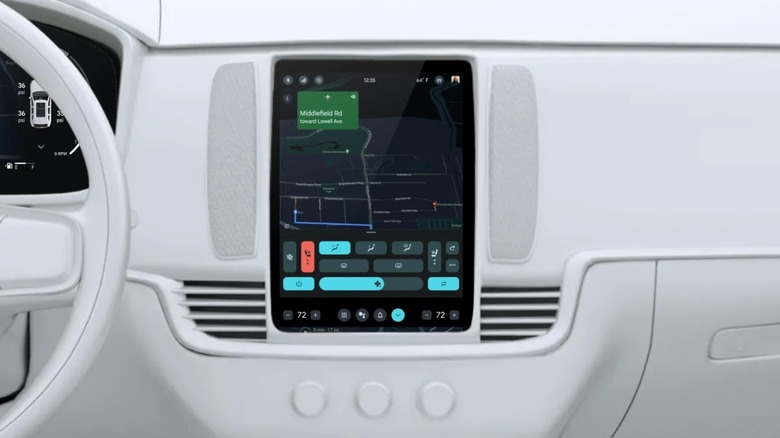
Unlike Android Auto, which is an extension of your phone, Android Automotive is a part of the Google operating system that's designed for cars and includes the necessary features and technologies required for automobile usage. It's a full-blown operating system that runs on the vehicle's hardware and doesn't need your phone's processing power. It replaces the car's traditional infotainment system with one that runs Android. As a result, apps are installed directly on the Android Automotive via the built-in Google Play Store. Moreover, Android Automotive supports apps designed for both regular Android and Android Auto. However, they need to follow Google's guidelines for car use. Automakers get the option to customize the experience as per their needs. Like the regular infotainment system, Android Automotive OS can control all vehicle functions, including HVAC, vehicle status, ADAS, and more, something you can't do with Android Auto.
Android Automotive OS is not as popular as Android Auto. That said, according to Google, you can find Android Automotive OS in over 50 car models, and more are coming. Some of the auto manufacturers using Android Automotive OS include Volvo, Polestar, BMW, GM, Honda, and Renault. It's trickier to implement than Android Auto and gives Google access to significantly more data about the vehicles and their usage. So, while there seems to be a shift to Android Automotive OS from Android Auto, it'll likely take a while for Android Automotive to support a significant number of car models. There is also currently no aftermarket way to get Android Automotive in a car that doesn't come with it from the factory.