

Lava Lamps Can Actually Create Secure File Encryptions - Here's How
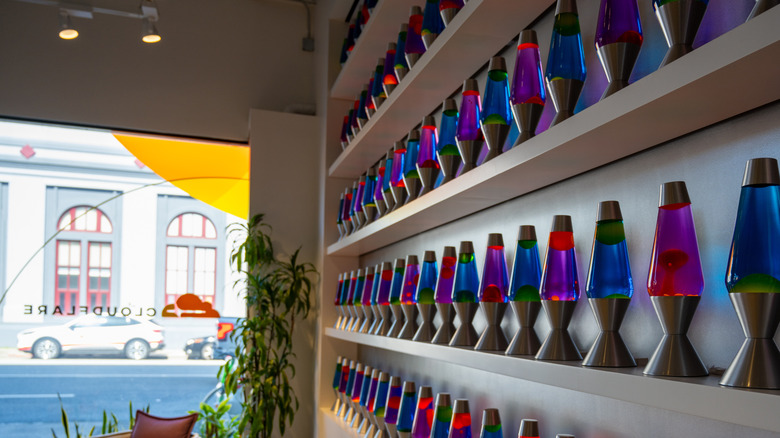
As far as data encryption goes, you wouldn't expect a bunch of lights to help secure anything — certainly not some '70s-style lava lamps. But as it turns out, the exact opposite is true. Cloudflare, the major infrastructure company that props up large portions of the internet, actually uses 100 lava lamps for SSL encryption. The blueprint, integral to secure encryption, is randomness. The encryption "key" is what unlocks the data for secure systems and allows it to be read. By keeping keys random, you can essentially keep would-be hackers guessing, preventing unauthorized parties from accessing the systems or data the encryption protects. This is a lot like how encrypted messaging apps work, minus the psychedelic decor.
The lava lamps help create those keys. As Cloudflare describes it, "To produce the unpredictable, chaotic data necessary for strong encryption, a computer must have a source of random data." Lava lamps are "consistently random" because no pattern inside is ever the same. The gelatinous lava is always twisting, conforming, and bobbing, and so 100 of them arranged provides the ultimate "chaotic" data.
To make it work, 100 lava lamps rest on shelves, in order, on a single wall at Cloudflare headquarters. A camera takes a photo of those lamps, at regular intervals, capturing the random shapes inside, and then sends the image to Cloudflare servers. As images are nothing more than data, stored by computers as a series of numbers — each pixel has a distinct numerical value — that also allows the team to use the "strings" to create an encryption key. That's pretty ingenious, is it not? And since Cloudflare protects about 20% of the entire internet, including major websites like Apple, X (Twitter), Discord, Zoom, and many others, this essentially makes lava lamps a core part of the internet's operation.
What if someone interrupts the picture or stands in front of the lava lamps?
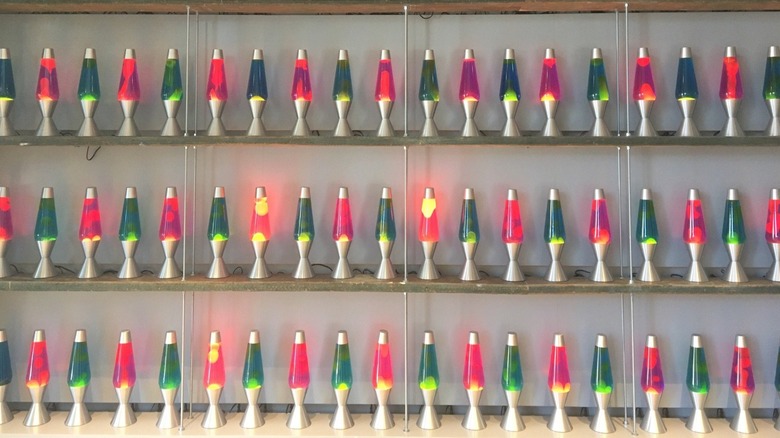
The general idea of the lava lamp wall is to provide "entropy," which is another word for chaos or disorganization. But in cryptography, entropy is responsible for generating unpredictability, which is what makes encryption keys and encryption altogether secure. So, more randomness is always good. Moreover, because the visual image is translated into a string, anything the image shows is incorporated into that randomness, including people walking in front of the wall or interrupting the photos.
As Cloudflare explains, "obstructions become part of the randomness that the camera captures," including people or objects that appear in the photos. That randomness boosts security. It's so secure, you can use Cloudflare's DNS app to protect your browsing data at work on Android. In fact, setting a trusted DNS provider manually on your phone is one of the CISA security rules everyone should know.
Now, if you know the history of Cloudflare and its outages, it's also important to point out that Cloudflare does have a backup system for randomization: two other sources running on a Linux operating system on the Cloudflare servers. So, should anything ever happen to the camera or photos, like if the camera is damaged, the backup sources will take over. Surprisingly, Cloudflare isn't the first company to do something like this. In the 1990s, a company called Silicon Graphics designed the original "Lavarand" system, which was patented at the time — that patent has since expired, however.