

Nuclear Submarines Can Stay Underwater For Months - Here's How
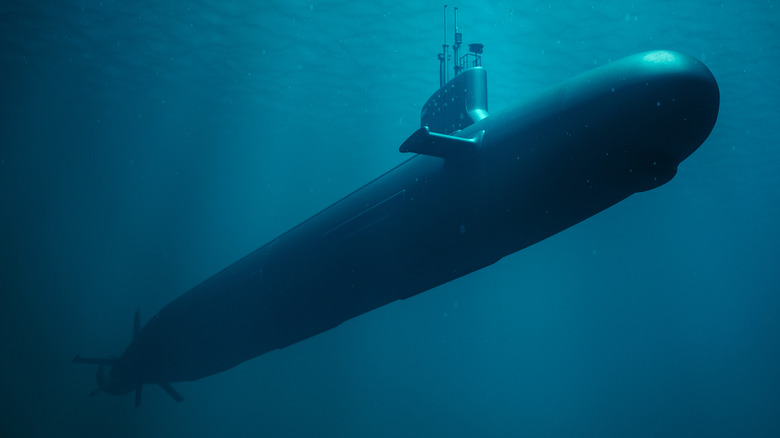
The United States military uses nuclear submarines to attack strategic targets, gather intelligence, and deter threats. Submarines make up part of the "nuclear triad" that protects against nuclear threats from land, air, and sea on a 24/7 basis. To that end, the nation's nuclear submarines need to be able to remain at sea and underwater for months at a time.
The key to this capability is, of course, nuclear power. It's the same reason why aircraft carriers can go years before a refuel. A small amount of nuclear fuel can enable a submarine to operate underwater at high speed for an indefinite amount of time. The onboard nuclear reactor generates heat that powers a steam turbine, which itself is responsible for driving the sub's propeller that thrusts the vehicle forward. Prior to the implementation of nuclear power on the USS Nautilus in 1954, submarines relied on diesel-electric engines, which were limited in how long they could be submerged.
The electric motors, which kicked in when the submarine went underwater, needed to recharge after just 80 miles of travel or, at best, four days of slow underwater "crawling." Recharging the batteries required the diesel engine to run, but that needed air, so the sub would have to return to the surface. Running the diesel engine was necessary for juicing up the batteries in preparation for the next submersion. By comparison, nuclear submarines can hypothetically remain underwater for years without surfacing.
How nuclear submarines create oxygen underwater
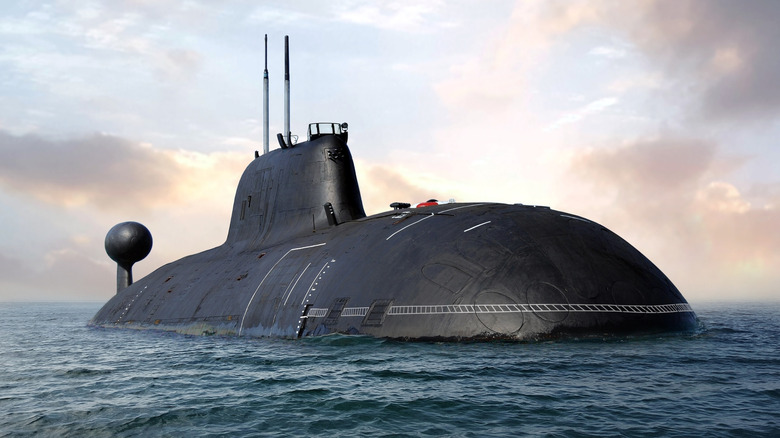
The reason missions tend to last no longer than a few months is human limitations. When preparing for a submarine voyage, it's typical for crews to prepare about 90 days' worth of food rations. Surprisingly, though, oxygen is not an issue for nuclear sub crews. So, where do the human personnel get their much-needed air when they're hundreds of meters underwater during prolonged outings?
The answer is electrolysis, which is the process of using an electric current to create hydrogen and oxygen from water via chemical reaction. Nuclear fission provides ample power to the electrolysis plant, and it goes without saying that there's plenty of water to be found around the submarine. However, processing saltwater as-is would generate deadly chlorine gas. The seawater must first go through reverse osmosis to filter out the salt before creating that sweet, sweet oxygen.
The electrolysis plant is vital not just for human crewmembers, but also for important parts of some subs. Even though nuclear submarines don't rely on diesel for propulsion, the older Los Angeles-class attack submarines possess diesel engines to serve as emergency backup generators, with the electrolysis providing the necessary oxygen. During day-to-day operations, though, nuclear power runs the show for the entire duration of a months-long voyage.