

The Complicated Truth About The Price Of 3D Printing Houses
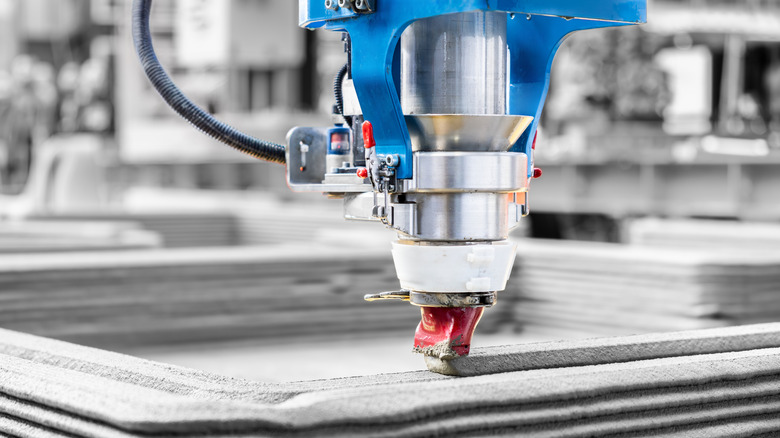
The idea of 3D printing an entire house sounds like something that you only find in movies or video games, since having a massive robot squeezing out concrete layer by layer to build a house from scratch feels almost too futuristic to be real. However, this kind of tech isn't something that we can only see in fiction, since it's possible to find some residences being built with this method.
A great example of this is 4Dify, a company that is building what they call America's first 3D printed neighborhood in Yuba County, California. Using a massive concrete printer, the company is going to construct five homes of about 1,000 square feet each, with at least one already listed for sale at a price below the regional average, making it an early case study for the future of affordable housing construction.
While this news might sound great for anyone hoping that 3D printing finally solves the housing crisis and makes housing affordable for everyone, there are some other things to consider as well. The price tag from a 3D printed home looks more attractive than buying a traditional home, but when considering the price per square foot of both, the 3D-printed options are significantly more expensive. Moreover, the technology still has a long way to go before it can truly deliver on its promise of cheap housing.
3D printed homes cost more per square foot
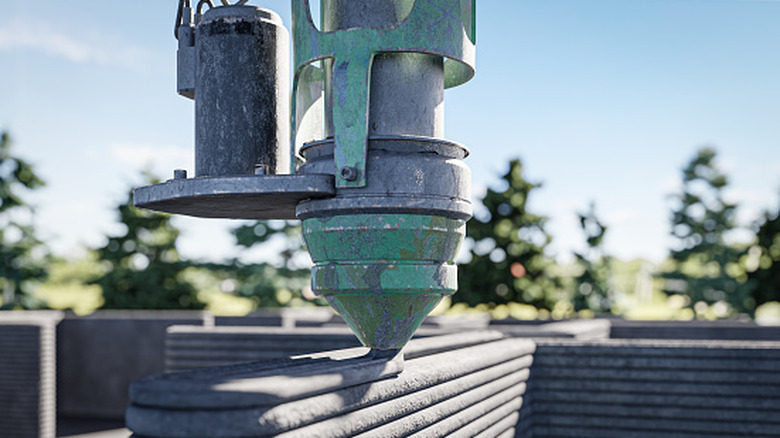
The $375,000 price that 4Dify's 3D-printed house has looks like a solid deal, especially because Yuba County offers homes at a $450,000 average price, but the reason those houses look cheaper is largely because of size. At almost 1,000 square feet, you're paying something next to $375 per square foot, which is way higher than the $268 per square foot that you'll find when looking at the prices of traditional options.
That's because the technology, despite having evolved considerably, is still in its early days. First up, the equipment investment remains massive, as each machine used by 4Dify costs around $1.5 million. Also, this method can handle only the structure of each house. Everything else that you need to make one, such as plumbing and electrical wiring still need traditional labor and materials, which are expensive.
Even at a larger scale, the prices don't get much better. For example, in Georgetown, Texas, the company ICON developed Wolf Ranch, the world's largest community of 3D-printed homes, with 100 houses. Yet, on the listings, the price to live there ranges from $450,000 to $600,000 a home, which means that at least for now, 3D printing isn't translating into cheaper homes at the scale the industry claims.
3D printed homes are expected to get cheaper over time
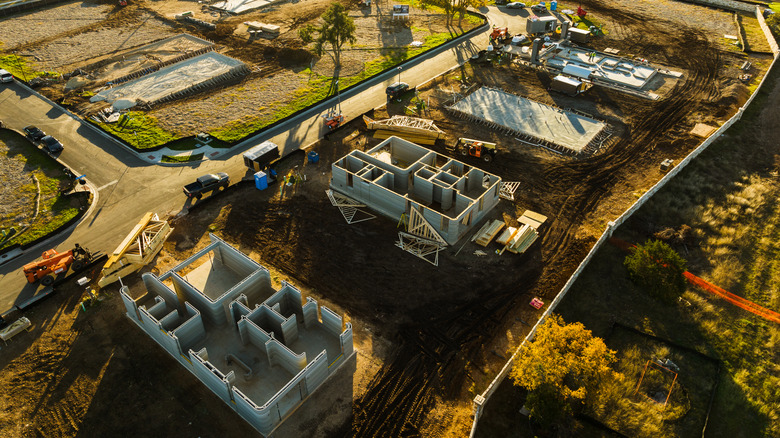
Despite the price that you pay for having a 3D-printed house nowadays being higher than it would normally cost to have a conventional one, the trend is for prices to fall over time. As the technology becomes better, it will be possible to construct them faster and at an affordable price. For example, 4Dify's first house took over 24 days to complete, but the founder Nan Lin told CBS News that he expects the next ones to be printed in only 10 days. In fact, the world's largest 3D printer can print a house in under 80 hours, which could translate to lower housing costs in the future.
Beyond these costs related to the construction itself, there are also some other barriers that currently affect the final price of a 3D-printed home. Many local governments are still updating building codes to account for printed walls, which can slow approvals and increase project expenses, and many insurance companies are still figuring out how to assess and cover these newer types of structures, which can add some costs. As the technology matures over time, these costs should go down in the future.
On the other hand, as 3D-printer tech gets better, this construction method may also help owners save some money over time. As researchers have already managed to 3D-print stronger concrete walls, those structures resist fire and mold, which means less spending on repairs in the future and enables complex architectural designs that would be expensive otherwise, making these homes a worthwhile long-term investment.