

This Overlooked Alien Movie Reveals A Different Side Of Horror Master John Carpenter
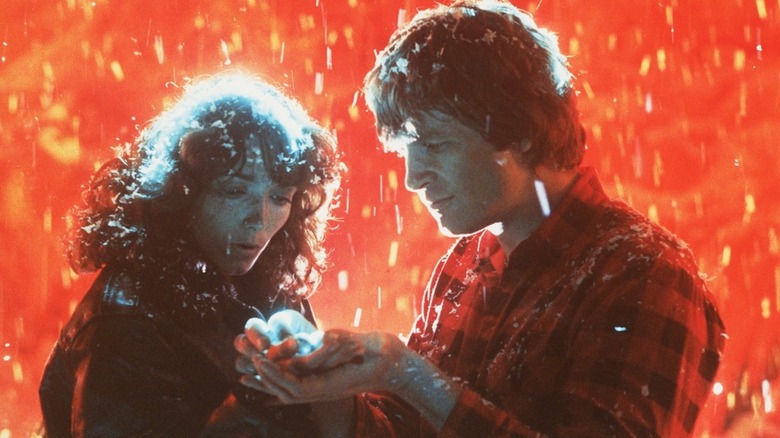
John Carpenter isn't exactly known for being gentle in his movies — quite the opposite. Whether we talk about his numerous horror classics, like the original "Halloween," whose villain was inspired by a sci-fi western, and "The Thing", which came out in the best year for sci-fi movies, there's an inherent rawness, hostility, and violence that dominate his films. That includes his dystopian flicks, such as "Escape From New York" and "Escape From L.A." Yet, there was a time during the filmmaker's peak when he tried his hand at something slightly different.
1984's "Starman," directed by Carpenter and written by Bruce A. Evans and Raynold Gideon, is a romantic drama dipped in science fiction. It follows an alien (Jeff Bridges) who's sent to Earth to establish contact after Voyager 2 shoots a disk into space with an audio message inviting alien civilizations to come and visit us in peace. But, as soon as the U.S. government discovers the UFO, they shoot it down, causing it to crash in Wisconsin, near the home of Jenny (Karen Allen), a grieving young woman who recently lost her husband, Scott. Employing future technology, the visitor clones and assumes the identity of Scott — through his DNA, old photographs, and video footage — and completely freaks the widow out.
After the initial shock, Jenny quickly gathers that the creature isn't human and might be dangerous — even though he hardly seems threatening. All he wants to do is get to Arizona in three days and return to wherever he came from. Jenny, fearing for her life, decides to help him, and the two begin a road trip that will change both of them in ways they couldn't have imagined.
Starman is weird yet oddly endearing and touching, too
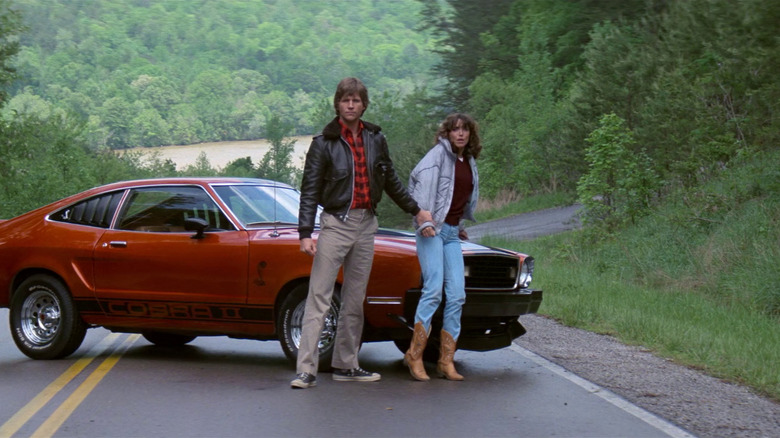
The way "Starman" begins hardly suggests what it'll become in the end. At the start, Carpenter delves into his usual ominous way of walking us into this strange tale, employing his dark imagination and some outdated-yet-effective off-putting CGI to deliver an uncanny "birth" scene as the alien grows from a baby to an adult Jeff Bridges in seconds. Due to the incomer's limited vocabulary and ethereal nature, there's a brief moment when we aren't sure whether this thing means any harm or not, but as the plot progresses, it becomes evident that it's a rather benevolent being. He's eager to learn about humans and understand our nature, which makes the initially terrified Jenny gradually fall for him, especially after she sees him bring a dead deer back to life with some alien magic.
Naturally, the government wants its hands on this thing, which creates the formulaic road trip structure the movie largely relies on. In between those intense encounters, however, is where "Starman" truly comes alive. Underneath the eerie atmosphere, intensified by Jack Nitzsche's classic '80s ambient and synth-pop score, there's a subtle and beautiful bond developing between Jenny and her new beau. Luckily, Carpenter knows how to capture the growth and manifestation of that love almost as well as he does unnerving terror. And thanks to Allen and Bridges' tender yet potent chemistry, "Starman" turns into an endearing and surprisingly touching gem by the end.
Unfortunately, audiences in the '80s didn't find all that to be so alluring, despite Bridges receiving an Oscar nod for his performance. The film performed poorly at the box office, earning $28 million worldwide against its $22 million budget (via IMDb). Ultimately, "Starman" was ahead of its time and couldn't really land back then, but that shouldn't keep long-time Carpenter fans away from checking out this sweet outing from the horror maestro.